


Why Does My Spindle Moulder Cause Wood Tear-Out?
Are you cutting a moulding, rebate or profile with your spindle moulder, only to find splinters and torn fibres along the edges or ends of the workpiece? This is a common problem when machining solid wood and can affect the quality of the finished surface.
A spindle moulder that tears out wood fibres is not necessarily faulty. Grain direction, the condition of the cutting edges, depth of cut and workpiece support can all contribute to tear-out. Here is how to identify possible causes and improve your results while following the necessary safety precautions.
1. Why Does Wood Tear Out During Spindle Moulding?
During spindle moulding, cutting edges remove material to create a moulding, rebate or profile. When the fibres are cut cleanly, the surface remains smooth. However, if they are lifted before being severed, wood tear-out occurs.
These defects can appear along an edge, at the end of a workpiece or around knots, particularly where the grain changes direction.
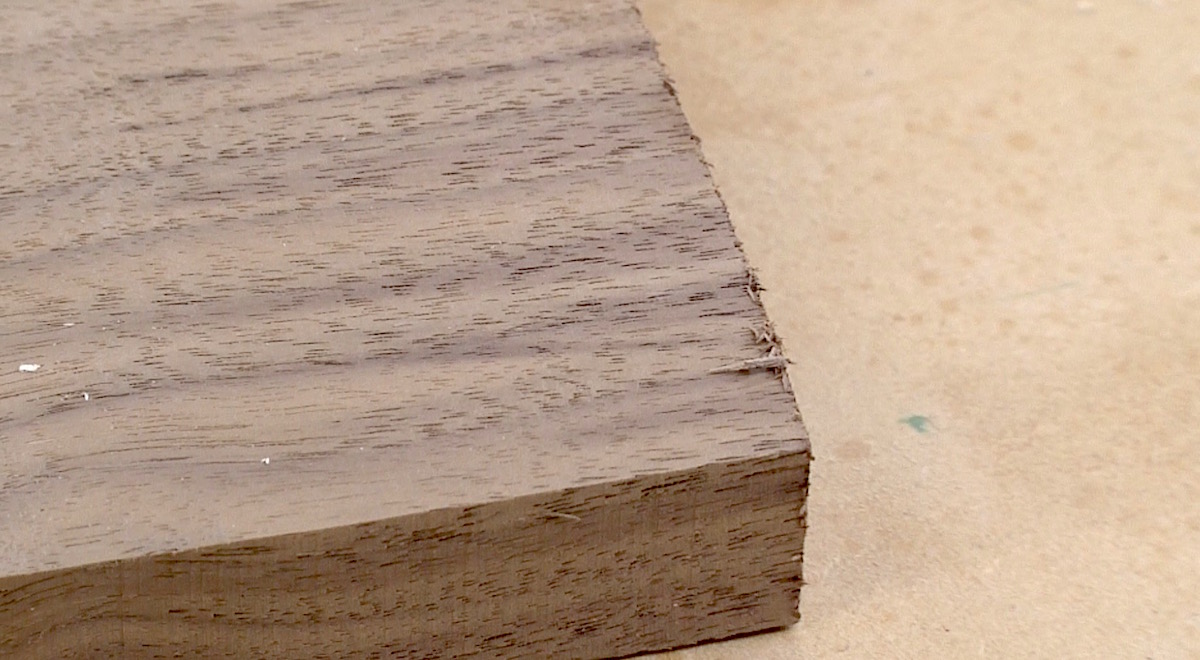
The torn fibres along the edge of this board illustrate a machining defect. The photograph alone does not identify which machine caused it.
Key point: tear-out is not necessarily related to motor power. The material, cutting tool and machining conditions all play an essential role.
2. Is Wood Grain Direction Responsible for Tear-Out?
Grain direction is one of the main factors affecting finish quality during spindle moulding. In solid wood, the fibres may slope, wave or change direction around knots. When the cutter encounters unfavourably oriented fibres, it may lift them, causing tear-out against the grain.
How Can You Reduce Tear-Out Against the Grain?
- Inspect the grain and identify irregular areas before machining.
- Reduce the amount of material removed when working with difficult grain.
- Check that the cutting edges are sharp and in good condition.
- Test the setup on an offcut of the same wood species and grain orientation.
Safety: never reverse the feed direction to perform climb cutting by hand. Follow the feed direction, guards and operating methods authorised in the machine manual.
3. Are the Cutter Head Knives and Inserts in Good Condition?
Blunt knives or damaged cutting inserts may crush or lift wood fibres instead of cutting them cleanly. Resin and dust deposits can also reduce cutting quality.
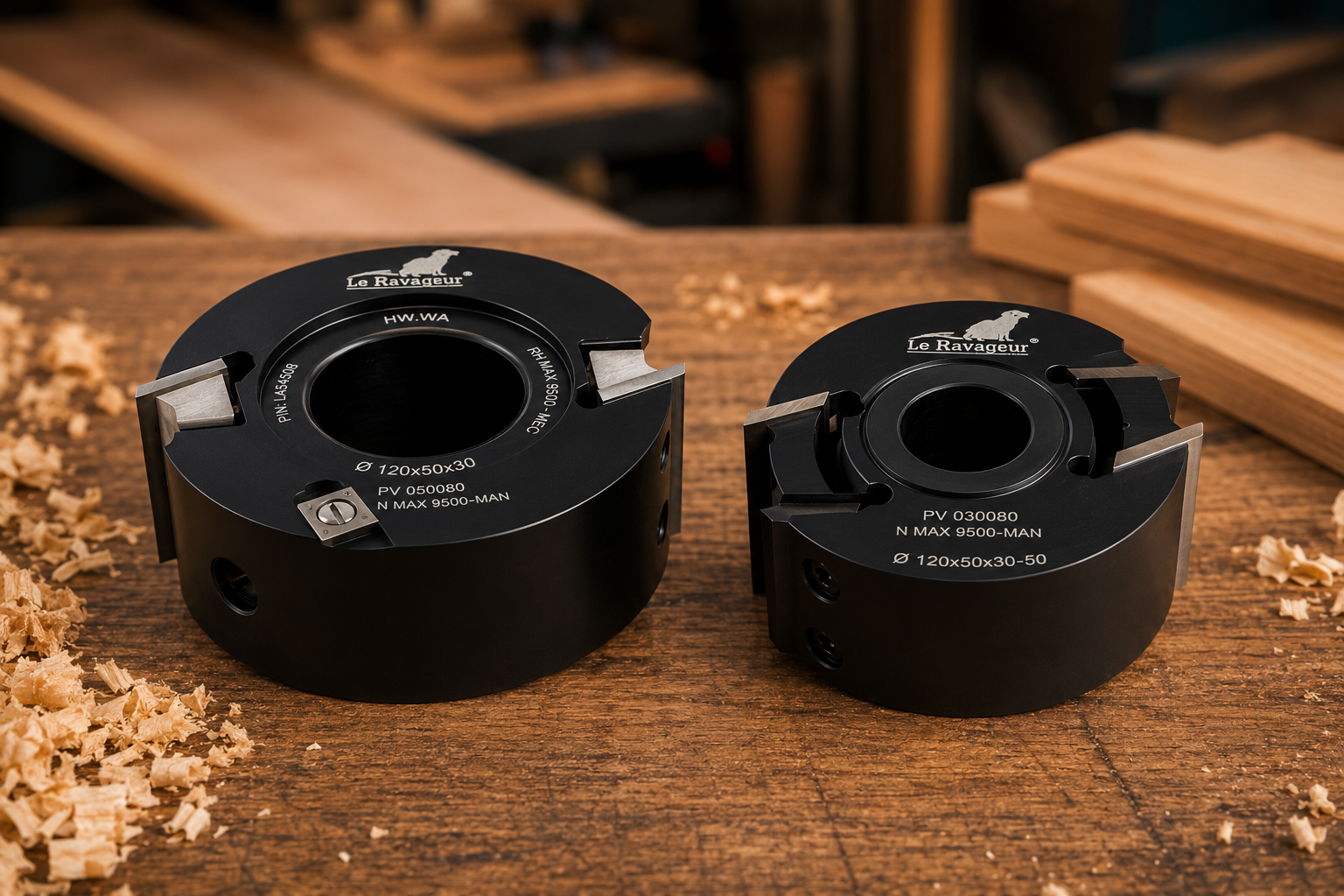
Cutter heads with cutting edges in good condition help produce clean profiles and reduce tear-out. Check the knives or inserts according to the tool design.
What Warning Signs Should You Look For?
- A rough finish or raised fibres on wood that is normally easy to machine.
- Unusually high feeding resistance.
- Heat marks or progressively deteriorating cutting quality.
- A chipped cutting edge, damaged insert or questionable fastening.
Before any inspection, switch off the machine, wait until the spindle has stopped completely and disconnect the power supply. Only fit knives, inserts, limiters and fastening components expressly compatible with the cutter head, following the manufacturer's instructions.
4. Is the Depth of Cut Too Great?
Removing too much material in one pass increases cutting forces and can encourage wood fibres to tear out, especially in hardwoods or timber with irregular grain.
When the operation and tooling allow it, removing material in several controlled passes may be preferable. Also check that the fences provide stable support throughout the operation.
Tip: do not try to overcome unusual resistance by pushing the workpiece harder. Stop machining and investigate the cause first.
5. Why Does Tear-Out Occur at the End of a Workpiece?
At the end of a workpiece, the last wood fibres have less support. As the cutter passes through them, they may break away rather than being cut cleanly. This problem can occur when machining the ends of rails or frame components.
How Can You Reduce Tear-Out at the Exit?
- Where the job allows, leave extra length that can be trimmed after machining.
- Use a guiding device suitable for machining the end of a workpiece.
- Where permitted and safe, use a securely held sacrificial backing piece in that device to support the fibres.
- Make sure the workpiece remains properly supported throughout the entire cutting operation.
Warning: never hold a short workpiece or sacrificial backing piece directly by hand near the rotating cutter. For end-grain operations, use the guiding and protective equipment specified by the manufacturer.
6. Is the Spindle Speed Suitable for the Cutter Head?
Spindle speed affects cutting conditions, but there is no universal setting. It must be selected according to the diameter and specifications of the cutter head and its permitted operating speed range.
- Check the markings on the tool and its documentation.
- Consult the speeds available on the spindle moulder and the manufacturer's recommendations.
- Always comply with the minimum and maximum speed limits applicable to the tool.
Important: simply increasing spindle speed to eliminate tear-out is not a reliable solution and may be dangerous.
7. Is the Wood Feed Rate Consistent?
An inconsistent feed rate can leave marks and cause variations in cutting forces. Feeding too quickly can also spoil the finish or cause a jam. The aim is steady movement suited to the timber, profile and tooling.
What Are the Benefits of a Power Feeder?
A properly installed spindle moulder power feeder can help hold the workpiece against the fence and table while maintaining a consistent feed rate. It is particularly useful for repetitive operations on workpieces suited to mechanical feeding.
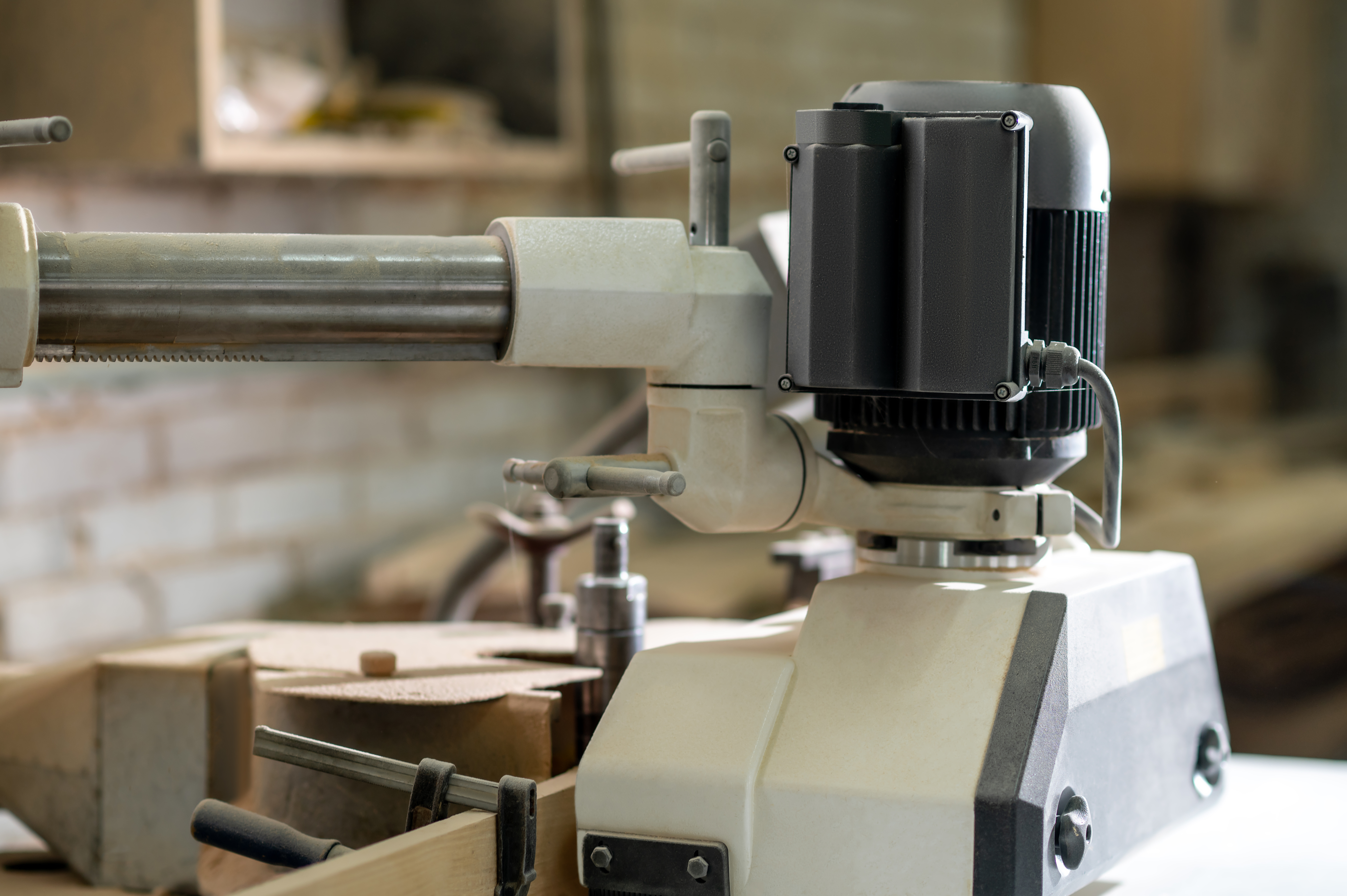
A power feeder can help maintain a steady feed rate and a more consistent finish. It does not replace the spindle moulder's guards or safety instructions.
8. Are Some Wood Species More Prone to Tear-Out?
Timber with irregular or interlocked grain, knotty areas and certain dense wood species may be more prone to tear-out. Warping, internal stresses and moisture content can also make machining more difficult.
Before starting, check the condition of the supporting faces and reference edges. A warped or poorly jointed workpiece may be difficult to guide correctly. If in doubt, carry out a test on an offcut.
9. Troubleshooting Table: Why Is My Spindle Moulder Tearing Out Wood?
| Problem observed | Possible cause | Recommended solution |
|---|---|---|
| Tear-out along an edge | Cutting against the grain or irregular grain | Reduce the depth of cut and check the cutting edges |
| Tear-out at the end of the workpiece | Insufficient support for the wood fibres | Use suitable guiding equipment with support at the exit |
| Rough surface | Blunt or dirty knives or inserts | Inspect, clean or replace components as instructed in the manual |
| Severe tear-out during profiling | Excessive depth of cut | Adjust the cut and, where possible, machine in several stages |
| Uneven finish | Inconsistent feed or vibration | Check workpiece support and machining conditions |
| Tear-out only on certain wood species | Difficult grain or material defects | Carry out tests and adapt the tool and depth of cut |
10. Frequently Asked Questions About Spindle Moulder Tear-Out
Why Does My Spindle Moulder Cause Tear-Out Even with New Knives?
Even new knives can cause tear-out if the grain direction is unfavourable, too much material is removed in one pass or the workpiece is not sufficiently supported. Also check that the cutting tool is suitable for the operation.
Why Does Wood Splinter Mainly at the End of a Workpiece?
The final wood fibres have less support and may tear away as the cutter passes. An appropriate guiding device, possibly combined with a securely held sacrificial backing piece, can help reduce this defect.
Does a Power Feeder Improve the Finish?
It can improve feed consistency and workpiece support. However, it cannot compensate for blunt tooling, incorrect settings or defects in the wood.
Should I Increase Spindle Speed to Prevent Tear-Out?
Not necessarily. The speed must remain within the range authorised by the tool manufacturer and be suitable for the operation.
Can Tear-Out Be Removed by Sanding?
Minor surface defects can sometimes be reduced by sanding. Deep tear-out often requires further machining or a suitable repair.
11. Probois Machinoutils' Tips for a Clean Spindle-Moulded Finish
If your spindle moulder is causing wood tear-out, start by examining the grain direction and the condition of the knives or inserts. Then check the depth of cut, workpiece stability and feed consistency.
For moulding, rebating and profiling, choose a cutter head compatible with both the machine and the operation, and always use the specified guards and guiding devices.
Find more practical advice in the Probois Machinoutils Spindle Moulders: Explanations and Operating Advice section.
Key takeaway: well-maintained cutting tools, appropriate depths of cut, stable workpiece support and a consistent feed rate all help reduce wood fibre tear-out during spindle moulding.