
Special Products
Special Products


Spare parts for Holzmann dust collector
-
Spare parts for Holzmann ABS850 dust collector
-
Spare parts for Holzmann ABS1080 dust collector
-
Spare parts for Holzmann ABS2480 dust collector
-
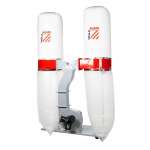
Spare parts for Holzmann ABS3880 dust collector
-
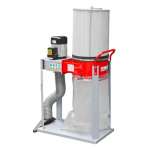
Spare parts for Holzmann ABS1500FF dust collector
-
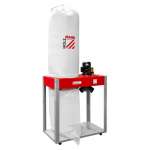
Spare parts for Holzmann ABS3000 and ABS3000SE dust collector
-
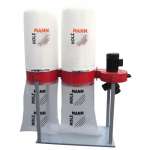
Spare parts for Holzmann ABS4000 dust collector
-
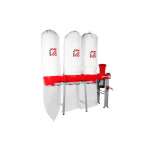
Spare parts for Holzmann ABS4560 dust collector
-
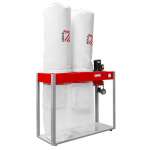
Spare parts for Holzmann ABS5000SE dust collector
-
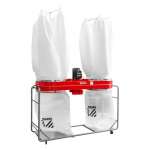
Spare parts for Holzmann ABS8000PRO dust collector
Holzmann dust collectors are designed to extract wood chips, sawdust and dust produced by woodworking machines. They can be connected to a wide range of workshop equipment, including planers and thicknessers, table saws, band saws, spindle moulders, sanders and combination woodworking machines.
Over time, certain components may wear out, become damaged or require replacement, including chip collection bags, filter bags, filters, motors, impellers, switches, capacitors, castors, bag clamps, extraction hoses, connectors and frame components.
This category contains spare parts for Holzmann dust collectors, allowing you to maintain and repair many models from the Holzmann range, particularly the various ABS series.
Spare parts for Holzmann ABS dust collectors
Holzmann offers a wide range of dust collectors suitable for small workshops as well as installations requiring higher extraction capacities.
Depending on the model and production generation, the range includes machines such as the ABS850, ABS1080, ABS1500FF, ABS2480, ABS3000SE, ABS3880, ABS4000, ABS5000SE, ABS8000PRO and other Holzmann dust collectors.
Technical specifications, bag dimensions, extraction port diameters, motors and filtration systems vary between models.
It is therefore essential to select a spare part specifically compatible with your dust collector.
Chip collection bags for Holzmann dust collectors
The chip collection bag collects the wood chips and sawdust extracted from the woodworking machine.
It is subject to regular use and may eventually become punctured, torn or lose its airtightness. A damaged collection bag can cause dust and sawdust to escape into the workshop.
Bag dimensions vary between Holzmann dust collector models. Larger machines may use large-diameter collection bags, while compact dust collectors require bags with specific dimensions.
Before ordering a Holzmann dust collector bag, always check your exact machine model and the compatibility information provided on the product page.
Filter bags and filters for Holzmann dust collectors
The filtration system retains dust while allowing the extracted air to leave the dust collector.
With regular use, a filter bag can gradually become clogged with fine dust. As dust accumulates on its surface, airflow becomes restricted and extraction performance may decrease.
Certain Holzmann dust collectors can also be equipped with a fine dust filter, offering improved filtration compared with a conventional textile filter bag.
The correct filter must always be selected according to the dust collector model and the mounting system used on the machine.
Impeller for Holzmann dust collector
The impeller, sometimes referred to as the fan wheel, is one of the main components of a dust collector.
By rotating at high speed, it generates the airflow required to carry wood chips and sawdust from the woodworking machine to the collection system.
Many Holzmann dust collectors use a metal impeller designed to withstand the passage of wood chips.
A bent, unbalanced or damaged impeller can cause excessive vibration, unusual noise and reduced extraction performance.
A dust collector showing abnormal vibration should not continue to be used until the cause has been identified.
Motor for Holzmann dust collector
The motor drives the dust collector impeller either directly or through the machine's drive system.
Depending on the Holzmann model, motor power, supply voltage and electrical specifications can vary considerably. Certain dust collectors are also available in 230 V and 400 V versions.
However, a motor that no longer starts is not necessarily defective.
Before ordering a replacement motor, check the power supply, switch, safety devices, wiring and, on relevant single-phase motors, the capacitor.
Capacitor for 230 V Holzmann dust collector
On single-phase models equipped with a motor requiring a capacitor, this component assists with motor starting and/or operation depending on the motor design.
A faulty capacitor may cause the motor to hum without starting properly, start with difficulty or operate abnormally.
However, similar symptoms can have other causes.
Before replacing the capacitor, its capacitance should be checked and, with the machine disconnected from the power supply, it should also be verified that the impeller rotates freely.
A replacement capacitor must always have the electrical specifications required by the motor.
Switch for Holzmann dust collector
The switch controls starting and stopping of the dust collector.
Over time, the internal contacts or mechanical components of the switch may wear out. A dust collector that no longer starts may therefore have a faulty switch, but this component should not be replaced before checking other possible causes.
A damaged power cable, loose electrical connection, protection device or motor fault can produce similar symptoms.
Bag clamps and fixing systems
Filter bags and chip collection bags must be securely attached to the dust collector.
Depending on the model, bag clamps or retaining bands are used to secure the bags around the collector body.
A bent or broken clamp, or a damaged locking mechanism, can prevent the bag from being properly secured and may cause dust leakage.
When replacing a clamp, always check the required diameter for your Holzmann dust collector.
Extraction hoses for Holzmann dust collectors
The extraction hose connects the dust collector to a woodworking machine or workshop extraction system.
The hose diameter must correspond to the extraction connections being used. 100 mm diameter is very common on woodworking machinery, although Holzmann also uses other diameters depending on the machine and application.
A punctured, crushed or heavily blocked hose will reduce airflow and can give the impression that the dust collector has lost power.
Before investigating a mechanical or electrical fault, it is therefore advisable to check the extraction hose and the complete airflow path.
Extraction connectors, adapters and distributors
Holzmann dust collectors can use various connectors, adapters, reducers and multi-port distributors to connect one or more woodworking machines.
Some models are equipped with several 100 mm connections, allowing multiple extraction hoses to be connected.
A significant air leak at a connector or an unused extraction port left open can reduce the airflow available at the machine being used.
It is therefore important to check the extraction system for leaks and close unused ports where necessary.
Castors and frame parts for Holzmann dust collectors
Many Holzmann dust collectors are mounted on a mobile frame with castors, making it easier to move the extractor between different woodworking machines.
Castors, brackets, fixing screws and other frame components can be replaced if they become worn or damaged.
A seized or broken castor should be replaced to maintain stability and make the dust collector easier and safer to move around the workshop.
Why has my Holzmann dust collector lost suction?
Reduced extraction performance does not necessarily mean that the motor is defective.
Before replacing an expensive component, several points should be checked:
-
clogged filter bag or filter;
-
chip collection bag too full;
-
blocked, punctured or crushed extraction hose;
-
poorly connected fitting or air leak;
-
unused extraction port left open;
-
accumulation of wood chips inside the dust collector;
-
damaged or obstructed impeller;
-
motor or electrical problem.
A systematic inspection can often identify the cause of reduced airflow without unnecessarily replacing the motor.
Why won't my Holzmann dust collector start?
If your Holzmann dust collector no longer starts, begin by checking the electrical supply and make sure that the impeller is not mechanically blocked.
Depending on the model, the switch, wiring, electrical connections, capacitor and motor may then need to be inspected.
On a 230 V machine, a motor that hums without starting may indicate a capacitor problem or mechanical blockage, but further checks are required before ordering a replacement part.
Check the 230 V or 400 V version before ordering
Several Holzmann dust collectors are available in 230 V and 400 V versions.
This is particularly important when ordering electrical spare parts. Some mechanical components may be common to both versions, while motors, switches, starting components and other electrical parts may differ.
Always check the exact machine reference and supply voltage shown on the identification plate before ordering an electrical component.
Identify the correct part using the Holzmann exploded diagram
To find the correct spare part for your Holzmann dust collector, the exploded diagram corresponding to your machine is the best way to identify the required component.
Parts are generally identified by item numbers, making it easier to match the component with the correct spare part.
This is particularly useful when distinguishing between components that look similar across several models but have different dimensions or technical specifications.
IMPORTANT: BEFORE PURCHASING, always check the list of compatible machines shown on the product page and, where required, the month and year of manufacture or the serial number of your machine.
Do not select a spare part based on appearance alone
Two parts from different Holzmann dust collector models may look almost identical without being interchangeable.
This particularly applies to impellers, motors, capacitors, switches, filters, bags, clamps and fixing components.
A difference in diameter, voltage, motor power, capacitance or mounting dimensions may be enough to make a part incompatible.
The exact machine model and spare part item number should therefore always take priority over a simple visual comparison.
Maintaining your Holzmann dust collector
Regular maintenance helps preserve extraction performance and extend the service life of your equipment.
Empty the chip collection bag regularly, maintain the filtration system, inspect hoses and connectors and remove any accumulation of sawdust that could restrict airflow.
Also pay attention to unusual noises or vibrations, as these may indicate a problem with the impeller or motor.
Before cleaning, inspection, maintenance or repair work, always disconnect the dust collector from the power supply.
Repair your Holzmann dust collector with the correct spare part
A torn collection bag, clogged filter, damaged impeller, faulty switch or motor problem does not necessarily mean that the complete dust collector needs to be replaced.
Our selection of spare parts for Holzmann dust collectors allows many components to be replaced individually, helping you maintain and repair your extraction equipment.
Before ordering, accurately identify your dust collector model, supply voltage, manufacturing date and, where necessary, serial number.
Choosing the correct spare part for your Holzmann dust collector allows you to repair your extraction system efficiently and extend its service life.