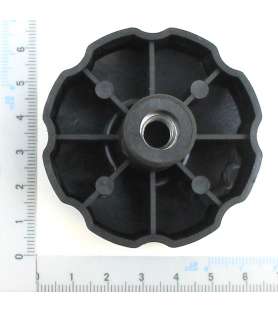
Discover our selection of spare parts, sanding sleeves and accessories for Holzmann OSS75A and OBS100A oscillating sanders.
These machines are designed for precise sanding operations on wooden workpieces, particularly curved edges, rounded profiles, internal cut-outs and shapes that are difficult to sand with a conventional sander.
The oscillating movement helps distribute abrasive wear over a larger surface area and contributes to consistent sanding results.
The Holzmann OSS75A is an oscillating spindle sander, while the Holzmann OBS100A combines oscillating spindle sanding with a belt sanding attachment.
This difference must be considered when choosing consumables and replacement components.
At Probois Machinoutils, we offer a selection of spare parts to help you maintain these machines, replace worn components and extend their service life.
Our range includes sanding sleeves, rubber sanding drums, timing belts, pulleys, switches and various mechanical components.
Compatibility must be checked individually for every product before ordering.
Spare Parts for the Holzmann OSS75A Oscillating Spindle Sander
The Holzmann OSS75A is an oscillating spindle sander designed for sanding curved shapes, rounded edges and workpieces with complex contours.
It uses cylindrical sanding sleeves fitted over suitable rubber drums.
The spindle combines a rotating movement with vertical oscillation, helping distribute abrasive wear over the height of the sanding sleeve.
Its main technical specifications are as follows:
Model: Holzmann OSS75A.
Power supply: 230 V / 50 Hz.
Motor power S1: 450 W.
No-load speed: 2000 rpm.
Oscillation rate: 58 oscillations per minute.
Oscillation stroke: 16 mm.
Spindle diameter: 12.7 mm.
Spindle height: 115 mm.
Sanding sleeve diameters: 15, 21, 28, 40, 53 and 78 mm.
Maximum sanding height: 98 mm.
Table dimensions: 320 x 300 mm.
Dust extraction connection diameter: 39 mm.
To maintain the performance of this sander, regularly inspect the sanding sleeves, rubber drums and components responsible for the rotating and oscillating movements.
A deformed drum or damaged abrasive can compromise sanding quality.
Spare Parts for the Holzmann OBS100A Oscillating Sander
The Holzmann OBS100A is a versatile oscillating sander that can be used with sanding drums and a belt sanding attachment.
It offers different options for sanding edges, curved profiles and certain straight surfaces.
Its main technical specifications are as follows:
Model: Holzmann OBS100A.
Power supply: 230 V / 50 Hz.
Motor power S1: 450 W.
No-load speed: 2000 rpm.
Oscillation rate: 58 oscillations per minute.
Oscillation stroke: 16 mm.
Spindle diameter: 12.7 mm.
Spindle height: 115 mm.
Sanding sleeve diameters: 15, 21, 28, 40 and 53 mm.
Maximum sanding height: 90 mm.
The OBS100A also features a sanding belt tensioning mechanism, belt tracking adjustment, a cast aluminium worktable and a dust extraction connection.
To keep the machine operating correctly, it is important to inspect the abrasives, sanding supports and various mechanical components.
Important: although both machines share certain technical characteristics, not all their accessories and spare parts are necessarily interchangeable.
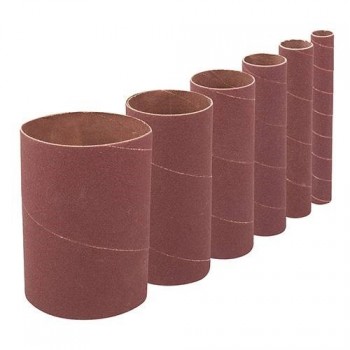
Sanding Sleeves for Holzmann Oscillating Sanders
Sanding sleeves are essential consumables for oscillating spindle sanders.
They are cylindrical abrasive sleeves designed to fit over rubber drums of the corresponding diameter.
They are particularly useful for sanding curved surfaces, rounded edges and internal profiles that are difficult to reach with conventional sanding equipment.
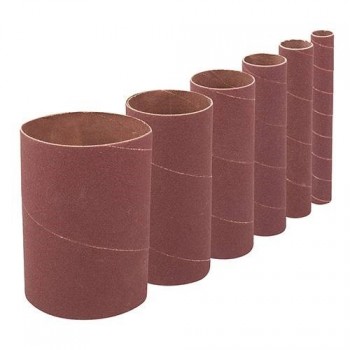
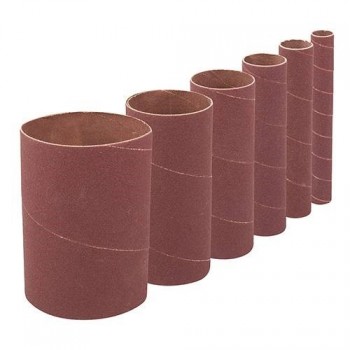
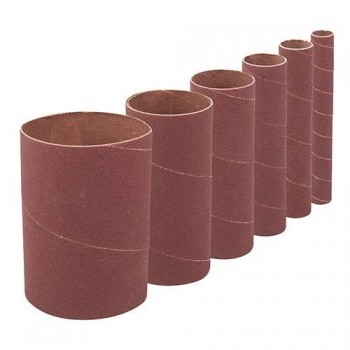
Our category includes sets of six sanding sleeves with a height of 114 mm, available in several diameters and grit sizes.
Available grit sizes include:
80 grit: suitable for relatively coarse sanding and initial shaping operations.
120 grit: designed for intermediate sanding and reducing marks left by coarser abrasives.
150 grit: helps refine wooden surfaces before the final preparation stages.
240 grit: suitable for applications requiring a finer sanding finish.
The choice of grit depends on the wood species, the condition of the workpiece and the desired result.
It is generally advisable to progress gradually through the different grit sizes to achieve an even surface.
Before ordering, always check the sleeve diameter, height and compatibility with your machine.
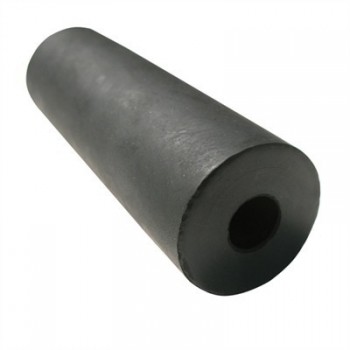
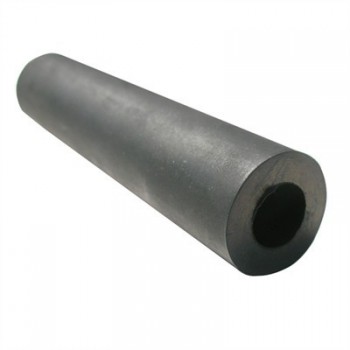
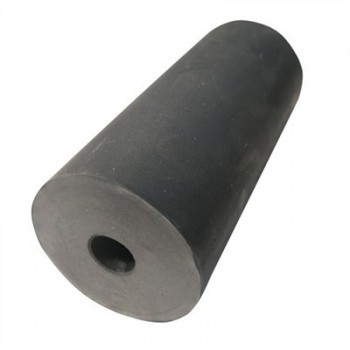
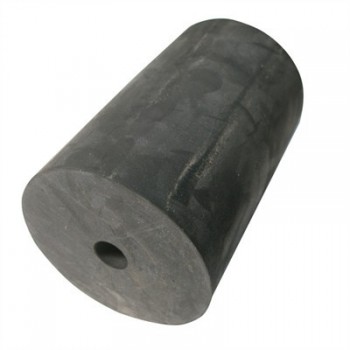
Rubber Sanding Drums for Oscillating Sanders
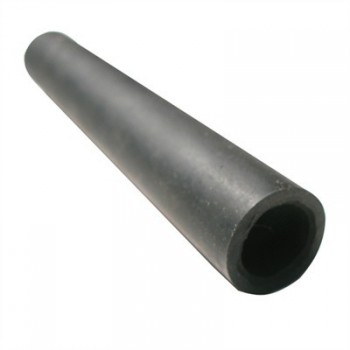
Rubber sanding drums support the sanding sleeves.
They help secure the abrasive to the sander spindle and must correspond to the diameter of the sleeve being used.
Our selection includes rubber drums in several diameters:
-
19 mm rubber sanding drum.
-
26 mm rubber sanding drum.
-
38 mm rubber sanding drum.
-
51 mm rubber sanding drum.
-
76 mm rubber sanding drum.
Each drum must be used with a suitable sanding sleeve.
A damaged or deformed rubber drum, or one that can no longer hold the abrasive securely, may need to be replaced.
Important: always check both the drum diameter and the sanding sleeve diameter. The dimensions specified for rubber drums do not necessarily correspond to the nominal outside diameter of the sanding sleeves.
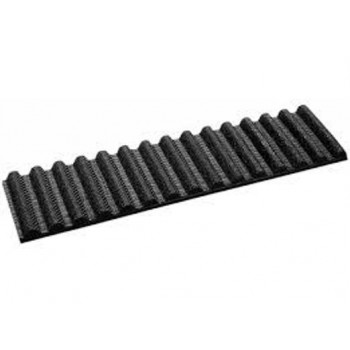
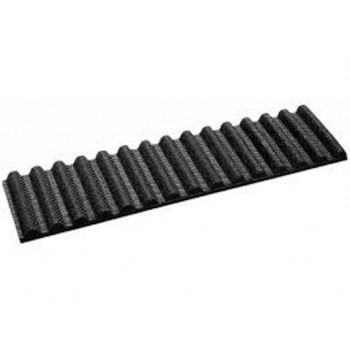
Timing Belts for Holzmann Oscillating Sanders
Timing belts transmit movement between different mechanical components of the sander.
When a belt becomes worn, loose or damaged, it may cause the mechanism to malfunction.
We offer two timing belt specifications in this category:
410 x 10 mm timing belt: 410 mm long and 10 mm wide.
410 x 6 mm timing belt: 410 mm long and 6 mm wide.
These belts have different widths and must not be considered interchangeable.
Before ordering, check the dimensions of the original belt, its tooth profile and the compatibility information provided on the product page.
A belt with damaged teeth, cracks or significant deformation must be replaced.
It is also important to inspect the pulleys and other transmission components to identify any potential cause of premature belt wear.
Pulleys and Drive Components for Oscillating Sanders
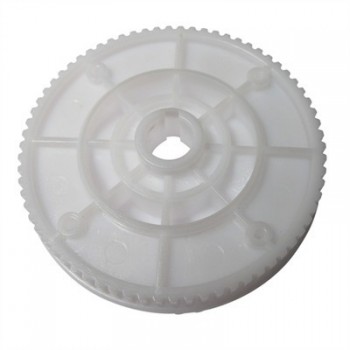
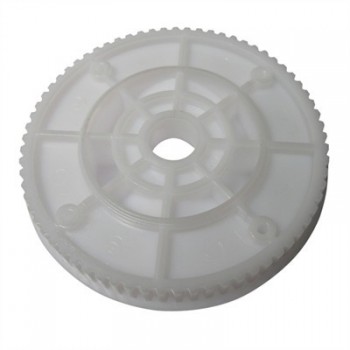
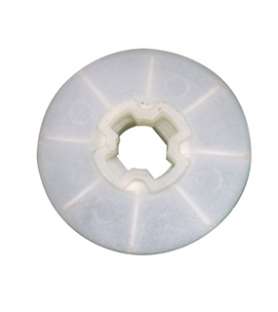
This category includes various pulleys used in the mechanisms of oscillating sanders.
Available components include:
These components help transmit movement and ensure the proper operation of the mechanism.
A cracked, deformed or excessively worn pulley can interfere with power transmission.
Before replacing a pulley, check its exact location, dimensions and position number on the machine's exploded parts diagram.
An upper pulley must not be replaced with a lower pulley unless their interchangeability has been explicitly confirmed.
When replacing a drive belt, it is also advisable to inspect the condition of the corresponding pulleys.
Switches, Motor Carbon Brushes and Electronic Circuit Boards
The correct operation of an oscillating sander also depends on its electrical components.
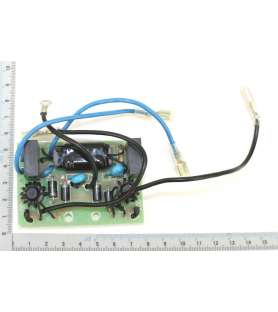
Our catalogue includes various replacement parts, including switches, motor carbon brushes and electronic circuit boards.
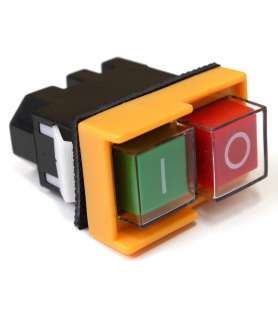
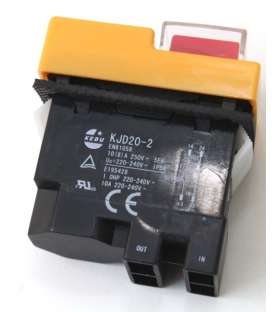
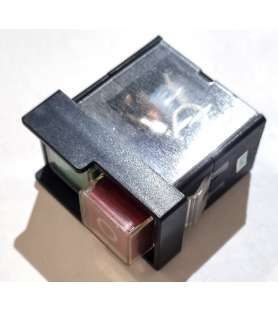
Switches: several references are available, including KJD20 and CK-1 models. Always check the exact reference, electrical specifications and connections before ordering.
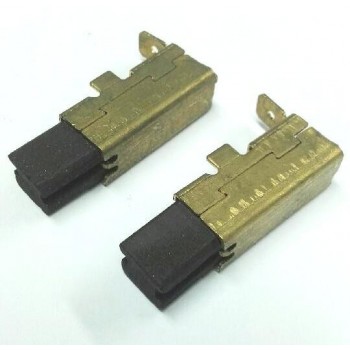
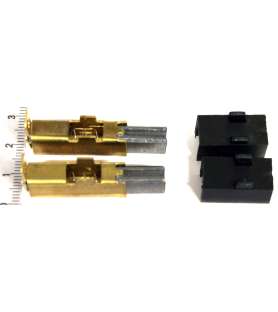
Motor carbon brushes: these components are involved in the operation of motors equipped with brushes. Wear may cause starting difficulties, irregular operation or motor failure.
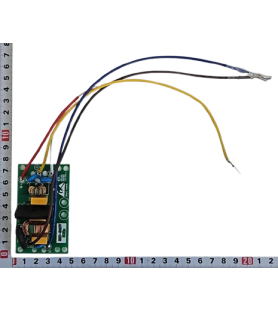
Electronic circuit boards: replacement circuit boards are also available, including references 3903401082 and 5903409011.
These two references must not be considered equivalent.
An electrical fault should be properly diagnosed before replacing a component.
Similar symptoms may have several causes, including a defective switch, motor, carbon brush, electronic circuit board or power supply.
All electrical work must be carried out with the machine disconnected from the power supply and by a suitably qualified person.
Table Inserts and Guiding Accessories
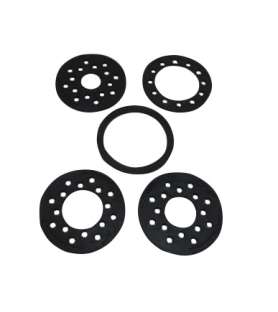
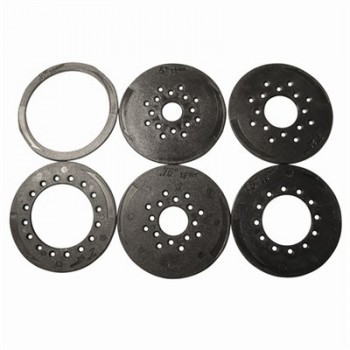
Table inserts allow the opening in the worktable to be adapted to the diameter of the sanding drum being used.
They help support the workpiece close to the sanding area.
Our selection includes table insert sets for oscillating sanders, available in sets of five or six pieces.
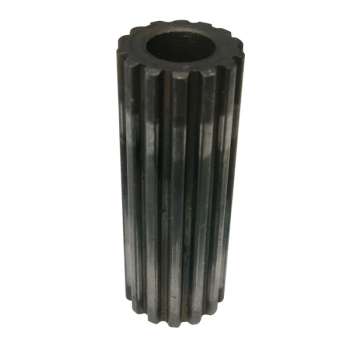
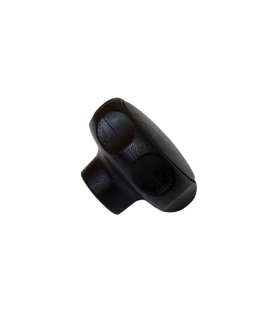
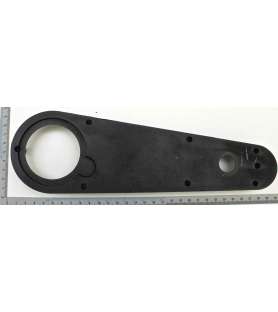
Other accessories include:
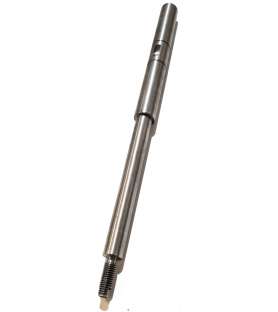
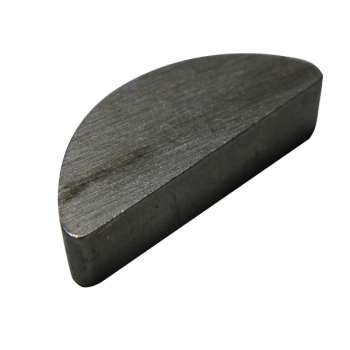
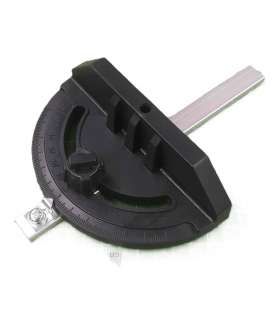
The shaft, key and mitre gauge offered in this category include references listed for the Holzmann OSS75A and OBS100A.
However, always check the compatibility information on the individual product page before ordering.
An unsuitable table insert may leave an excessive opening around the sanding drum and compromise proper workpiece support.
It is therefore important to select the insert corresponding to the sanding setup being used.
When Should You Replace Your Oscillating Sander's Spare Parts?
Several warning signs may indicate that a component needs to be inspected or replaced.
A worn sanding sleeve may lose its effectiveness, become clogged or develop tears.
A damaged rubber drum may no longer hold the sanding sleeve securely.
A defective timing belt may cause irregular operation of the mechanism.
A worn pulley may interfere with the transmission of movement.
Starting difficulties may also indicate an electrical problem requiring diagnosis.
Do not continue using a machine that exhibits unusual vibrations, abnormal noises or inadequate abrasive retention.
Stop the sander, disconnect it from the power supply and identify the cause before carrying out any work.
What Is the Difference Between the Holzmann OSS75A and OBS100A?
The main difference between the two models concerns their sanding capabilities.
Holzmann OSS75A: an oscillating spindle sander particularly suitable for sanding curved edges, rounded profiles and internal shapes.
Holzmann OBS100A: an oscillating sander combining a spindle sanding system with a belt sanding attachment.
Both machines feature a 450 W motor, a no-load speed of 2000 rpm and an oscillating movement of 58 oscillations per minute.
However, they do not have exactly the same equipment or sanding capabilities.
You should therefore never assume that all their consumables, table inserts and mechanical components are identical.
Compatibility must be verified for each individual reference.
How to Identify the Correct Holzmann Spare Part
Before ordering a spare part, start by checking the exact model reference on your sander's identification plate.
Verify whether it is a Holzmann OSS75A or OBS100A.
Then consult the machine's exploded parts diagram to identify the position number of the required component.
For a timing belt, check its length, width and tooth profile.
For a rubber sanding drum, verify its diameter and dimensions.
For a sanding sleeve, check its diameter, height and grit.
For an electrical component, always record the references and specifications of the original part.
Two visually similar components may have different dimensions or technical characteristics.
We therefore recommend that you never select a spare part based solely on its photograph.
IMPORTANT: BEFORE PURCHASING, always check that your machine appears in the list of compatible machines provided on the spare part's product page. Where necessary, also verify the month and year of manufacture and your machine's serial number.
Maintain and Repair Your Oscillating Sander Instead of Replacing It
An oscillating sander experiencing reduced performance or a malfunction does not necessarily need to be replaced.
When the fault has been correctly identified and the appropriate replacement component is available, a repair may help extend the machine's service life.
Replacing a worn sanding sleeve, damaged rubber drum or defective timing belt may be sufficient to restore normal operation, depending on the problem encountered.
Regular maintenance also helps prevent certain breakdowns.
Clean accessible surfaces, remove accumulated dust in accordance with the manufacturer's instructions and periodically inspect the condition of the abrasives.
Before carrying out any maintenance, disconnect the machine from the power supply and wait until all moving parts have come to a complete stop.
Electrical repairs and complex mechanical work should only be carried out by suitably qualified individuals.
Find Your Holzmann OSS75A and OBS100A Spare Parts at Probois Machinoutils
At Probois Machinoutils, we are continuously expanding our catalogue of spare parts and consumables for Holzmann woodworking machines.
This category includes sanding sleeves, rubber sanding drums, timing belts, pulleys, switches, motor carbon brushes, electronic circuit boards and table accessories for oscillating sanders.
If you cannot find the component you need, please provide the exact model of your machine, its serial number and, if possible, the position number shown on its exploded parts diagram.
A photograph of the original component may also help us identify the correct replacement.
Whether you need to replace an abrasive, maintain the oscillating mechanism or repair your sander, explore our selection of spare parts for Holzmann OSS75A and OBS100A and carefully check their compatibility before placing your order.