
Sorry for the inconvenience.
Search again what you are looking for


Search again what you are looking for
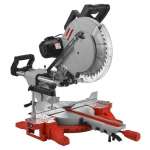
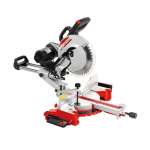
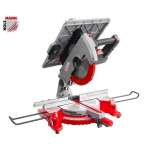
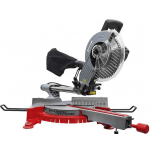
Holzmann sliding mitre saws are designed for accurate crosscuts, mitre cuts and bevel cuts in wood and wood-based materials. Thanks to their sliding mechanism, they provide a greater cutting capacity than conventional non-sliding mitre saws.
The Holzmann range includes various mitre saws and sliding mitre saws from the KAP series, with features that may include sliding rails, a laser cutting guide, rotating table and tilting saw head. The KAP305JL, for example, features a sliding system, belt drive and a 305 mm saw blade.
This category contains spare parts for Holzmann sliding mitre saws, including switches, carbon brushes, drive belts, motors, bearings, blade shafts, blade guards, handles, springs, fences, table extensions, locking mechanisms, lasers, dust bags and many other components required to maintain and repair your machine.
Holzmann mitre saws are mainly found in the KAP range.
Depending on the model and production generation, specifications may vary, including blade diameter, motor power, transmission system, cutting capacity, sliding mechanism, head tilt and electrical equipment.
It is therefore important to select spare parts according to the exact Holzmann saw model, rather than relying only on the appearance or general dimensions of the part.
The Holzmann KAP305JL is a sliding mitre saw equipped with a 305 mm saw blade and a sliding cutting head.
Its mechanism allows the cutting head to travel across the workpiece, providing a considerably greater crosscut capacity. The machine also features a tilting head, rotating table, laser cutting guide and depth stop for operations such as groove cutting.
Many mechanical and electrical components can be replaced individually when available as spare parts.
The circular saw blade has a direct influence on cutting quality.
A blunt, damaged or unsuitable blade can cause:
difficult cutting;
splintering of the wood;
burn marks;
vibrations;
excessive load on the motor;
irregular cutting quality.
The blade diameter, bore, thickness and number of teeth must be suitable for the machine.
A blade with a higher tooth count is generally preferred for finer cuts, while a lower tooth count may be better suited to faster cutting applications.
The blade shaft transfers the drive to the saw blade.
It must rotate freely without excessive play or runout.
A damaged shaft or incorrectly mounted blade can cause vibration, noise and reduced cutting accuracy.
If a problem occurs, the bearings, blade flanges and other associated components should also be inspected before replacing the shaft.
The blade flanges ensure that the saw blade is correctly secured to the shaft.
A bent, damaged or incorrectly installed flange can prevent the blade from running properly.
When replacing these components, it is essential to use parts specifically designed for the corresponding saw model.
The correct mounting position and tightening procedure must also be respected.
Bearings allow shafts and other moving components to operate smoothly and accurately.
A worn bearing can cause:
unusual noise;
vibrations;
mechanical play;
overheating;
irregular rotation.
When replacing a bearing, the condition of the corresponding shaft and bearing housing should also be checked for possible damage.
Some Holzmann mitre saws use a belt drive system, including models such as the KAP305JL.
The drive belt transfers power from the motor to the blade drive mechanism while helping to provide smooth operation.
Over time, a belt can become worn, stretched, cracked or begin to slip.
A saw that appears to have lost power may therefore simply have a worn or insufficiently tensioned drive belt rather than a faulty motor.
The motor provides the power required to rotate the saw blade.
If the saw loses power, slows down during cutting or no longer starts, the motor is not necessarily defective.
Before replacing it, check:
power supply;
extension lead;
switch;
carbon brushes where fitted;
drive system;
free rotation of the blade;
bearings;
condition of the saw blade;
safety devices.
A severely blunt blade can significantly increase the load placed on the motor.
On motors equipped with them, carbon brushes are normal wear parts.
Their length gradually decreases with use. Excessively worn carbon brushes can cause irregular motor operation, starting problems or complete motor failure.
When replacement is required, carbon brushes should generally be replaced as a pair using parts suitable for the exact motor fitted to the machine.
The switch is frequently operated because it controls the motor each time the machine is used.
A faulty switch may prevent the motor from starting or cause intermittent operation.
However, a saw that does not start does not necessarily have a defective switch.
The power supply, cable, safety devices, electrical connections and other electrical components should also be inspected before replacing the switch.
The blade guard is an essential safety component of a mitre saw.
On many models, the movable section of the guard automatically retracts as the cutting head is lowered towards the workpiece and returns to cover the blade when the head is raised.
A cracked, broken or incorrectly returning blade guard should be inspected before the machine is used again.
Springs, pivots, screws and other parts associated with the guard mechanism may also be responsible for the problem.
Return springs are used in several mechanisms on the machine.
They may assist with the return of the cutting head or the operation of the blade guard.
A broken, weakened or incorrectly positioned spring can prevent a mechanism from returning to its normal position.
The complete assembly should therefore be inspected before ordering a replacement spring.
Handles, knobs and locking levers are used to adjust and secure various parts of the mitre saw.
They may be used for mitre angle adjustment, head tilt, sliding mechanism locking or securing various accessories.
These parts are frequently handled and may eventually break, become distorted or lose their ability to lock correctly.
Depending on the design of the machine, the handle itself or the complete mechanism may be available as a spare part.
The main advantage of a sliding mitre saw is its sliding mechanism, which allows the cutting head to move across wider workpieces.
This mechanism may include guide rails, bushes, bearings, stops, locking devices and various fixing components.
The sliding action should remain smooth, accurate and free from excessive play.
If the cutting head becomes difficult to move, the guide system should be cleaned and inspected before excessive force is applied.
The rotating table allows the mitre angle to be adjusted for accurate cuts to the left or right.
The mechanism may include a locking handle, angle stops, graduated scale, central pivot and various fixing components.
A table that no longer locks correctly or develops excessive play can significantly reduce cutting accuracy.
It is therefore important to identify the actual defective component before replacing the complete mechanism.
The rear fence provides a reference surface for correctly positioning the workpiece during cutting.
It must be correctly aligned to maintain accurate 90° cuts and mitre cuts.
A bent, incorrectly adjusted or loose fence can cause a difference between the selected angle and the actual cutting angle.
After working on the table or fence, the saw's squareness should be checked.
Table extensions provide additional support when cutting long workpieces.
They may include rods, supports, locking screws, stops and other fixing components.
A damaged or incorrectly locked extension can make long workpieces less stable during cutting.
Always check compatibility with the exact Holzmann saw model before ordering a replacement.
Some Holzmann mitre saws are equipped with a laser guide to indicate the cutting line.
If the laser stops working, the laser module itself is not necessarily defective.
Depending on the machine design, the power supply, electrical connections, switch or adjustment system may also need to be checked.
After repair or adjustment, the laser position should be checked against the actual cutting path of the blade.
Mitre saws produce a considerable amount of sawdust, particularly when making wide crosscuts.
The dust extraction outlet, extraction duct and dust bag help collect part of this waste.
Poor dust extraction can be caused by a blockage, full dust bag, damaged outlet or incorrect connection to a dust extractor.
Extraction passages should therefore be inspected and cleaned regularly.
A loss of power during cutting does not necessarily mean that the motor needs replacing.
Several possible causes should be checked:
blunt or unsuitable saw blade;
excessive cutting speed or depth;
worn drive belt on applicable models;
electrical supply problem;
unsuitable extension lead;
damaged bearing;
abnormal mechanical resistance;
worn carbon brushes where fitted.
A systematic inspection helps identify the actual cause before replacing an expensive component.
A mitre saw that no longer produces accurate cuts may simply require adjustment rather than replacement parts.
Check the fence alignment, rotating table setting, head tilt adjustment, blade mounting and any play in the sliding mechanism.
A damaged blade or a blade that does not run true can also affect cutting accuracy.
After major adjustments or repairs, the 90° and 45° settings should be checked again.
Excessive play in the sliding mechanism can directly affect cutting accuracy.
Depending on the model, the problem may originate from the guide rails, bearings, bushes, fixings or adjustment components of the sliding mechanism.
The exact source of the play should be identified rather than replacing parts unnecessarily.
The sliding mechanism should also be kept clean to ensure smooth and accurate movement.
The exploded diagram for your Holzmann mitre saw is one of the most reliable ways to identify the correct spare part.
The different components are generally identified by item numbers, making it easier to locate the corresponding replacement part.
It is therefore advisable to identify the required component using its item number and then check its compatibility with your exact saw model.
This is particularly important because two parts that look almost identical may have different dimensions or specifications.
Two Holzmann mitre saws that look very similar may use different spare parts.
Technical changes can also be introduced during the production life of the same model. Switches, motors, blade guards, belts, handles and other components may therefore differ depending on the manufacturing period.
Before ordering, check the exact model designation of your Holzmann saw and, where required, its manufacturing date and serial number.
IMPORTANT: BEFORE PURCHASING, always check the list of compatible machines shown on the product page and, where required, the month and year of manufacture or the serial number of your machine.
Regular maintenance helps preserve the accuracy and extend the service life of your machine.
Regularly remove sawdust from around the table, blade guard and sliding mechanism. Check the condition of the blade, power cable, locking devices and safety systems.
The sliding mechanism should remain clean and operate smoothly without excessive play or tight spots.
The dust extraction system should also be maintained to prevent excessive sawdust accumulation around the machine's mechanisms.
Before carrying out any cleaning, adjustment, blade replacement, maintenance or repair work, always disconnect the Holzmann mitre saw from the power supply.
A faulty switch, worn drive belt, noisy bearing, broken handle, damaged blade guard or worn sliding mechanism does not necessarily mean that the complete machine needs to be replaced.
Our selection of spare parts for Holzmann sliding mitre saws allows many mechanical and electrical components to be replaced individually, helping to maintain your equipment and extend its service life.
Before ordering, accurately identify the saw model, the item number of the required part and, where necessary, the manufacturing date and serial number.
Choosing the correct spare part for your Holzmann sliding mitre saw allows you to carry out an appropriate repair and restore the accuracy and performance of your machine.