

PS50 Precision Rotating Base Vise for Pillar Drill
159,99 €
Tax included


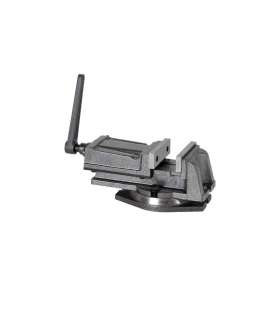
Holzmann I100 quick-release vise with rotating base
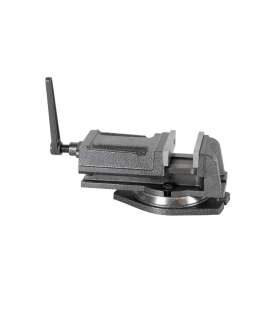
Holzmann I125 quick-release vise with rotating base
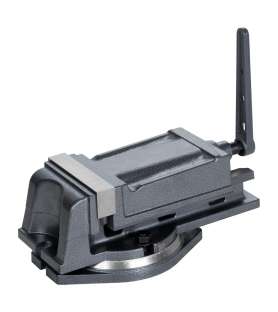
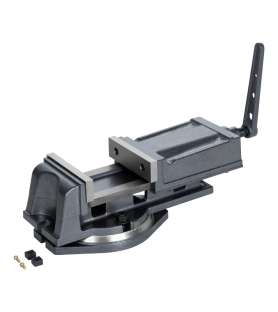
Holzmann I160 quick-release vise with rotating base


Vise for metal milling machine or metal drilling-milling machine with extra-large capacities
A swivel base machine vice is a practical accessory for securely holding workpieces while allowing their orientation to be adjusted on a machine tool table. Thanks to its rotating base, it makes it possible to change the position of a component without necessarily removing and reinstalling the entire clamping device.
Widely used in mechanical workshops, maintenance departments, metal fabrication workshops and engineering environments, a swivel machine vice provides a convenient solution for operations requiring accurate positioning and regular changes of workpiece orientation.
At Probois Machinoutils, we offer a selection of swivel base vices for metalworking machines, including quick-release models and precision machine vices. Our range is designed to meet different workshop requirements, whether you are a hobbyist, an experienced craftsperson or a professional user.
A swivel base machine vice is a workholding device equipped with a rotating base that allows the body of the vice to pivot relative to its mounting surface. This feature makes it easier to position a workpiece at the required angle, within the adjustment range provided by the design of the vice.
Unlike a fixed machine vice, whose orientation is determined by its mounting position, a rotating base vice allows the direction of the jaws to be adjusted without necessarily moving the mounting bolts on the machine table.
The swivel base is generally equipped with a locking mechanism that secures the vice once the desired orientation has been selected.
Some models also feature angular graduations that help users identify and reproduce approximate positions. These markings are useful for everyday adjustments but should not replace appropriate measuring instruments when high angular accuracy is required.
It is important to distinguish a swivel base vice from a tilting vice. A swivel base primarily allows rotation in a plane parallel to the machine table, whereas a tilting vice includes an additional mechanism for changing the inclination of the workpiece.
Not all swivel vices offer a tilting function, so the available adjustment movements should always be checked in the product specifications.
The main advantage of a swivel base vice is its ability to simplify positioning adjustments and changes in workpiece orientation.
During certain machining operations, it may be necessary to position a component at different angles. With a fixed vice, this can involve loosening the mounting bolts, repositioning the entire assembly and carrying out a new alignment procedure.
A swivel vice simplifies these adjustments through its rotating mechanism.
Its main advantages include:
However, the swivel base must always be securely locked before machining begins. An improperly secured vice may rotate under cutting forces, affecting both machining accuracy and operator safety.
Some swivel base machine vices feature a quick-release mechanism designed to simplify the opening and closing of the jaws.
This system is particularly useful when the operator needs to clamp several workpieces of different sizes in succession.
On a conventional machine vice, the moving jaw is generally adjusted by turning the clamping screw through the required distance. A quick-release system can, depending on its design, speed up part of this adjustment process.
It may therefore reduce the time spent preparing and positioning components, especially in workshops where frequent workpiece changes are necessary.
Holzmann quick-release machine vices, including suitable models from the I series, are intended to meet this requirement for practical and efficient clamping.
However, the exact operation of the quick-release mechanism may vary between models, so it is important to check the specifications of each product.
Final clamping must always be carried out in accordance with the manufacturer's instructions to ensure that the workpiece is held securely.
A quick-release mechanism is designed to make adjustments more convenient. It should not be considered a substitute for adequate clamping force or correct machine operation.
A precision swivel base vice is intended for users who need a workholding accessory suitable for operations requiring careful workpiece positioning.
Depending on its construction, a precision vice may feature machined guiding surfaces, suitable jaws or a mechanism designed to provide smooth and consistent movement of the sliding jaw.
The swivel base adds an additional positioning adjustment that can be useful for certain workshop operations.
Within our selection, suitable models from the PS series can meet the needs of users looking for a compact precision swivel vice for their workshop equipment.
It is nevertheless essential to consult the technical specifications of each model to determine its clamping capacity, dimensions and applications approved by the manufacturer.
The word "precision" in a product description does not automatically mean that the vice is suitable for every high-accuracy machining operation.
When strict tolerances are required, reference surfaces and workpiece alignment should be checked using appropriate measuring instruments.
Choosing a vice with suitable guiding surfaces and a reliable clamping mechanism helps create consistent working conditions, but correct installation and adjustment remain essential.
The jaw width of a swivel base vice is an important factor when selecting a model suitable for the dimensions of your workpieces.
A compact vice is generally useful for small mechanical components, while a larger model may be more appropriate for workpieces requiring a wider clamping surface.
Our range includes different sizes of swivel base machine vices, with models offering jaw widths of approximately 100, 125 or 160 mm, depending on the product reference.
However, jaw width should not be confused with maximum jaw opening.
Jaw width refers to the transverse dimension of the clamping surfaces, whereas the maximum jaw opening indicates the available distance between the jaws when fully opened.
To choose the most suitable vice, you should also consider:
A swivel base may increase both the overall height and the footprint of the vice. These dimensions must be considered when the available clearance between the machine table and the cutting tool is limited.
It is also important to ensure that the vice can rotate through the required angle without coming into contact with other parts of the machine.
A swivel base vice for metalworking can be used with different types of equipment, provided that its design and technical characteristics are suitable for the intended operation.
Depending on the model, it may be installed on certain pillar drills, drilling and milling machines or other machine tools equipped with a compatible table.
On a pillar drill, a suitable swivel vice can make it easier to hold and orient components during drilling, counterboring and countersinking operations.
On a drilling and milling machine, an appropriately designed vice may also be used to position components for machining operations compatible with its mechanical strength.
However, not every swivel base vice is designed to withstand the lateral cutting forces generated during milling.
Before use, it is essential to check the manufacturer's recommendations concerning permitted applications, acceptable loads and mounting requirements.
For milling operations requiring high rigidity, a dedicated milling machine vice may be a more suitable solution.
Choosing a vice specifically designed for the intended machine and machining process helps improve stability and reduce the risk of inappropriate equipment use.
Correctly mounting a swivel base vice on a machine table is essential for maintaining the stability of the entire assembly.
Before installation, clean the machine table and the contact surface beneath the swivel base. Metal chips and other debris can prevent proper seating and affect alignment.
The vice should then be secured using mounting components suitable for the slots or fixing points of the machine table.
Once the assembly is properly installed, the orientation of the vice can be adjusted by releasing the locking mechanism provided for this purpose.
After positioning the jaws at the desired angle, the swivel base locking mechanism must be securely tightened.
Before starting the machining operation, check that:
For operations requiring accurate angular positioning, use a suitable measuring instrument rather than relying solely on the graduations marked on the swivel base.
All adjustments must be carried out with the machine completely stopped.
Never attempt to rotate, reposition or restrain a vice while the machine is operating.
Several types of machine vices for metalworking are available, each designed to meet particular workshop requirements.
A fixed machine vice has an orientation determined by its mounting position. It can provide a straightforward and rigid solution when angular adjustments are rarely required.
A swivel base machine vice allows the body of the vice to rotate around an axis that is generally perpendicular to the machine table.
A tilting machine vice incorporates a mechanism that allows the angle of the jaws or vice body to be changed relative to the horizontal plane.
Some specialised models combine several adjustment movements, but this feature should not be assumed for all swivel base vices.
The most suitable design depends on the machining operations performed, the required angles, the desired rigidity and the characteristics of the machine.
For repetitive operations requiring a constant orientation, a fixed vice may sometimes be simpler to use. Conversely, when frequent positioning changes are necessary, a swivel base offers greater flexibility.
It is also important to consider the additional height and complexity of adjustable mechanisms when selecting a vice for precision machining.
A swivel base machine vice requires regular maintenance to preserve the smooth operation of its clamping mechanism and rotating base.
After each use, remove metal chips from the jaws, sliding surfaces, clamping screw and accessible areas of the swivel base.
Sharp metal chips should be removed with a suitable brush rather than bare hands. Cleaning must always be performed with the machine switched off.
Depending on the manufacturer's recommendations, light lubrication of moving components may help reduce wear and maintain smooth operation.
Regularly inspect the swivel base locking mechanism, the condition of the jaws and the presence of any excessive play.
Pay particular attention to the surfaces that allow the vice body to rotate. Dirt or accumulated chips in these areas may interfere with adjustment or prevent the locking mechanism from functioning correctly.
A vice showing cracks, significant deformation or a defective locking system should not be used until it has been properly inspected and repaired or replaced.
Regular cleaning, appropriate lubrication and storage in suitable conditions help extend the service life of this workshop accessory.
Specialising in woodworking and metalworking machines, Probois Machinoutils offers a selection of swivel base machine vices designed to meet different workshop requirements.
Our range includes quick-release models and precision vices, allowing users to choose a clamping accessory suited to their workpiece dimensions and intended operations.
We supply equipment from brands including Holzmann, together with a wide range of accessories for pillar drills, drilling and milling machines and other metalworking equipment.
To complete your workshop setup, explore our drilling vices, clamping kits, drill chucks and metal cutting tools.
Whether you want to improve workpiece positioning, simplify changes of orientation or equip a new machine, choosing a swivel base vice compatible with your equipment helps make clamping operations more convenient, consistent and secure.