Welding Consumables: Essential Supplies for Your Welding Projects
To produce strong, consistent and precise metal joints, it is essential to use welding consumables suited to the welding process and the materials being joined. Whether you use a MIG/MAG, TIG or MMA stick welding machine, choosing the right filler metal and replacement wear parts plays an important role in weld quality and the proper operation of your equipment.
At Probois Machinoutils, discover a selection of consumables for welding machines designed for metalworking workshops, maintenance professionals, craftsmen and DIY users carrying out metal fabrication or repair work. This category covers the supplies required for welding operations, including welding wires, electrodes, filler rods and welding torch consumables, depending on the available products.
Using suitable welding supplies and consumables helps maintain good working conditions, reduce certain welding defects and preserve equipment performance. However, each welding process has its own requirements regarding consumables, machine settings and workpiece preparation.
What Are the Main Types of Welding Consumables?
Welding consumables include various products that are consumed, worn or replaced during welding operations. They may provide filler metal for the joint, contribute to the formation of the electric arc or help maintain the correct operation of welding torches and equipment.
Common products include MIG/MAG welding wire spools, MMA stick welding electrodes, TIG filler rods, contact tips, gas nozzles and various replacement wear parts.
These components must be selected according to the welding machine, the welding process, the type of metal, material thickness and working conditions. Unsuitable consumables can cause an unstable arc, irregular wire feeding or defects in the weld bead.
MIG/MAG Welding Wire: Consistent Filler Metal Feeding
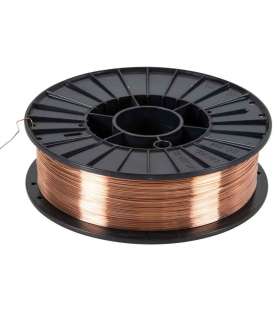
MIG/MAG welding wire is an essential consumable for semi-automatic welding machines. It is generally supplied on a spool and mechanically fed through the welding torch to the weld area.
The wire acts as both a consumable electrode and filler metal. As it melts, it forms the weld bead that joins the metal workpieces together.
Different types of MIG/MAG welding wire are available depending on the materials being welded and the intended application. These include wires for unalloyed steels, certain stainless steel welding wires and wires suitable for aluminium welding.
Wire diameter must be selected according to material thickness, welding current, machine specifications and the manufacturer's recommendations. Common diameters include 0.6 mm, 0.8 mm, 1.0 mm and 1.2 mm, depending on the application.
Before purchasing a welding wire spool, it is also important to check its outside diameter, weight, mounting system and compatibility with the welding machine's wire feeder.
Flux-Cored Welding Wire: A Solution for Specific Applications
Flux-cored welding wire is another type of consumable used with compatible welding equipment. Unlike solid welding wire, it contains a filling material inside the wire.
Some flux-cored wires are designed to operate with an external shielding gas, while others, known as self-shielded flux-cored wires, can be used without an external gas supply under the conditions specified by the manufacturer.
Gasless welding wire is often considered for certain repair, maintenance and metal fabrication operations. However, it is essential to check that the welding machine supports this type of wire and to follow the recommended polarity, settings and permitted applications.
The choice of flux-cored wire depends on the material being welded, workpiece thickness and the mechanical properties required. Not all flux-cored wires are suitable for the same applications.
MMA Welding Electrodes: Consumables for Stick Welding
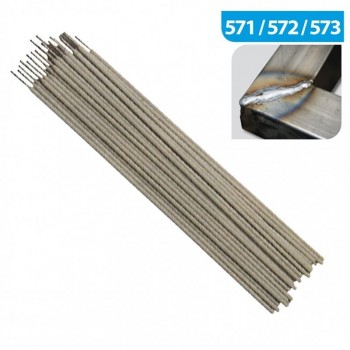
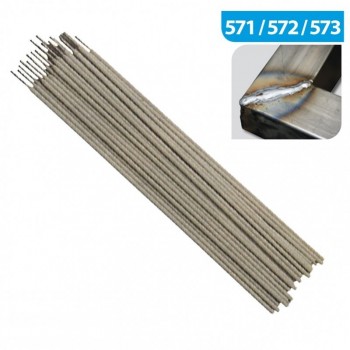
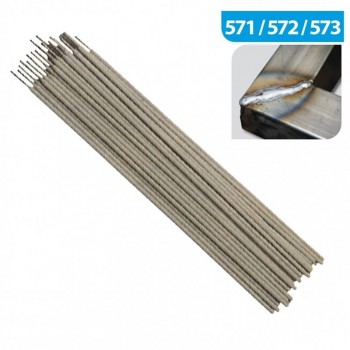
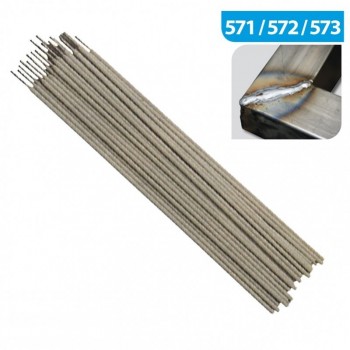
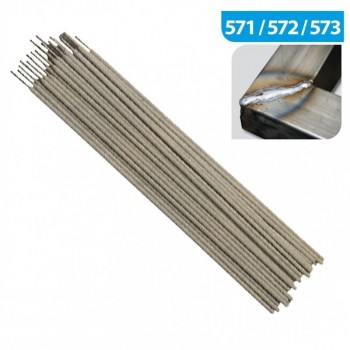
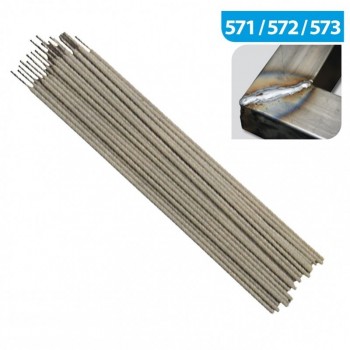
An MMA welding electrode, also known as a stick welding rod or covered electrode, is used with welding machines operating according to the manual metal arc welding process.
It consists of a metal core surrounded by a flux coating whose composition varies according to the electrode type. During welding, the metal core melts to provide filler material, while the coating contributes to protecting the molten weld pool and forming slag.
Different types of stick welding electrodes are available, including rutile, basic and cellulosic electrodes. Each type has specific characteristics relating to arc striking, penetration, welding positions and operating conditions.
Electrode diameter must be suited to the thickness of the workpieces and the welding current available. Diameters such as 2.0 mm, 2.5 mm and 3.2 mm are commonly used for general metalworking applications.
It is also important to follow the manufacturer's storage instructions, as certain welding electrodes are particularly sensitive to moisture.
TIG Filler Rods: Filler Metal for Precision Welding
A TIG filler rod is used to provide additional metal during welding operations carried out with a TIG torch and a non-consumable tungsten electrode.
Unlike MIG/MAG welding, where wire is generally fed automatically, the TIG filler rod is manually introduced into the molten weld pool when additional filler metal is required.
TIG welding rods are available in different compositions suitable for materials such as steel, stainless steel and aluminium. The correct choice depends on the grade of the base metal, the required properties of the welded joint and the applicable recommendations.
Rod diameter should be selected according to workpiece thickness, welding current and the welding technique being used.
To achieve consistent welds, it is important to use clean, correctly stored filler rods that are compatible with the materials being joined.
TIG Tungsten Electrodes: An Essential Torch Component
A TIG tungsten electrode plays a central role in creating and maintaining the electric arc. Unlike consumable electrodes used in other welding processes, it is not intended to provide filler metal.
Different types of tungsten electrodes for TIG welding are available according to their composition and intended applications. Their selection depends on factors such as the welding current, the type of metal and the specifications of the welding machine.
Electrode diameter and tip preparation influence arc stability and welding precision. A contaminated, damaged or incorrectly prepared electrode can cause arc-starting difficulties and inconsistent welding results.
Electrode replacement and preparation must follow the manufacturer's recommendations, with appropriate precautions to prevent inhalation of dust during grinding.
MIG/MAG Welding Nozzles: Directing the Shielding Gas
A MIG/MAG welding nozzle is one of the consumables and wear parts frequently replaced on welding torches. It directs the shielding gas around the electric arc and molten weld pool.
A nozzle contaminated by metal spatter can interfere with gas flow and contribute to welding defects.
It is therefore recommended to regularly inspect MIG/MAG torch nozzles and clean or replace them whenever their condition requires it.
Nozzle dimensions, shapes and attachment systems vary according to the torch model. Before ordering, it is essential to check compatibility with the equipment being used.
MIG/MAG Contact Tips: Reliable Electrical Contact with Welding Wire
A MIG/MAG welding contact tip transfers electrical current to the welding wire as it passes through the torch.
This component is subject to wear and high temperatures. Over time, its internal bore may deteriorate, potentially causing irregular current transfer and affecting weld quality.
The welding contact tip must be selected according to the wire diameter and welding torch model. Thread sizes, lengths and shapes are not universal.
Regular inspection of this component helps maintain correct welding machine operation and consistent wire feeding.
TIG Torch Consumables: Ceramic Nozzles, Collets and Replacement Parts
TIG welding torches also require various welding consumables to maintain their performance.
Common components include TIG ceramic nozzles, electrode collets, collet bodies, gas diffusers and torch back caps.
The ceramic nozzle helps direct the shielding gas around the tungsten electrode and weld pool. The electrode collet holds the tungsten electrode securely inside the torch.
Depending on the equipment configuration, certain accessories can also help improve shielding gas distribution.
When selecting TIG torch replacement consumables, it is important to check the torch model, tungsten electrode diameter and the dimensions of the required accessories.
How to Choose the Right Welding Consumables
Choosing suitable welding consumables and accessories depends on several technical factors. The first step is to identify the welding process being used: MIG/MAG, TIG, MMA or another process supported by the equipment.
The type of metal being welded must then be considered. Consumables intended for mild steel, stainless steel and aluminium are not necessarily interchangeable.
Workpiece thickness, welding position, operating current and the required properties of the welded joint should also be taken into account.
For wear parts such as nozzles, contact tips and torch collets, mechanical compatibility with the equipment is particularly important.
Before purchasing consumables for your welding machine, consult the product specifications and the recommendations provided by the equipment manufacturer.
When Should Welding Consumables Be Replaced?
Welding consumables should be inspected regularly, as their condition can influence arc stability, weld pool protection and weld bead quality.
A heavily contaminated gas nozzle, worn contact tip, damaged tungsten electrode or deteriorated torch component can cause difficulties during welding.
Warning signs may include difficult arc starting, an unstable arc, inconsistent wire feeding, unusual spatter or visible deterioration of a component.
These symptoms may have several possible causes and do not automatically indicate a defective consumable. However, they justify checking the equipment and its settings.
Regular torch maintenance and timely replacement of worn components help preserve welding machine performance and reduce interruptions during work.
How to Store Welding Wire, Electrodes and Filler Rods
Proper storage of welding wires and electrodes plays an important role in maintaining their characteristics.
Consumables should generally be stored in a clean, dry environment, protected from moisture, dust and contamination that could affect welding operations.
Welding wire spools should be protected against corrosion and deformation. Filler rods should be stored in conditions that preserve their cleanliness and physical integrity.
Some covered electrodes require specific storage conditions. The manufacturer's instructions regarding storage, possible drying procedures and operating conditions must be followed.
Proper organisation of workshop welding consumables also makes it easier to identify the correct references and avoid selection errors.
Welding Consumables for Professionals and DIY Users
Welding consumables for workshops are intended for metal fabrication professionals, craftsmen, maintenance companies and DIY users equipped with a welding machine.
For occasional metal repair work, it is important to select consumables that are compatible with the welding machine and suitable for the materials being joined.
In professional environments, reliable availability, consistent product characteristics and access to replacement wear parts are also important considerations.
Whether you are assembling metal structures, carrying out repairs or manufacturing components, correctly selected quality welding consumables contribute to consistent welding results.
Buy Your Welding Consumables at Probois Machinoutils
Specialising in woodworking and metalworking machinery, Probois Machinoutils helps you equip your workshop with a selection of machines, accessories and welding consumables.
Depending on the products available in our catalogue, discover supplies for MIG/MAG, TIG and MMA welding processes, as well as various replacement wear parts for compatible welding torches and machines.
We also offer complementary equipment for metalworking, including welding machines, plasma cutters, welding tables, welding carts and welding fume extraction solutions.
Before ordering, take the time to check the diameter, material composition, dimensions and compatibility of each consumable with your equipment.
Our team is available to provide information about product specifications and help you identify the correct references for your welding equipment.
Explore our selection of welding consumables at Probois Machinoutils and equip your workshop with the supplies needed for welding, metal fabrication and repair work.