Spare Parts for Bernardo KDH1100 and KDM1000 Wood Lathes
The Bernardo KDH1100 and KDM1000 wood lathes are woodworking machines designed for turning wooden workpieces and producing a wide range of cylindrical and decorative shapes. They can be used to make furniture legs, balusters, handles, decorative elements and many other turned wood components.
Like all woodturning machines, these lathes contain mechanical components subjected to repeated loads during operation. The drive system, which transfers power from the motor to the spindle, plays an essential role in maintaining smooth rotation and consistent machining performance.
Over time, certain components may show signs of wear, require adjustment or need replacement.
At Probois Machinoutils, we offer a category dedicated to spare parts for Bernardo KDH1100 and KDM1000 wood lathes, helping users identify replacement components and maintain their woodworking equipment.
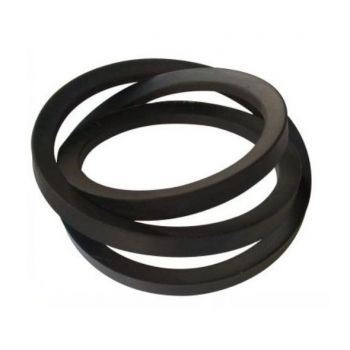
Our catalogue currently includes a 625 mm V-belt, also listed for the Jean l'ébéniste MC1100B wood lathe.
Before ordering this belt for a Bernardo lathe, its dimensions and specifications must be checked against the original component to confirm compatibility.
Our aim is to help you identify suitable parts, understand common transmission problems and extend the service life of your wood lathe.
Bernardo KDH1100 and KDM1000 Wood Lathes
The Bernardo KDH1100 and KDM1000 belong to the family of stationary woodworking lathes designed to shape wooden workpieces while they rotate around their central axis.
Woodturning involves securing a piece of wood to the lathe and gradually removing material using suitable turning tools.
Depending on the operation, a wood lathe may be used for spindle turning between centres or for other turning applications requiring an appropriate workholding system.
The main components of a typical wood lathe include the headstock, spindle, tailstock, bed and tool rest.
The motor drives the spindle through a transmission system that may incorporate pulleys and a belt.
The condition of this transmission is important for maintaining smooth rotation and reducing unwanted vibration.
When a transmission component becomes worn or damaged, the machine's operating characteristics may change.
It is therefore advisable to inspect mechanical components regularly and investigate unusual behaviour before continuing work.
When looking for Bernardo KDH1100 or KDM1000 replacement parts, always refer to the exact machine model and, whenever possible, its technical documentation.
625 mm V-Belt for Wood Lathe
The 625 mm V-belt is a mechanical transmission component designed to transfer rotational movement between pulleys.
This type of belt is commonly used on stationary machinery, including certain wood lathes.
Its trapezoidal cross-section is designed to engage with the grooves of compatible pulleys.
When the motor operates, the belt transfers rotational movement to the driven mechanism.
A drive belt in good condition helps maintain consistent power transmission and limits slipping.
Our catalogue includes a 625 mm V-belt for the Jean l'ébéniste MC1100B wood lathe, presented in this spare parts category for the Bernardo KDH1100 and KDM1000.
However, the stated belt length alone is not sufficient to guarantee compatibility with a particular machine.
It is essential to verify the belt profile, dimensions and original part reference.
Two belts with similar lengths but different cross-sections may not be interchangeable.
Before purchasing, we recommend comparing the replacement belt specifications with the original component or the manufacturer's technical documentation.
What Is the Function of a Wood Lathe Drive Belt?
The wood lathe drive belt transfers mechanical power from the motor to the spindle that rotates the wooden workpiece.
It is therefore an important part of the machine's operating system.
During woodturning, the workpiece must rotate consistently to allow controlled and progressive material removal.
A transmission system in good condition contributes to smooth and reliable operation.
Depending on the lathe's design, the pulley arrangement may also allow the spindle speed to be changed.
The appropriate rotational speed depends on several factors, including the size, shape and balance of the workpiece and the operation being performed.
Large-diameter or unbalanced workpieces require particular care and an appropriate speed.
The drive belt must transmit movement without excessive slipping or abnormal behaviour.
When the belt deteriorates, transmission efficiency may decrease.
Regular inspection is therefore important, and a visibly damaged belt should be replaced before it fails completely.
When Should You Replace the Belt on a Bernardo KDH1100 or KDM1000?
Several signs may indicate that a Bernardo wood lathe drive belt needs to be inspected.
An ageing belt may develop cracks, become hardened or show significant wear along its sides.
It may also produce unusual noises or display visible signs of deterioration.
A reduction in spindle speed during turning may sometimes be caused by belt slipping.
However, this symptom can also result from excessive cutting resistance, a pulley problem or another mechanical fault.
Unusual noises from the transmission compartment may also justify an inspection.
A belt that moves out of its pulley groove or runs irregularly may indicate an alignment problem or incorrect installation.
It is important not to assume that every transmission problem is caused by the belt.
Before replacing it, the other components involved in power transmission should also be checked.
A belt showing significant damage or a risk of breaking must be replaced with a component that matches the machine's required specifications.
How to Choose the Correct Belt for a Bernardo Wood Lathe
Selecting a replacement belt for a Bernardo KDH1100 or KDM1000 wood lathe requires careful attention to several characteristics.
The first step is to look for markings on the original belt.
These markings may indicate a reference number, length or belt profile.
If the markings remain readable, they can provide valuable information for identifying the correct replacement.
The belt cross-section is also important.
Two belts with the same nominal length may have different profiles and may not fit the same pulleys.
The dimensions must correspond to the pulley system installed on the lathe.
It is also important to understand how the belt length is specified, as manufacturers may use different measurement conventions.
Simply measuring an old, stretched belt may therefore be insufficient.
If the original reference is unknown, consulting the machine's operating manual or exploded parts diagram is recommended.
The 625 mm V-belt available in our catalogue should only be selected after confirming its specifications and compatibility with the lathe concerned.
This precaution helps avoid fitting an unsuitable belt that could cause incorrect tension, slipping or premature wear.
How to Replace a Wood Lathe Drive Belt
Replacing a wood lathe transmission belt must always be carried out in accordance with the manufacturer's safety instructions.
Before starting, the machine must be switched off and completely disconnected from the electrical supply.
Wait until the spindle and all moving components have stopped.
Access to the drive belt depends on the lathe's construction and the location of the transmission system.
On certain machines, a protective cover must be opened to reach the pulleys.
Any disassembly must be performed according to the manufacturer's instructions.
Before removing the belt, it may be helpful to record its position and routing around the pulleys.
Once the belt has been removed, inspect the pulley grooves for damage or excessive wear.
The replacement belt should be installed without forcing it or using tools that could damage its structure.
Its position and tension must comply with the manufacturer's recommendations.
Excessive belt tension can increase the load on bearings and shafts.
Insufficient tension, on the other hand, can encourage slipping.
After refitting all protective covers, the machine can be tested according to the manufacturer's procedures, while checking for unusual noises or vibrations.
Why Does a Bernardo Wood Lathe Lose Power During Turning?
An apparent loss of power on a Bernardo wood lathe can have several causes.
A worn or slipping drive belt may prevent mechanical power from being transmitted efficiently from the motor to the spindle.
As a result, spindle speed may decrease when the cutting tool comes into contact with the wood.
However, a reduction in speed does not necessarily mean that the belt needs replacing.
A blunt turning tool may create excessive cutting resistance.
Taking cuts that are too deep can also place unnecessary strain on the motor.
Using an unsuitable spindle speed for the workpiece may contribute to irregular operation.
Mechanical problems involving pulleys, bearings or the spindle can also affect rotation.
In addition, an unsuitable electrical supply or a motor fault may cause performance problems.
To identify the cause correctly, it is important to observe the symptoms and inspect accessible components while following appropriate safety procedures.
Replacing the belt will not resolve a fault originating from another part of the machine.
How to Reduce Vibration on a Bernardo Wood Lathe
Wood lathe vibration can result from several different factors.
A poorly centred, irregularly shaped or significantly unbalanced workpiece may generate vibration during rotation.
Excessive spindle speed in relation to the size or shape of the workpiece can make the problem worse.
The workpiece must be secured correctly between centres or in the appropriate holding device before each operation.
The stability of the lathe and the quality of its installation are also important.
Loose fasteners or an unstable support can increase vibration.
Within the transmission system, a damaged belt, misaligned pulley or mechanical component with excessive play may also contribute to irregular operation.
A systematic inspection is therefore preferable to replacing parts without first identifying the actual cause.
A machine showing significant or unusual vibration must be stopped until the problem has been investigated.
Maintaining Your Bernardo KDH1100 or KDM1000 Wood Lathe
Regular maintenance helps preserve the performance and service life of Bernardo KDH1100 and KDM1000 wood lathes.
After each use, wood chips and dust should be removed from the lathe bed and accessible machine surfaces.
Sliding and guiding surfaces should be kept clean to allow the moving components to be positioned correctly.
The tailstock and tool rest should move smoothly and lock securely in place.
Their clamping mechanisms should be checked regularly for signs of damage or excessive play.
The drive system also requires periodic inspection.
A wood lathe V-belt should be examined for cracks, deformation and visible wear.
Pulleys must remain clean and free from damage that could interfere with belt operation.
Lubrication should only be applied to the points specified by the manufacturer, using suitable products.
It is particularly important to avoid contaminating the belt and pulley contact surfaces with unsuitable oil or grease.
Before each turning session, check that the workpiece is securely mounted, the tool rest is correctly positioned and no keys or loose objects have been left on the machine.
All maintenance operations must be performed with the lathe disconnected from the electrical supply.
How to Identify Spare Parts for Bernardo KDH1100 and KDM1000
Before ordering a Bernardo wood lathe spare part, it is important to verify the exact model of the machine.
The KDH1100 and KDM1000 are distinct model designations that must be considered when searching for replacement components.
Even when machines have similar characteristics, their parts are not necessarily interchangeable.
The machine identification plate provides a useful starting point.
It allows the manufacturer and exact model to be confirmed.
The technical documentation and exploded parts diagram can then help locate individual mechanical components.
When a part has a position number in the diagram, this information can make identification easier.
For drive belts, the reference number and dimensions are particularly important.
If the original belt is still available, keeping it for comparison is recommended.
A photograph of the component, together with the machine details, may also help identify the correct replacement.
This method reduces the risk of ordering errors and helps ensure that the selected part is suitable.
Why Repair a Wood Lathe Instead of Replacing It?
Replacing a worn transmission component on a Bernardo wood lathe may help extend the machine's service life.
When the motor, spindle, bed and other main components remain in good condition, a targeted repair can be more economical than purchasing a new lathe.
Replacing a damaged drive belt is a common maintenance operation on many machines equipped with pulley-driven transmission systems.
However, it is essential to use a suitable component and follow the manufacturer's installation instructions.
Repairing a machine rather than replacing it also helps reduce waste and preserve woodworking equipment that remains functional.
Before carrying out a repair, the overall condition of the lathe should be assessed to ensure that no other fault compromises safe operation.
Operator safety must always remain the priority.
Find Bernardo KDH1100 and KDM1000 Wood Lathe Spare Parts at Probois Machinoutils
At Probois Machinoutils, we offer a category dedicated to spare parts for Bernardo KDH1100 and KDM1000 wood lathes.
Our catalogue currently includes a 625 mm V-belt, also listed for the Jean l'ébéniste MC1100B wood lathe.
Before selecting this belt for your Bernardo lathe, we recommend checking its reference, profile and dimensions to confirm compatibility.
If you are looking for another replacement component, our customer service team can help identify it using the exact machine model, identification plate or part number shown in the exploded diagram, subject to availability from the manufacturer.
Our aim is to support the maintenance and repair of your woodworking machines by helping you select suitable replacement components.
Discover spare parts for Bernardo KDH1100 and KDM1000 wood lathes at Probois Machinoutils to maintain your machine, investigate transmission problems and extend the service life of your woodworking equipment.