Car Jacks and Hydraulic Jacks for Garages, Workshops and Material Handling
A hydraulic jack is an essential piece of lifting equipment designed to temporarily raise vehicles, machinery or heavy loads during maintenance, repair and material handling operations. Widely used in automotive garages, mechanical workshops, agricultural facilities and certain industrial environments, hydraulic jacks make lifting operations easier while reducing the physical effort required.
Thanks to their hydraulic lifting systems, car jacks are particularly useful for changing wheels, performing certain mechanical repairs and positioning heavy loads, provided the manufacturer's technical specifications and safety instructions are respected.
At Probois Machinoutils, we offer a selection of Holzmann and Bernardo hydraulic jacks designed for demanding DIY enthusiasts, mechanics, automotive professionals and maintenance workshops.
Our range includes hydraulic trolley jacks, off-road hydraulic jacks and heavy-duty hydraulic jacks for various professional applications.
With lifting capacities ranging from 1.25 to 20 tonnes, depending on the model, our selection meets a wide variety of requirements, from occasional car maintenance to more demanding lifting operations involving heavy equipment.
How Does a Hydraulic Jack Work?
A hydraulic jack uses pressurised hydraulic fluid to operate a cylinder capable of lifting substantial loads.
Its operating principle is based on a hydraulic circuit generally comprising a pump, an oil reservoir, a hydraulic cylinder and control mechanisms.
When the user operates the pumping handle or lever, hydraulic pressure increases and causes the lifting piston or mechanism to move.
This movement progressively raises the load positioned on the jack's designated lifting point.
Lowering is then controlled by a pressure-release mechanism, allowing the load to descend gradually in accordance with the manufacturer's instructions.
The main advantage of hydraulic lifting equipment is its ability to generate considerable lifting force while requiring relatively little manual effort.
Depending on their design, hydraulic jacks may feature wheels, an elongated chassis or a compact body suitable for different working configurations.
However, it is important to remember that a hydraulic jack is intended for temporary lifting operations. It must never be used as the sole means of supporting a raised load during maintenance or repair work.
Hydraulic Trolley Jacks for Cars and Automotive Garages
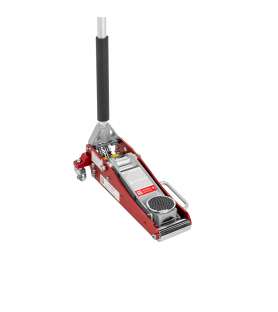
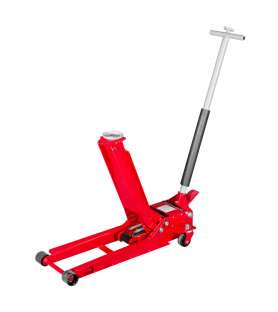
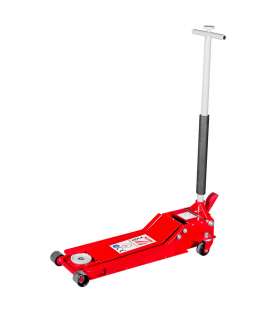
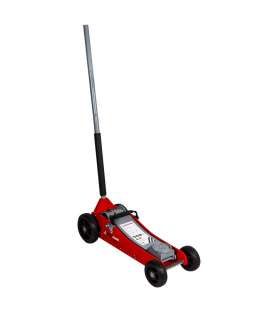
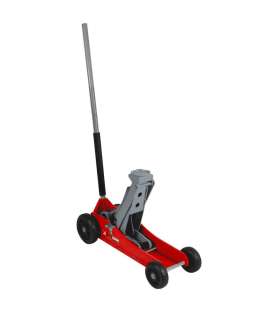
A hydraulic trolley jack is particularly popular in automotive garages and vehicle repair workshops.
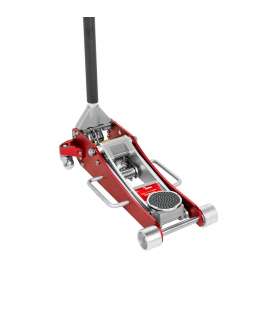
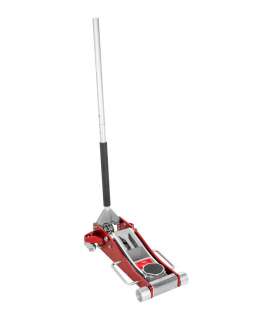
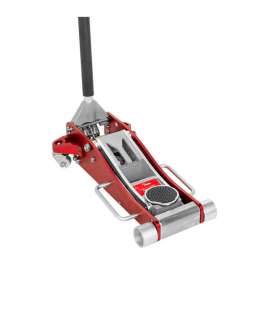
It typically features a wheeled chassis, an articulated lifting arm and a hydraulic system operated using a handle.
This design allows the jack to be positioned beneath a vehicle and gradually lift it using a lifting point specified by the vehicle manufacturer.
A trolley jack for cars is commonly used when changing tyres, removing wheels and carrying out certain maintenance operations.
Its mobile chassis makes it easy to position beneath a vehicle and move around the workshop.
Some models feature a low minimum lifting height, making them particularly suitable for vehicles with reduced ground clearance.
Other models prioritise a higher lifting capacity or an increased maximum lifting height for specific applications.
At Probois Machinoutils, you will find several Holzmann hydraulic trolley jacks, including the RWH125ALU, RWH150XLIFT, RWH180ALU and RWH250ALU models.
These jacks offer different lifting capacities, allowing users to select equipment suited to their vehicles and intended maintenance operations.
Off-Road Hydraulic Jacks for Workshops and Outdoor Applications
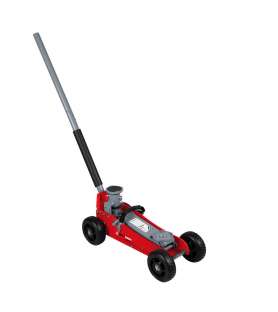
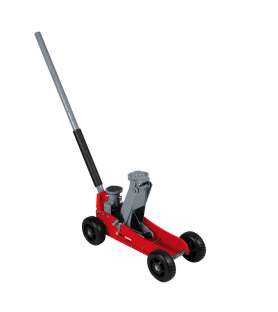
An off-road hydraulic jack is designed to facilitate certain lifting operations in environments where moving equipment may be more difficult than on the smooth floor of a conventional garage.
Depending on the model, this type of jack features a chassis and wheels designed for specific operating conditions.
It may be particularly useful in agricultural workshops, garages with outdoor working areas or maintenance facilities where lifting equipment needs to be moved between different locations.
At Probois Machinoutils, we offer the Holzmann OWH1.5 and OWH3.0 off-road hydraulic jacks.
The Holzmann OWH1.5 has a maximum lifting capacity of 1.5 tonnes, while the Holzmann OWH3.0 offers a maximum capacity of 3 tonnes.
These models feature wheels designed to facilitate movement under the conditions specified by the manufacturer.
However, an off-road jack must not be used on unstable, soft or insufficiently load-bearing ground unless the manufacturer expressly permits the intended conditions and all required precautions are followed.
Ensuring the stability of the jack and the load remains essential for safe lifting operations.
Heavy-Duty Hydraulic Jacks for Lifting Heavy Loads
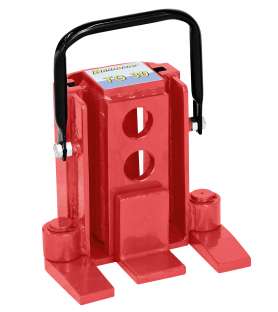
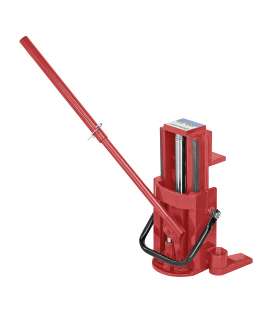
For certain industrial maintenance and material handling applications, a heavy-duty hydraulic jack may be required.
Unlike models primarily designed for passenger cars, these lifting devices are intended to provide greater lifting force.
They can be used for certain operations involving machinery, industrial equipment or heavy loads, provided the lifting configuration is compatible with their design.
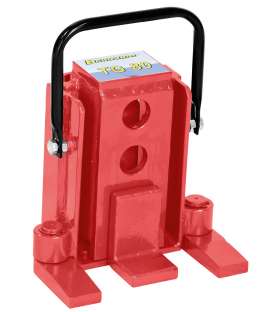
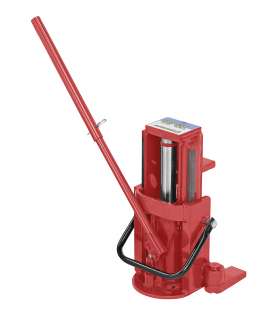
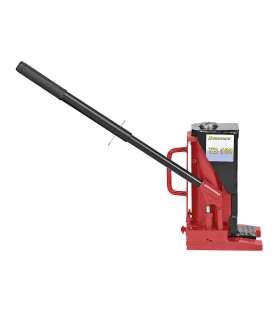
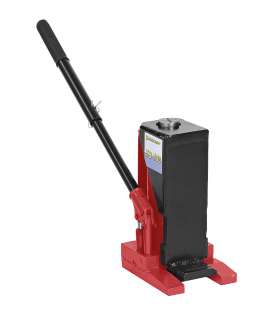
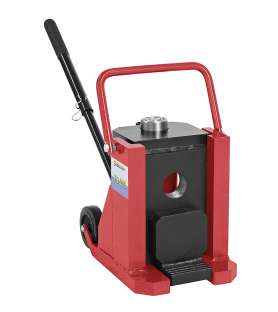
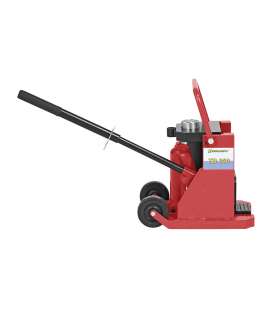
At Probois Machinoutils, we offer several Bernardo hydraulic jacks, including the TG30, TG80, TB100 and TB200 models.
The Bernardo TG30 has a lifting capacity of 3 tonnes, while the Bernardo TG80 offers a maximum capacity of 8 tonnes.
For more demanding applications, the Bernardo TB100 provides a maximum lifting capacity of 10 tonnes, while the Bernardo TB200 can lift up to 20 tonnes.
These capacities make it possible to meet various lifting requirements in workshops and professional environments.
However, maximum lifting capacity alone is not sufficient to determine whether a jack is suitable for a particular operation.
Other factors must also be considered, including lifting height, contact surface, load centre of gravity and overall stability.
Hydraulic Jack or Mechanical Jack: What Is the Difference?
There are several types of lifting jacks, each offering specific advantages depending on the intended application.
A hydraulic jack uses pressurised oil to raise the load. This mechanism generally allows substantial lifting force to be generated with relatively little manual effort.
A mechanical scissor jack, on the other hand, uses a threaded screw to open or close an articulated lifting mechanism.
This type of jack is commonly supplied as emergency vehicle equipment for occasional roadside wheel changes.
A hydraulic trolley jack is particularly suitable for garages with compatible floor surfaces and operations requiring convenient positioning beneath a vehicle.
Compact or heavy-duty hydraulic jacks can meet other requirements, particularly in maintenance workshops and industrial environments.
The choice therefore depends on the type of load, frequency of use, available working space and technical characteristics of the equipment being lifted.
How to Choose the Right Hydraulic Jack for Your Vehicle
Before purchasing a hydraulic car jack, several important factors should be considered.
The first is the maximum lifting capacity. This must be sufficient for the intended operation, taking into account actual load distribution and the vehicle manufacturer's recommendations.
The minimum lifting height is also important, particularly for low-profile cars and sports vehicles with limited ground clearance.
A jack that is too high may be impossible to position beneath the vehicle's designated lifting point.
The maximum lifting height must be sufficient to carry out the required maintenance operation under appropriate conditions.
It is also advisable to check the chassis dimensions, handle length, wheel design and ease of movement.
For regular garage use, a hydraulic trolley jack can provide a practical solution thanks to its mobility.
For operations requiring greater lifting capacities, a heavy-duty model specifically designed for the intended load may be more appropriate.
Finally, floor conditions, load stability and the available lifting points must always be considered.
Holzmann Hydraulic Jacks for Different Lifting Requirements
The Holzmann brand offers several models of hydraulic jacks for automotive garages and workshops.
The Holzmann RWH125ALU is a hydraulic trolley jack with a maximum lifting capacity of 1.25 tonnes.
The Holzmann RWH150XLIFT offers a maximum lifting capacity of 1.5 tonnes and provides another option for lifting operations compatible with its technical specifications.
The Holzmann RWH180ALU has a maximum capacity of 1.8 tonnes, while the Holzmann RWH250ALU can lift up to 2.5 tonnes.
The range also includes the Holzmann OWH1.5 and OWH3.0 off-road hydraulic jacks, offering maximum lifting capacities of 1.5 and 3 tonnes respectively.
These different models allow users to select a hydraulic car jack according to the required capacity, lifting height and working environment.
To make the right choice, we recommend consulting the individual product pages and comparing the detailed technical specifications.
Bernardo Hydraulic Jacks for Professional Workshops and Maintenance
Bernardo hydraulic jacks complement our range with models designed for different lifting operations.
The Bernardo TG30, with a lifting capacity of 3 tonnes, is suitable for applications compatible with its technical characteristics.
The Bernardo TG80 offers a maximum lifting capacity of 8 tonnes and can be considered for operations requiring greater lifting force.
For heavy-duty applications, the Bernardo TB100 and TB200 provide maximum lifting capacities of 10 and 20 tonnes respectively.
These products may be of particular interest to mechanical professionals, maintenance workshops and certain industrial users.
Before any lifting operation, it is essential to check that the jack is suitable for the load, its geometry and the intended lifting configuration.
Safety and Best Practices When Using a Hydraulic Jack
Using a hydraulic lifting jack requires strict attention to essential safety precautions.
Before each use, the jack should be inspected for signs of damage, including hydraulic fluid leaks, cylinder condition, wheel condition, lifting contact points and operating controls.
The vehicle or load must be positioned on stable, sufficiently load-bearing ground compatible with the manufacturer's instructions.
When lifting a vehicle, the jack must only be positioned beneath lifting points specified by the vehicle manufacturer.
The vehicle must also be properly secured to prevent unintended movement.
A hydraulic jack must never be used as the sole support when working underneath a vehicle.
After lifting, appropriately rated axle stands or jack stands must be correctly positioned before anyone works beneath the vehicle.
Never exceed the maximum rated lifting capacity or use a damaged jack or one that operates abnormally.
Lowering must be performed gradually, ensuring that no one is in a hazardous area.
Finally, hydraulic system maintenance and periodic inspections must be carried out in accordance with the manufacturer's recommendations.
Buy Car Jacks and Hydraulic Jacks at Probois Machinoutils
As a specialist in workshop machinery and equipment, Probois Machinoutils offers a selection of Holzmann and Bernardo hydraulic jacks for a wide range of lifting applications.
Whether you are looking for a hydraulic trolley jack for cars, an off-road hydraulic jack or a heavy-duty lifting jack, our range includes equipment suited to numerous garage, mechanical and maintenance requirements.
With models offering maximum lifting capacities ranging from 1.25 to 20 tonnes, you can select the appropriate equipment according to the load to be lifted, the required lifting height and the operating conditions.
Consult the technical specifications of each model to choose the hydraulic jack best suited to your vehicle, workshop or material handling operations.
With Probois Machinoutils, equip your garage or workshop with reliable lifting equipment designed to facilitate mechanical repairs, vehicle maintenance and heavy-load handling operations.