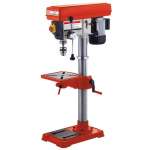
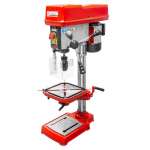
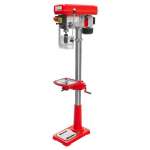
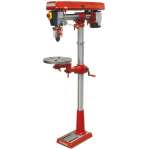
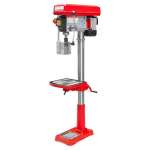
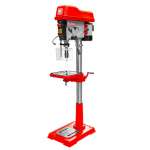
Discover our selection of spare parts for Holzmann drill presses, designed for the maintenance, repair and servicing of your machine.
Holzmann drill presses contain numerous mechanical and electrical components subject to wear, including drive belts, pulleys, return springs, spindles, bearings, motors, switches, handles, feed levers, adjustment mechanisms and electrical components.
Over time or following intensive use, some of these parts may need to be replaced. Probois Machinoutils offers a growing range of replacement parts for Holzmann drill presses, allowing you to repair the machine by replacing only the defective component.
Depending on availability, you can find various mechanical, electrical and transmission parts for Holzmann drill presses.
Drive Belts for Holzmann Drill Presses
On many drill presses, power is transmitted between the motor and spindle by one or more drive belts running over a set of pulleys.
A worn, stretched or damaged belt can cause slipping, reduced power at the drill chuck, difficulty maintaining the correct spindle speed or unusual noises.
A drive belt can also deteriorate over time even when the drill press is used relatively infrequently. The rubber can gradually harden, crack or lose its elasticity.
Before ordering a drive belt for a Holzmann drill press, check its reference, profile and dimensions as well as compatibility with your exact machine model.
Pulleys for Holzmann Drill Presses
Pulleys transmit power between the motor and spindle on drill presses equipped with a belt-driven transmission.
Depending on the model, stepped pulleys may be used to select different spindle speeds.
A damaged or cracked pulley, or one with excessive play, can cause vibration, poor power transmission or premature drive belt wear.
When replacing a pulley, it is also advisable to inspect the condition of the drive belt, shaft, bearings and other transmission components.
Return Springs for Holzmann Drill Presses
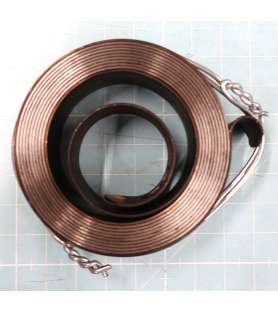
The spindle return spring allows the quill and spindle to return to their upper position when the operator releases the feed lever.
This component is repeatedly loaded during normal operation of the drill press.
A broken, weakened or damaged return spring can prevent the spindle from returning correctly or cause irregular quill movement.
Replacing a return spring on a Holzmann drill press should be carried out carefully, as the spring may be under significant mechanical tension.
Spindles and Quills for Holzmann Drill Presses
The spindle is one of the essential components of a drill press. It transmits rotation to the drill chuck and should operate with minimal play to ensure accurate drilling.
However, excessive play at the chuck does not necessarily mean that the complete spindle is defective.
Before replacing it, the bearings, quill, mounting taper, drill chuck and transmission components should also be inspected.
Excessive vibration, unusual noise or spindle play can have several possible causes. Accurate diagnosis helps avoid replacing an expensive component unnecessarily.
Bearings for Holzmann Drill Presses
Bearings allow the spindle and other rotating shafts to operate smoothly while reducing friction and mechanical play.
A worn bearing can cause noise, vibration, overheating or noticeable spindle play.
These symptoms should be investigated promptly, as a severely worn bearing can eventually damage other mechanical components.
When replacing a bearing, its dimensions and technical specifications must correspond precisely to the original part.
Drill Chucks and Tool-Holding Components
The drill chuck securely holds the drill bit during operation. Different chuck types and capacities may be used depending on the Holzmann drill press model.
It is particularly important to distinguish between the chuck's clamping capacity and its mounting system.
Before replacing a drill chuck, carefully check the specifications of your machine and the original component.
A drill bit that rotates irregularly does not necessarily indicate a defective chuck. The drill bit itself, mounting taper, spindle or bearings may also be responsible.
Motors for Holzmann Drill Presses
The motor provides the power required to rotate the spindle and drill bit.
However, if a drill press no longer starts or appears to lack power, the motor is not necessarily defective.
Before replacing it, check the electrical supply, safety devices, switch, wiring, capacitors on certain single-phase models, contactors and, depending on the machine, the electronic speed control system.
A blocked or excessively resistant transmission can also cause motor overload or overheating.
Variable Speed and Speed Control Systems
Some Holzmann drill presses feature a variable speed system that allows the spindle speed to be adapted to the drill bit diameter and the material being drilled.
Depending on the machine design, speed adjustment may be mechanical, electronic or use a combination of different systems.
Models with electronic speed control may include a speed controller, potentiometer, display or electronic control board.
If the spindle speed becomes unstable or can no longer be adjusted correctly, it is important to identify the defective component accurately before ordering a replacement part.
Switches and Electrical Components
Switches, emergency stop buttons, contactors, capacitors, safety devices and other electrical components contribute to the operation and protection of the drill press.
A machine that no longer starts does not necessarily have a defective switch.
The problem may also be caused by the power supply, a safety device, motor, capacitor, contactor, wiring or electronic component depending on the design of the drill press.
It is therefore advisable to diagnose the fault before replacing an electrical component.
Feed Levers, Handles and Feed Mechanisms
The feed mechanism allows the drill bit to be lowered into the material in a controlled manner.
Feed levers, handles, shafts, gears and feed mechanism components can gradually develop play or become damaged following excessive force.
A broken lever or a mechanism with excessive play can make the drill press less precise and more difficult to operate.
The complete mechanism should therefore be inspected to identify the component actually responsible for the problem.
Tables and Adjustment Mechanisms
The drill press table can generally be adjusted in height and, depending on the model, tilted or rotated to accommodate different drilling operations.
Handles, racks, cranks, shafts, clamping mechanisms and other adjustment components can be subject to wear.
Poor table clamping or difficult adjustment may be caused by a damaged component, but it can also result from a dirty, incorrectly adjusted or insufficiently lubricated mechanism.
Guards and Safety Components
Drill presses incorporate various safety devices designed to protect the operator, particularly around the chuck and rotating components.
Depending on the model, these may include a drill chuck guard, safety switches, transmission covers or emergency stop systems.
A broken guard or defective safety device should be replaced with a component compatible with the machine.
Safety devices should never be removed or bypassed in order to operate the drill press.
How to Find the Correct Part for Your Holzmann Drill Press
To correctly identify a spare part for a Holzmann drill press, first check the exact machine reference on its identification plate.
Then consult the exploded parts diagram corresponding precisely to your model to identify the required component and its position number.
Several details may be required to confirm compatibility: exact model, position number on the exploded parts diagram, month and year of manufacture, serial number, supply voltage and reference marked on the original component.
For drive belts, pulleys, bearings and other mechanical components, the dimensions of the original part may also help confirm the correct reference.
IMPORTANT: Check Compatibility Before Ordering
IMPORTANT: BEFORE ORDERING, ALWAYS CHECK THE LIST OF COMPATIBLE MACHINES PROVIDED ON THE PRODUCT PAGE.
Holzmann may have made technical modifications to certain drill presses during their production period.
The same drill press model may therefore have been fitted with different components depending on its month and year of manufacture or serial number.
This check is particularly important for motors, drive belts, pulleys, return springs, spindles, switches, speed controllers and electrical components.
A part that looks identical to the one fitted to your drill press is not necessarily compatible.
Using the Exploded Parts Diagram for Your Holzmann Drill Press
The exploded parts diagram for your Holzmann drill press allows you to identify the individual machine components and their position numbers.
When a part needs to be replaced, locate your exact drill press model and identify the required component on its exploded diagram.
The position number is particularly useful for identifying the correct replacement part.
Never select a component solely from its appearance, as visually similar parts may have different dimensions, specifications or mounting systems.
Maintaining and Repairing a Holzmann Drill Press
Regular maintenance helps extend the service life of your drill press and preserve drilling accuracy.
Regularly inspect the drive belts, pulleys, bearings, return spring, spindle, drill chuck, feed mechanisms and electrical components.
Chips and dust should also be removed regularly, particularly around the table, column and adjustment mechanisms.
Vibration, unusual noises, spindle play, loss of power or problems with quill return should be investigated promptly to identify the cause before it results in damage to other components.
Probois Machinoutils – Holzmann Drill Press Spare Parts
Probois Machinoutils offers a growing range of spare parts for Holzmann drill presses to facilitate the maintenance and repair of your machine.
Depending on availability, you can find drive belts, pulleys, return springs, bearings, spindles, motors, switches, electrical components, handles, feed levers, transmission parts and other mechanical components.
Replacing only the component that is actually defective can restore your Holzmann drill press to proper working condition and extend its service life.