Has your Woodstar or Woodster drill press been helping you with drilling work in wood, metal and other materials for several years? As long as the machine remains in good overall condition, a worn belt, damaged chuck, faulty switch or tired mechanical component does not necessarily justify replacing the entire drill press.
This category brings together spare parts for Woodstar and Woodster drill presses, particularly for the TD13T, TD16S, TD16T, TD16VL and TD16SL models and other machines from the brand. Some of these drill presses also share components with similarly designed Scheppach models, making it possible to repair and maintain many older Woodstar machines.
Depending on the model and availability, you can find V-belts, drill chucks, chuck keys, pulleys, return springs, chuck guards, switches, motors and various mechanical or electrical components required to repair your drill press.
Repair your Woodstar drill press instead of replacing it
A drill press consists of numerous mechanical and electrical components that can be replaced separately. When a fault occurs, it is therefore often better to identify its exact cause before considering the purchase of a new machine.
A spindle that no longer rotates correctly, irregular speed, a chuck with excessive play, a loose or broken belt, a worn return spring or a switch that no longer controls the motor correctly can generally be dealt with independently of the rest of the machine.
Replacing only the component that is actually faulty allows you to extend the service life of a drill press you already know, while keeping its frame, table and other major components that are still in good condition.
Woodstar drill press belt: an important wear part
On many conventional drill presses, the motor drives the spindle through a V-belt and stepped pulleys. This simple and proven system generally allows several spindle speeds to be selected by moving the belt between the different pulley diameters.
Over time, the belt can stretch, harden, crack or wear. A belt that is too loose may slip during drilling and make the machine appear to lack power, particularly when the drill bit comes under load. A badly deteriorated belt should be replaced to restore correct power transmission between the motor and spindle.
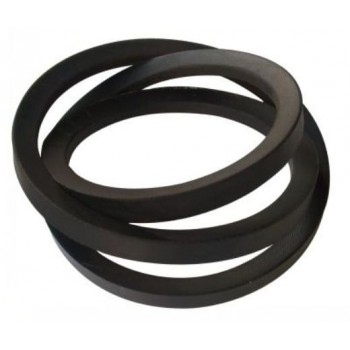
The V-belt for the Woodster TD16SL is one of the parts still available, with compatibility also indicated for the Scheppach DP16SL. Before ordering, it is essential to check the exact machine model and the part reference.
Drill chuck and chuck key for drill presses
The drill chuck holds the drill bit during operation. Its condition therefore has a direct influence on tool retention and drilling quality. A worn chuck may develop play, become difficult to tighten or no longer hold the drill bit securely.
With a keyed chuck, the chuck key is essential for correct tightening. If it is lost or damaged, choose a key suited to the chuck fitted to the machine rather than using an unsuitable tool that could damage the geared ring.
When replacing a chuck, checking its clamping capacity alone is not enough. The mounting type and spindle fitting must also be taken into account. Two chucks with similar dimensions are therefore not necessarily interchangeable.
Drill press pulleys and drive system
The stepped pulleys are directly involved in power transmission and speed adjustment on belt-driven drill presses. By changing the belt position between the motor pulley and spindle pulley, the spindle speed can be adapted to the drill bit diameter and the material being drilled.
A damaged pulley, worn groove or faulty mounting can interfere with the drive system. Unusual vibration, abnormal belt movement or mechanical noise should prompt an inspection of the pulleys and their alignment.
Before replacing a pulley, always check its bore, mounting system and reference, as different versions may have been fitted to Woodstar, Woodster or Scheppach drill presses.
Return spring and spindle feed mechanism
When you lower the feed handle on a drill press, the spindle and chuck move down towards the workpiece. Once the handle is released, a return spring helps bring the mechanism back to its upper position.
Over the years, this spring can lose tension, break or no longer provide proper return action. The chuck may then rise slowly or remain partially lowered. Depending on the machine design, the spring or individual parts of the mechanism may be replaceable separately.
Care must be taken when working on a return spring because it may be under tension. The machine must always be disconnected from the power supply before any mechanical or electrical work is carried out.
Chuck guard and drill press safety
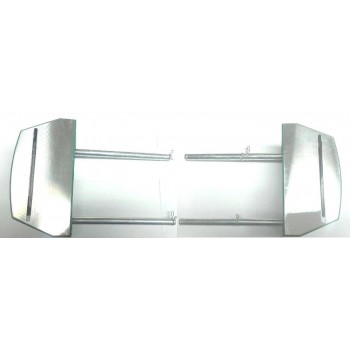
The chuck guard is an important safety component. It helps restrict direct access to the rotating chuck and drill bit during operation. If it is broken, cracked, missing or no longer stays correctly in position, it should be replaced before the machine is used again.
Depending on the model, the guard may be linked to a safety device or safety switch that prevents the drill press from operating when the guard is not correctly positioned. A starting problem can therefore sometimes be caused by a safety component rather than the motor itself.
A safety device should never be bypassed to work around a fault. The correct solution is to identify the defective component and replace it with a compatible part.
Switch and motor for Woodstar drill presses
The switch is used every time the machine is started and stopped. Over time, its internal contacts, mechanism or associated safety components can wear. However, a drill press that no longer starts does not automatically have a faulty switch: the power supply, wiring, safety devices and motor should also be checked.
The electric motor can also be replaced on certain machines when the corresponding part is still available. Before replacing it, it is advisable to make sure that the fault really comes from the motor and not from a peripheral component.
Any work on electrical components must be carried out with the machine disconnected from the power supply and, when diagnosis or replacement is beyond the user's competence, entrusted to a qualified person.
Woodstar, Woodster and Scheppach: some shared parts
Many Woodstar and Woodster machines are technically related to certain Scheppach models. This is particularly true of the Woodster TD16SL, for which some parts such as the belt are also used on the Scheppach DP16SL.
However, this similarity between machines does not mean that all parts are interchangeable. The same drill press family may have undergone several revisions or changes during production. A part that looks similar to the one fitted to your machine is therefore not a guarantee of compatibility.
Before ordering, carefully check the exact model of your Woodstar or Woodster drill press, the reference of the required part, its position number on the exploded diagram where applicable and, when requested, the manufacturing date or serial number of the machine.
Maintain your drill press to extend its service life
A well-maintained drill press can remain in service for many years. Regular cleaning prevents swarf and chips from accumulating around the table, column and moving parts. It is also useful to periodically check belt tension and condition, chuck clamping, possible spindle play and the correct operation of safety devices.
Unusual noise, new vibration or a loss of drilling accuracy should not be ignored. Quickly identifying a worn belt, tired chuck or loose mechanical component can prevent the problem from causing premature wear to other parts.
Extend the life of your Woodstar drill press
With the right spare parts for Woodstar and Woodster drill presses, many machines that have been in use for years can still be repaired. A simple belt, chuck, return spring, guard, pulley or switch may sometimes be all that is needed to restore the machine to full working order.
The aim is to diagnose the fault correctly, identify the right part reference and replace only the component that is actually required. This allows you to keep your Woodstar drill press for longer, avoid unnecessarily replacing a repairable machine and continue working with equipment you already know well.