Spare parts for the Holzmann HBS400 bandsaw: maintain and repair your machine
Discover our selection of spare parts for the Holzmann HBS400 bandsaw, designed for the maintenance, troubleshooting and repair of your woodworking machine.
The Holzmann HBS400 is a bandsaw equipped with 400 mm cast iron wheels, a 1500 W motor and a stated maximum cutting height of 220 mm. Available in 230 V and 400 V versions, it can be used for various woodworking operations, including ripping, cutting thick workpieces and making curved cuts with a suitable blade.
Its design relies on several mechanical and electrical assemblies: the wheels, rubber tyres, blade guides, bearings, tensioning devices, guiding accessories and electrical controls.
After many hours of use, certain components may wear out, become incorrectly adjusted or suffer accidental damage.
A damaged wheel tyre can interfere with blade movement on the wheels. A worn bearing may cause noise or excessive play. A deteriorated blade guide can affect cutting accuracy, while a defective switch may prevent the machine from starting.
At Probois Machinoutils, we offer a range of replacement parts that allow you to replace defective components and extend the service life of your bandsaw.
Our selection includes wheel tyres, bearings, blade guides, a table insert, a switch, a blade tension handwheel and guiding accessories.
Each part performs a specific function. It is therefore essential to identify the source of the problem correctly before ordering.
Which Holzmann HBS400 spare parts are available in this category?
Our category dedicated to the Holzmann HBS400 includes the following parts:
-
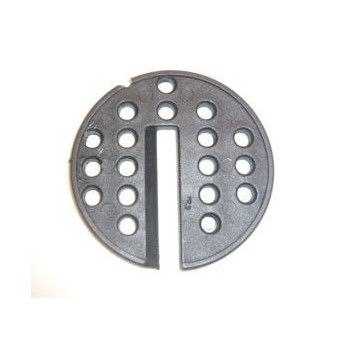
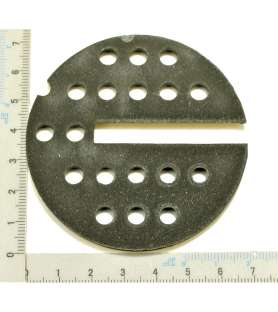
Round table insert for compatible bandsaws.
-
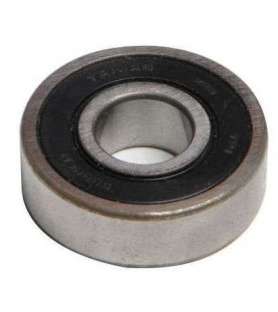
6201 bearing for bandsaws and sliding mitre saws.
-
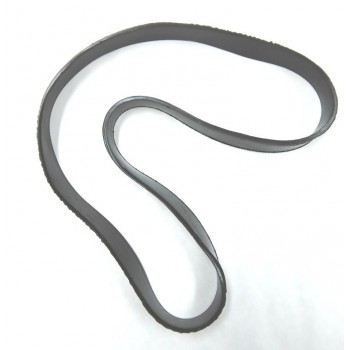
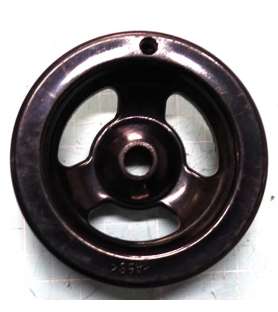
Rubber wheel tyre for Holzmann HBS400 bandsaw.
-
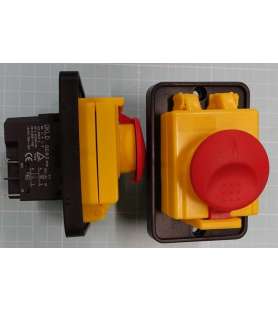
230 V switch for Holzmann HBS400 bandsaw.
-
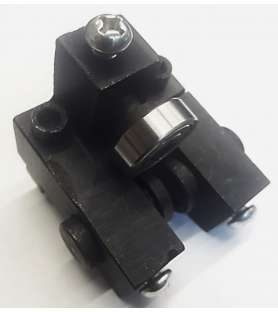
Upper blade guide for Holzmann HBS400.
-
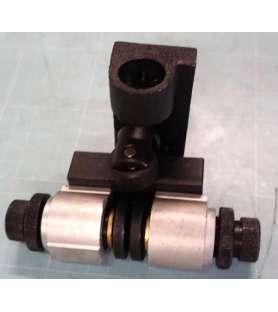
Lower blade guide for Holzmann HBS400.
-
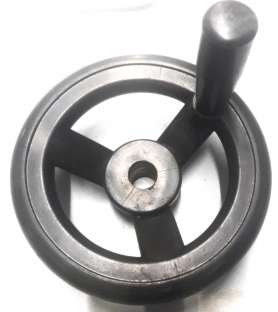
Blade guide adjustment handwheel for Holzmann HBS400.
-
Blade tension handwheel for Holzmann HBS400.
-
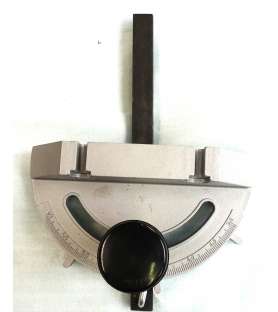
Mitre gauge for Holzmann HBS400.
-
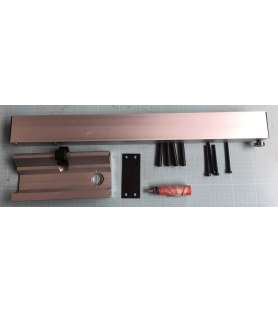
Complete rip fence for Holzmann HBS400.
These components allow you to work on different parts of the machine, including blade guidance, drive, tensioning, cutting accuracy and electrical controls.
The parts offered may have different compatibility specifications depending on their reference. Always check the list of compatible machines provided on each product page.
Rubber wheel tyre for the Holzmann HBS400
The rubber wheel tyre for the Holzmann HBS400 bandsaw is fitted around the circumference of the wheel.
It forms the contact surface between the wheel and the bandsaw blade.
Its purpose is to contribute to smooth blade drive and correct movement on the wheels, together with suitable blade tension and proper adjustment.
The tyre also prevents direct contact between the blade and the metal surface of the wheel.
Over the years, the rubber may harden, crack, become deformed or begin to detach.
A deteriorated tyre can contribute to various problems:
-
Irregular blade movement.
-
Abnormal vibrations.
-
Difficulty maintaining stable blade tracking.
-
Cracks or deformation on the tyre surface.
-
Rubber separating from part of the wheel.
When the tyre shows significant deterioration, replacement may become necessary.
However, please note that abnormal blade movement on the wheels does not automatically indicate a defective tyre.
Incorrect tension, improper wheel tilt adjustment, a damaged blade or a mechanical problem can produce similar symptoms.
Before replacing the tyre, the entire blade guidance and tensioning system should therefore be inspected.
6201 bearing for Holzmann HBS400 bandsaw
The 6201 bearing offered in this category is intended for compatible machines, including bandsaws and certain sliding mitre saws.
A bearing allows a mechanical component to rotate while limiting friction.
Depending on its location within the machine, it may contribute to the operation of a wheel or a guiding device.
A bearing in good condition should allow smooth rotation without excessive play or abnormal noise.
Over time, its internal components may wear out or deteriorate.
Several symptoms may justify inspection:
-
Unusual bearing noise.
-
Difficult or irregular rotation.
-
Excessive mechanical play.
-
Roughness or tight spots during rotation.
-
Vibrations originating from the component concerned.
A worn bearing must be replaced with a model having the appropriate specifications.
The 6201 designation is important information, but it is not sufficient on its own to guarantee compatibility with every installation.
The dimensions, sealing or shielding type, and reference indicated on the product page should also be checked.
Before carrying out any work, identify the defective bearing and its exact location.
Upper blade guide for Holzmann HBS400 bandsaw
The upper blade guide for the Holzmann HBS400 plays an essential role in keeping the blade correctly positioned during cutting.
It helps limit sideways and backward blade movement when the blade is subjected to cutting forces.
Correctly adjusted guidance improves blade stability and contributes to consistent cuts.
The upper guide must be positioned according to the manufacturer's instructions, particularly in relation to the height of the wooden workpiece.
A blade guide may require replacement if it has:
-
A broken or deformed component.
-
A damaged support.
-
A defective adjustment mechanism.
-
Abnormal mechanical play.
-
Damage preventing the blade from being guided correctly.
However, it is important to distinguish a mechanical defect from a simple adjustment problem.
A blade that drifts during cutting does not necessarily mean that the upper guide is defective.
Before ordering, check the condition of the blade, its tension and the adjustment of the various guiding components.
Lower blade guide for Holzmann HBS400
The lower blade guide for the Holzmann HBS400 bandsaw complements the upper guide.
Located below the table, it helps maintain the blade's position in the lower section of the machine.
It contributes to limiting unwanted blade movement during cutting.
A damaged, incorrectly secured or excessively loose lower guide can affect cutting quality.
Several situations may require replacement:
The lower and upper guides must work together.
After replacing either component, all blade adjustments must be checked.
A new guide will not compensate for a blunt blade, incorrect tension or improper positioning on the wheels.
Blade guide adjustment handwheel for Holzmann HBS400
Our selection includes a blade guide adjustment handwheel for the Holzmann HBS400 bandsaw.
This component operates the adjustment mechanism with which it is associated.
An adjustment control must be in good condition to allow the relevant guide to be positioned correctly.
Over time, it may become damaged following an impact, excessive tightening or deterioration of its mounting.
Replacement may be necessary when the handwheel is broken or can no longer operate its mechanism correctly.
Before ordering, however, check that the fault actually originates from the handwheel rather than the shaft, thread or another part of the adjustment mechanism.
After replacement, make sure that the mechanism operates freely and that the guide can be secured in its intended position.
Blade tension handwheel for Holzmann HBS400 bandsaw
The blade tension handwheel for the Holzmann HBS400 operates the mechanism used to adjust blade tension.
Suitable tension is essential for the correct operation of a bandsaw.
A blade with insufficient tension may lack stability during cutting.
Conversely, excessive tension may place unnecessary stress on the blade and mechanical components.
Adjustment must always be carried out according to the manufacturer's recommendations and the specifications of the blade being used.
The tension handwheel may need replacing when it is broken, cracked or its mounting no longer allows correct adjustment.
However, it is important to check that the problem does not originate from the tensioning mechanism itself.
A new handwheel will not repair a damaged threaded rod or a seized mechanism.
After any intervention, check blade tension and tracking before returning the machine to service.
Round table insert for Holzmann HBS400 bandsaw
The table insert, also known as a throat plate, is positioned around the blade opening in the worktable.
It reduces the opening around the blade and helps provide a suitable support surface for wooden workpieces.
Our category includes a round table insert intended for several compatible bandsaw models.
A table insert may become damaged through accidental contact with the blade, an impact or mechanical deterioration.
When it is broken, heavily cut or no longer stays correctly in place, replacement may be necessary.
A damaged insert may interfere with the support of small wooden workpieces and leave an excessively large opening around the blade.
Before installing a new insert, check that the blade is correctly positioned.
Also check the dimensions and shape of the original insert.
The presence of a table insert in this category does not mean that it is suitable for every Holzmann bandsaw.
Always consult the compatibility information on the product page.
230 V switch for Holzmann HBS400 bandsaw
Our category includes a 230 V switch for the Holzmann HBS400 bandsaw.
This component forms part of the machine's electrical control system.
It controls machine operation according to the arrangement specified by the manufacturer.
A switch may require replacement when its mechanism is broken, it no longer operates correctly or an electrical fault has been confirmed.
However, a machine that no longer starts does not necessarily have a defective switch.
The problem may also originate from the electrical supply, a safety device, the motor or another component.
It is therefore important to carry out a diagnosis before ordering.
Important: the Holzmann HBS400 is available in 230 V and 400 V versions. The switch offered in this category is specified for the 230 V version. It must not be considered compatible with the 400 V version.
Before ordering, check your machine's rating plate, together with the specifications and connections of the original switch.
Never modify the wiring or safety devices to accommodate an unsuitable switch.
Electrical work must be carried out by a competent person.
Complete rip fence for Holzmann HBS400 bandsaw
The complete rip fence for the Holzmann HBS400 is used to guide wooden workpieces during longitudinal cuts.
It provides a reference for maintaining a set distance between the blade and the edge of the workpiece.
This accessory is particularly useful for ripping and resawing operations.
The complete rip fence offered includes:
-
Guide rail.
-
Aluminium fence.
-
Locking mechanism.
-
Mounting hardware.
A rip fence in good condition contributes to maintaining consistent workpiece positioning during cutting.
Replacement may be necessary if it is deformed or broken, or if its locking mechanism can no longer hold it securely.
Before ordering, check that the problem concerns the complete fence rather than a simple adjustment or mounting issue.
After installation, check its alignment with the blade and make sure that the locking mechanism operates correctly.
A rip fence alone will not correct blade drift caused by poor sharpening, unsuitable tension or incorrect blade guide adjustment.
Mitre gauge for Holzmann HBS400 bandsaw
The mitre gauge for the Holzmann HBS400 is intended for operations requiring a wooden workpiece to be positioned at a specific angle.
It provides a reference for guiding the workpiece during certain cutting operations.
This accessory may be useful for crosscuts and angled cuts that are compatible with the machine's capabilities.
A mitre gauge may need replacing when it is broken, deformed or its adjustment mechanism no longer operates correctly.
Before ordering, check the gauge dimensions, mounting system and compatibility with your bandsaw table.
After installation, check the angle adjustment and make sure that the accessory is securely fastened.
The gauge must be used according to the manufacturer's instructions and must never come into contact with the blade.
Your Holzmann HBS400 cuts off line: which parts should you inspect?
A bandsaw that cuts off line does not necessarily have a defective blade guide.
Several components can be responsible for an irregular cut.
In particular, you should inspect:
-
Blade sharpness.
-
Consistency of the tooth set.
-
Condition of the blade weld.
-
Blade tension.
-
Blade positioning on the wheels.
-
Condition of the rubber wheel tyres.
-
Upper and lower blade guide adjustment.
-
Condition of the bearings.
-
Rip fence positioning.
A blunt blade or one with an uneven tooth set may cause the cut to drift sideways.
Incorrectly adjusted guides can also allow excessive blade movement.
Insufficient tension may contribute to a lack of stability.
Replacing a blade guide or bearing should therefore not be undertaken without accurately identifying the cause of the problem.
A complete diagnosis helps avoid unnecessarily replacing components that are still in good condition.
How to identify the correct spare part for your Holzmann HBS400
Before ordering a component, identify your machine precisely.
We recommend recording the following information:
-
Brand: Holzmann.
-
Exact model: HBS400.
-
Electrical version: 230 V or 400 V.
-
Serial number.
-
Manufacturing month and year.
-
Original part reference, if known.
-
Position number on the exploded diagram, where available.
This information is particularly important for electrical components and parts that may have changed between manufacturing versions.
Do not confuse the Holzmann HBS400 with the HBS300J, HBS450 or HBS470PROFI models.
Similarly, a part intended for a Bernardo HBS400 or Scheppach HBS400 must not be considered compatible simply because the machines have similar model names.
IMPORTANT: BEFORE PURCHASING, you must check that your machine appears in the LIST OF COMPATIBLE MACHINES provided on the spare part product page. Where necessary, also check your machine's manufacturing month, manufacturing year and serial number.
Visual resemblance alone never guarantees that a replacement part is compatible.
How to maintain your Holzmann HBS400 bandsaw
Regular maintenance helps preserve the correct operation of your bandsaw and detect early signs of wear.
Before carrying out any work, disconnect the machine from the mains and wait until the blade has stopped completely.
Periodically inspect the condition of the rubber wheel tyres.
Check that they do not show cracks, deformation or signs of separation.
Also inspect the bearings and make sure that they do not have excessive play or produce unusual noise.
Check the upper and lower blade guides and their adjustment mechanisms.
Inspect blade tension and its position on the wheels.
Make sure that the rip fence and mitre gauge are correctly secured before starting a cut.
Regularly clean accessible areas to remove accumulated sawdust without damaging mechanical or electrical components.
A properly maintained machine makes it easier to detect an abnormality before it develops into a more serious breakdown.
Check the safety devices after every repair
After replacing a part, make sure that all covers and protective devices have been correctly refitted.
Check the blade's position and make sure that it is not damaged.
Ensure that the guides are correctly adjusted.
Verify that the control and safety devices are functioning properly.
Never operate the bandsaw with an open cover or a disabled safety device.
If you notice abnormal vibrations, unusual noise or incorrect blade movement, stop the machine immediately.
Work on electrical components must be carried out by a competent person.
The bandsaw must only be returned to service when its operation complies with the manufacturer's instructions.
Repair your Holzmann HBS400 instead of replacing the entire machine
A localised fault does not necessarily require purchasing a new bandsaw.
When a wheel tyre, bearing, blade guide, switch or another component has been confirmed as defective, replacing it may restore normal operation.
This approach helps extend the service life of your equipment.
However, confirming the cause of the fault remains essential.
A blade that drifts does not necessarily require new guides.
A wheel that produces noise does not always need to be replaced completely: the bearing may be responsible.
A machine that no longer starts does not necessarily have a defective switch.
An effective repair therefore depends on an accurate diagnosis and the selection of a fully compatible replacement part.
Order your Holzmann HBS400 spare parts from Probois Machinoutils
At Probois Machinoutils, discover a selection of spare parts for the maintenance and repair of your Holzmann HBS400 bandsaw.
Wheel tyres, 6201 bearings, upper and lower blade guides, table insert, 230 V switch, blade tension handwheel, adjustment handwheel, complete rip fence and mitre gauge: our range allows you to work on different parts of your machine.
Looking for another spare part for your Holzmann HBS400?
Send us the exact model, electrical voltage, serial number, manufacturing date and, if possible, the position number of the required part on the exploded diagram to help us identify it.
Probois Machinoutils: your specialist in spare parts for Holzmann woodworking machines, helping you maintain, repair and extend the service life of your HBS400 bandsaw.