
(0) Items
Special Products
Special Products


Welding Accessories and Protective Equipment

Cover glasses for solder mask (qty 10)
5,99 €
Tax included
Lot of 10 cover glasses for solder mask Silverline.
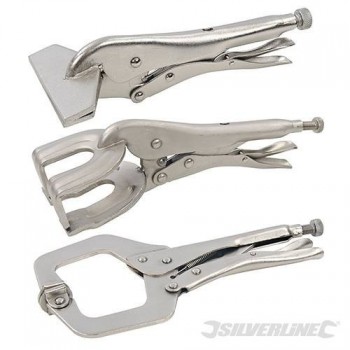
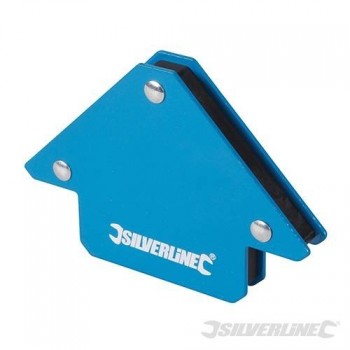
Magnet welder Silverline 75 mm
2,99 €
Tax included
Magnet welding powerful to maintain the workpieces in place at 45°, 90° and 135°.
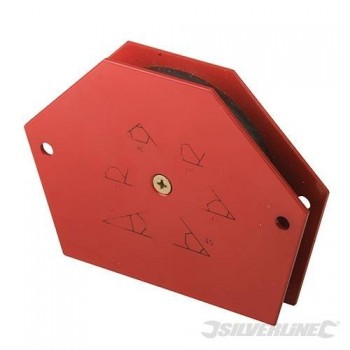
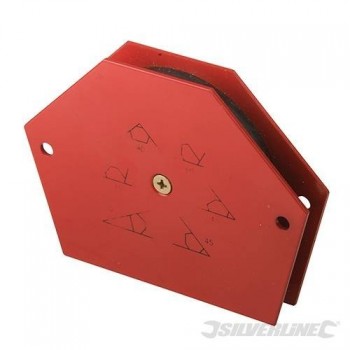
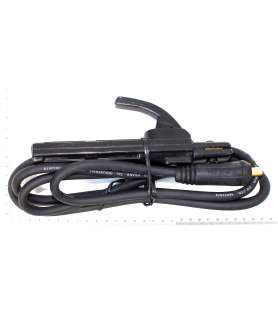
Electrode Holder 1x16 mm² for MMA Welding Machine – Cable Length 1.8 m
62,29 €
Tax included
Single-core electrode holder with 16 mm² cable section for MMA welding machines up to 160–200A maximum – Cable length 1.8 m.
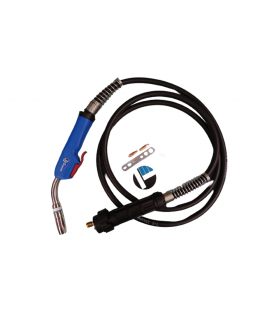
Binzel welding torch 3 m ERGOPLUS 25
160,00 €
Tax included
Binzel 3 m ERGOPLUS 25 welding torch designed for Holzmann MS250 and MS315 welding machines.
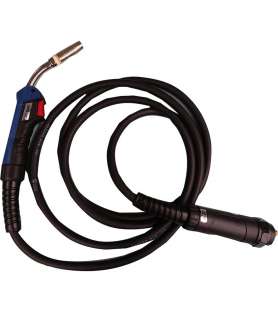
Binzel welding torch 4 m ERGOPLUS 25
180,00 €
Tax included
Binzel welding torch 4 m ERGOPLUS 25 designed for Holzmann MS250 and MS315 welding machines.
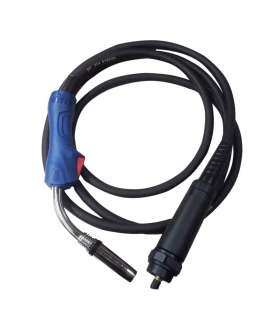
Welding Accessories and Protective Equipment: Equip Your Workshop for Efficient and Safe Welding
To carry out welding operations under good working conditions, having a reliable welding machine is not enough. Choosing the right welding accessories, workholding equipment and personal protective equipment also plays an essential role in assembly accuracy, working comfort and operator safety.
At Probois Machinoutils, discover a selection of welding accessories and protective equipment designed for metalworking professionals, craftsmen, maintenance workshops and DIY users looking to equip their workspace for metal fabrication and repair projects.
This category brings together several complementary product families, including welding torches, welding machine accessories, welding magnets, magnetic welding squares, holding clamps, welding helmets, protective gloves and other welding safety equipment, depending on the products available in our catalogue.
Whether you use a MIG/MAG, TIG or MMA welding machine, suitable accessories help improve workstation organisation, make positioning metal components easier and contribute to protecting the welder against the hazards associated with welding operations.
Why Use Accessories Designed for Your Welding Machine?
Welding machine accessories perform several important functions. Some provide the connection between the machine and the welding area, while others make it easier to handle, position or secure metal components during assembly.
Properly selected equipment makes welding operations more comfortable, reduces unnecessary handling and helps prepare workpieces with greater accuracy.
The choice of accessories depends on the welding process, the technical specifications of the welding machine, the type of metal components and the frequency of use.
The requirements of a DIY user carrying out occasional repairs will differ from those of a professional performing metal fabrication work every day.
Before purchasing a welding accessory, it is therefore important to check its technical specifications and compatibility with your existing equipment.
MIG/MAG Welding Torch: Accuracy and Working Comfort
A MIG/MAG welding torch is a central component of semi-automatic welding equipment. It guides the welding wire to the work area, transfers electrical current and directs shielding gas when required by the welding process.
A suitable torch contributes to consistent wire feeding and comfortable handling during welding operations.
Different types of MIG/MAG welding torches are available, varying in current capacity, length, connection system and cooling characteristics.
When selecting a torch, consider the welding machine's power output, duty cycle, operating conditions and connector type.
Some welding torches use a Euro connector, but not all welding machines are equipped with the same connection system.
Before ordering a MIG/MAG welding torch, check the compatibility of its connections as well as the electrical and mechanical specifications of your equipment.
TIG Welding Torch: Greater Control for Precision Welding
A TIG welding torch is used for welding operations requiring precise control of the electric arc and molten weld pool.
It holds a non-consumable tungsten electrode and delivers shielding gas to the welding area. Depending on the operation, additional filler metal may be introduced separately using a TIG filler rod.
TIG welding torches are available in different configurations, with specifications suited to different welding currents, cooling systems and machines.
Some models feature integrated controls, while others require specific connections for gas, electrical current or remote-control functions.
The choice of a TIG torch must therefore take into account the characteristics of the welding machine and the requirements of the intended application.
An ergonomic torch suited to the working conditions can improve handling and comfort during extended welding operations.
Welding Torch Accessories: Adapt and Maintain Your Equipment
Welding torch accessories allow you to complete, adapt or maintain equipment used for MIG/MAG and TIG welding processes.
Depending on the model, these accessories may include torch holders, connection components, mounting parts and various items required for operating the equipment.
Some accessories are specific to a particular torch family or welding machine model. Dimensions, mounting systems and connections are not always interchangeable.
It is therefore essential to check the product specifications before ordering.
Components that require regular replacement due to wear, such as gas nozzles, contact tips and certain internal torch parts, can also be found in our dedicated welding consumables category.
This distinction makes it easier to identify both durable accessories and consumable parts required for routine equipment maintenance.
Welding Magnets: Hold Metal Components During Assembly
A welding magnet is a practical accessory for temporarily positioning ferromagnetic metal components before joining them together.
It helps with preparation, tack welding and workpiece positioning, particularly when several metal components need to be arranged at a specific angle.
Magnetic welding holders are especially useful in metal fabrication workshops, steelworking and the manufacture of metal structures.
They can help position steel profiles, tubes and other metal components, provided their shape, weight and characteristics are compatible with the holding accessory.
The holding force varies between models and depends on factors such as the thickness, shape, surface condition and material of the workpieces.
A welding magnet does not necessarily replace a mechanical clamping device. It should not be used as the sole means of securing workpieces when stability or operational safety requires more reliable clamping.
Magnetic Welding Squares: Make Angled Assemblies Easier
A magnetic welding square is designed to help position metal components at predetermined angles.
Depending on the model, it may allow workpieces to be positioned at 45°, 90° or 135°, as well as other configurations specified by the manufacturer.
Magnetic welding angle holders are particularly useful when manufacturing metal frames, brackets, tubular structures and other steel fabrication components.
They make initial workpiece positioning easier before tack welding and can reduce the need for assistance during certain straightforward operations.
However, to achieve accurate assemblies, angles and dimensions must still be checked using suitable measuring instruments.
It is also important to consider the distortion that can occur due to heat during welding.
Magnets must be used within the temperature and load limits specified by their manufacturer, as excessive heat exposure may reduce their performance.
Welding Clamps and Workholding Accessories
Welding clamps and workholding devices play an important role in preparing metal assemblies.
They allow components to be secured before tack welding and help maintain their position during certain fabrication stages.
Commonly used equipment includes locking pliers, G-clamps, clamping systems and fixtures designed for welding tables.
The choice of a welding workholding accessory depends on workpiece dimensions, geometry, required holding force and operating conditions.
Appropriate clamping helps reduce unintended movement of components during assembly preparation.
However, it does not eliminate the risk of thermal distortion. Workpieces must be positioned and secured using a method suited to the operation being carried out.
Welding Helmets: Protect Your Eyes and Face
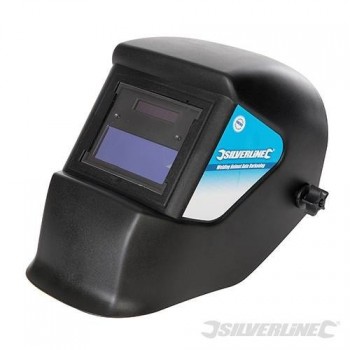
A welding helmet is an essential item of personal protective equipment for arc welding operations.
It helps protect the eyes and face against radiation emitted by the electric arc, spatter and certain hazards associated with the welding process, within the protection limits of the selected model.
Different types of welding helmets are available, including fixed-shade models and auto-darkening welding helmets equipped with automatic darkening filters.
Auto-darkening models switch from a light state to a darker state when the arc is detected, according to the filter's specifications and settings.
Helmet selection must take into account the welding process, operating current, available shade range, viewing area and applicable safety standards.
A welding helmet must be used according to its instructions and maintained in good condition. A damaged viewing screen or defective filter may compromise the welder's protection.
Welding Gloves: Protect Your Hands Against Heat-Related Hazards
Welding gloves are designed to help protect the hands during welding operations and the handling of metal components.
They may provide protection against certain thermal and mechanical hazards, depending on their construction, performance and applicable standards.
Different types of welder's gloves are available, with characteristics suited to MIG/MAG, TIG or MMA welding applications.
Some models prioritise flexibility and dexterity, while others are designed to provide greater thermal protection under the conditions specified by the manufacturer.
The choice of gloves depends on the welding process, duration of use, exposure to heat and precision required for the work.
Gloves must fit correctly, be kept in good condition and be replaced when damage could reduce their protective performance.
Welding Aprons and Protective Clothing
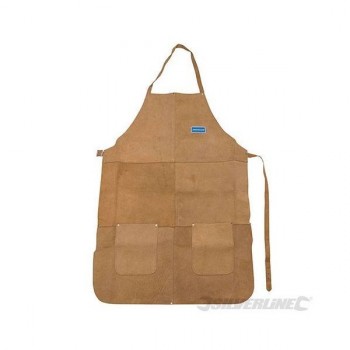
A welding apron and suitable protective clothing help protect the body against sparks, spatter and certain thermal hazards associated with welding operations.
Depending on the application, the welder may use an apron, jacket, protective sleeves or other welding protective equipment.
Protective clothing must be selected according to the identified hazards, welding process and applicable protection requirements.
Materials and construction characteristics are important considerations. Ordinary clothing, particularly garments made from certain synthetic fibres, may present additional hazards when exposed to heat or molten metal spatter.
It is advisable to use equipment specifically designed for welding operations and to follow the manufacturer's instructions for use and maintenance.
Welding Screens and Curtains: Protect the Surrounding Work Area
Welding protection screens and suitable welding curtains help separate work areas and reduce the exposure of nearby people to welding radiation and spatter, within the protective capabilities of the equipment.
These products are particularly useful in workshops where several people work simultaneously.
A welding curtain can be used to organise workstations and reduce direct visual exposure to the electric arc.
It is important to choose a screen specifically designed for welding, with protective characteristics appropriate to the intended application.
These collective protective measures do not replace the personal protective equipment required by the welder.
They must also be installed so that they do not obstruct movement, emergency evacuation or ventilation of the work area.
How to Choose Welding Accessories and Protective Equipment
Choosing the right welding accessories and protective equipment begins with an assessment of the work to be performed.
For welding torches and connection accessories, check compatibility with the welding machine, the process being used and the technical specifications of the installation.
For magnets, magnetic squares and workholding devices, important criteria include workpiece geometry, weight, required angles and mechanical loads.
When selecting welding safety equipment, it is essential to consider the hazards associated with arc radiation, heat, spatter and the working environment.
Protective equipment must be suitable for the identified hazards and comply with applicable regulatory requirements.
Welding can also generate hazardous fumes and gases. A conventional welding helmet does not provide respiratory protection against these contaminants.
Appropriate preventive measures may include welding fume extraction at the source, suitable ventilation and, depending on the risk assessment, specific respiratory protective equipment.
Organise Your Welding Workstation for Greater Efficiency
A properly organised welding workstation makes preparation, tack welding and welding operations easier.
It is advisable to arrange welding accessories so that tools, workpieces and protective equipment remain readily accessible.
Welding torches and their cables should be positioned to reduce the risk of snagging and damage.
Magnets, clamps and workholding devices should be inspected before use to check their condition and suitability for securing the workpieces.
The work area should also be kept clean, combustible materials exposed to sparks should be removed, and appropriate fire prevention measures should be implemented.
Personal protective equipment for welders must remain easily accessible and be worn whenever required by the operation.
Good workstation organisation improves working comfort and makes it easier to follow safety procedures.
Welding Accessories for Professionals and DIY Users
Welding accessories meet the needs of a wide range of users, from DIY enthusiasts with compact welding machines to professional metalworkers and industrial maintenance teams.
For occasional repair projects, a carefully selected range of accessories can simplify workpiece preparation and improve working conditions.
In professional workshops, choosing robust accessories suited to regular use and compatible with existing equipment is particularly important.
Magnetic welding holders, suitable torches and clamping devices help organise metal fabrication operations.
Protective equipment contributes to the implementation of necessary safety measures, alongside collective protection systems and established working procedures.
Buy Welding Accessories and Protective Equipment at Probois Machinoutils
Specialising in woodworking and metalworking machinery, Probois Machinoutils helps you equip your workshop with a selection of machines, accessories and welding protective equipment.
Depending on the products available in our catalogue, discover welding torches, welding machine accessories, welding magnets and magnetic squares, workholding devices and various products designed to protect welders.
To complete your installation, explore our range of welding machines, plasma cutters, welding tables and carts, welding consumables and welding fume extraction solutions.
Before ordering, check the dimensions, technical specifications, compatibility and operating conditions of the selected accessories.
Our team is available to provide information about the products and help you identify equipment suited to your machinery and requirements.
Discover our selection of welding accessories and protective equipment at Probois Machinoutils and equip your workshop for metal fabrication, assembly and repair projects.