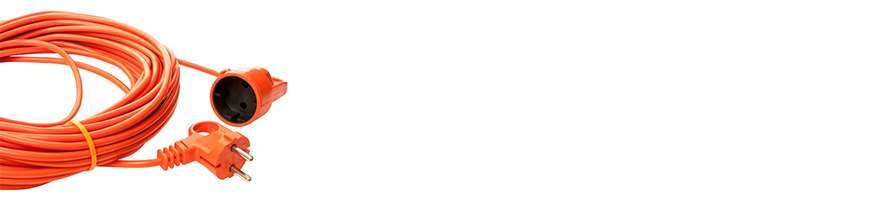
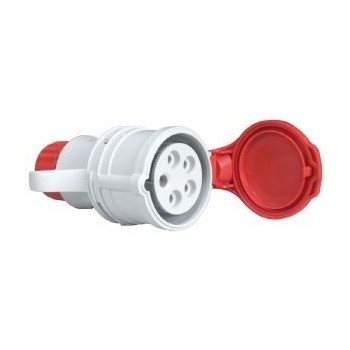
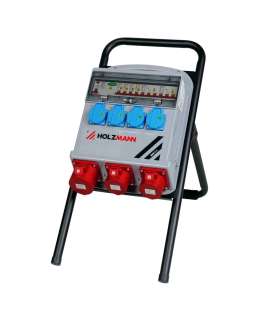
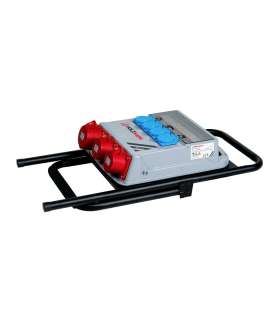
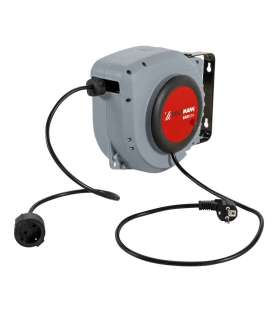
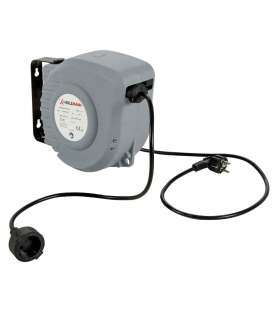
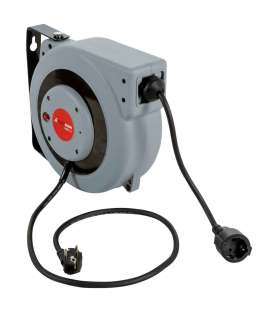
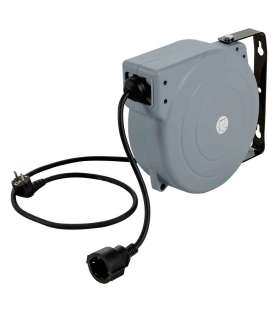
Extension leads and electrical plugs for woodworking machines and machine tools
Discover our selection of extension leads, electrical plugs and power sockets for woodworking machines, metalworking machines and workshop equipment.
The electrical power supply of a machine is essential to ensure correct operation and preserve the service life of its motor. An unsuitable extension lead, an inadequately sized cable or a faulty plug may cause power loss, starting difficulties or abnormal motor overheating.
At Probois Machinoutils, a specialist in woodworking machinery and workshop equipment, we offer electrical accessories designed for connecting your single-phase and three-phase machines.
Extension leads suitable for workshop machinery
Machines used in woodworking and metalworking workshops are often equipped with electric motors requiring a power supply suited to their power rating and operating conditions.
Extension leads and electrical plugs can be used to power various types of machinery, including:
- Planer thicknessers.
- Table saws.
- Sliding table saws.
- Woodworking and metalworking band saws.
- Sliding mitre saws.
- Spindle moulders.
- Combination woodworking machines.
- Woodturning lathes and metalworking lathes.
- Pillar drills.
- Stationary sanders.
- Dust and chip extractors.
- Air compressors.
- Log splitters.
- Log saws.
- Garden shredders.
- Various handheld power tools.
Each machine has specific electrical characteristics. The choice of extension lead and plug must therefore take into account the manufacturer's recommendations, motor power, current consumption and supply voltage.
230 V single-phase extension leads for woodworking machines
230 V single-phase extension leads, also commonly searched for under the former 220 V designation, are particularly widespread in home workshops and small woodworking businesses.
Unlike low-power household appliances, certain woodworking machines may require a substantial current when their electric motor starts.
An extension lead with an insufficient conductor cross-sectional area may cause a voltage drop and affect machine operation.
For our 230 V woodworking machines, when an extension lead is required, we generally recommend the following characteristics:
- A minimum conductor cross-sectional area of 2.5 mm².
- A three-core 3G2.5 mm² cable with a protective earth conductor.
- A maximum recommended length of 10 metres.
- A current rating suitable for the machine.
- Electrical plugs compatible with the installation.
- A cable that is fully unwound during operation.
The machine manufacturer's specific requirements always take priority. Certain machines require a dedicated electrical circuit or a specific electrical connection.
400 V three-phase extension leads for professional machinery
400 V three-phase extension leads, formerly referred to as 380 V extension leads, are used to power certain professional woodworking and metalworking machines.
Three-phase electrical installations are particularly common in workshops equipped with high-powered stationary machinery.
When choosing a three-phase extension lead, several characteristics must be checked:
- The rated operating voltage.
- The current-carrying capacity of the cable.
- The conductor cross-sectional area.
- The required number of conductors.
- The need for a neutral conductor.
- The presence of a protective earth conductor.
- The length of the extension lead.
- Compatibility between plugs and sockets.
- The rating of the electrical protection devices.
For certain three-phase machines, our recommendations may require the use of a 5G6 mm² cable. However, cable sizing must be adapted to the characteristics of each machine and electrical installation.
We recommend having three-phase machine connections checked by a qualified electrician.
Electrical plugs and sockets for woodworking machines
Electrical plugs and sockets allow a machine to be connected to its electrical installation or to a compatible extension lead.
A damaged electrical plug showing signs of overheating or deteriorated contacts must be replaced to preserve the quality and safety of the electrical connection.
Various types of electrical plugs and sockets are used in workshops:
- 230 V single-phase earthed plugs.
- Single-phase sockets.
- 400 V three-phase industrial plugs.
- Three-phase sockets.
- 16 A industrial plugs and sockets.
- 32 A industrial plugs and sockets.
- Four-pin and five-pin three-phase plugs.
The choice of electrical plug or socket must comply with the voltage, current rating, conductor configuration and connection requirements of the machine.
What is the difference between a single-phase and a three-phase plug?
Single-phase and three-phase plugs correspond to two different types of electrical power supply.
230 V single-phase plug: generally used to power machines intended for home workshops, handheld power tools and certain professional machines. An earthed single-phase connection usually includes a live conductor, a neutral conductor and a protective earth conductor.
400 V three-phase plug: frequently used in professional workshops to power three-phase electric motors. Depending on the configuration, it may include three phase conductors, a neutral conductor and a protective earth conductor.
These two types of plugs are not interchangeable and correspond to different electrical installations.
A simple electrical adaptor cannot convert a single-phase power supply into a three-phase power supply.
Four-pin or five-pin three-phase plugs: what is the difference?
Three-phase industrial plugs may feature four or five pins depending on the electrical requirements of the machine.
Four-pin three-phase plug (3P+E): it includes three phases and a protective earth connection. It does not include a neutral conductor.
Five-pin three-phase plug (3P+N+E): it includes three phases, a neutral conductor and a protective earth connection.
Certain three-phase machines require a neutral conductor to power their control circuits or auxiliary equipment.
It is therefore essential to check the manufacturer's wiring diagram before selecting a three-phase plug or socket.
16 A and 32 A industrial plugs: how to choose?
Industrial plugs and sockets are designed to withstand a specified rated current.
16 A and 32 A models are among the most commonly encountered configurations in professional workshops.
The choice between a 16 A and a 32 A industrial plug depends on several factors:
- The rated current drawn by the machine.
- The power and characteristics of the motor.
- The supply voltage.
- The conductor cross-sectional area.
- The rating of the electrical protection devices.
- The characteristics of the existing electrical installation.
Installing a higher-rated socket does not increase the electrical power available from an existing circuit.
The entire electrical installation must be correctly sized according to the requirements of the machine.
How to choose an extension lead for a woodworking machine?
Choosing an extension lead for a woodworking machine should not be based solely on its length or price.
Various technical criteria must be taken into account:
- The machine supply voltage: 230 V or 400 V.
- The type of power supply: single-phase or three-phase.
- The rated current drawn by the motor.
- The motor starting current.
- The power requirements of auxiliary equipment.
- The conductor cross-sectional area.
- The total cable length.
- The number of conductors.
- The type of electrical plug.
- The presence of a suitable protective earth connection.
- The mechanical resistance of the cable sheath.
- The operating conditions within the workshop.
- The IP protection rating of the electrical connections.
- The machine manufacturer's recommendations.
For stationary machines permanently installed in a workshop, connecting the machine to a suitable nearby wall socket is generally preferable to the permanent use of an extension lead.
What cable cross-sectional area should you choose for a woodworking machine?
The cross-sectional area of an electrical conductor, expressed in square millimetres (mm²), corresponds to the area of its conductive material.
The larger the conductor cross-sectional area, the lower its electrical resistance for an identical cable length and conductor material.
Common conductor cross-sectional areas found in electrical installations include:
- 0.75 mm².
- 1 mm².
- 1.5 mm².
- 2.5 mm².
- 4 mm².
- 6 mm².
Not all these cable sizes are necessarily suitable for powering stationary machinery equipped with a high-powered electric motor.
For many single-phase woodworking machines, we recommend a minimum conductor cross-sectional area of 2.5 mm² when an extension lead is required, subject to the specific requirements of each machine.
For three-phase machines and high-powered equipment, cable sizing must be determined according to the current consumption, cable length and operating conditions.
3G1.5 or 3G2.5 mm² extension lead: what is the difference?
The markings on an electrical cable identify, among other characteristics, the number and cross-sectional area of its conductors.
3G1.5 mm² cable: it contains three conductors, each with a cross-sectional area of 1.5 mm², including a green and yellow protective earth conductor.
3G2.5 mm² cable: it contains three conductors, each with a cross-sectional area of 2.5 mm², including a green and yellow protective earth conductor.
For an identical length and conductor material, a 2.5 mm² cable has lower electrical resistance than a 1.5 mm² cable.
This difference is particularly important for machines equipped with electric motors that place substantial demands on their power supply during starting or machining operations.
A suitable extension lead helps limit voltage drops and excessive heating of the electrical conductors.
What does the 5G6 mm² marking mean on a three-phase cable?
An electrical cable marked 5G6 mm² contains five conductors, each with a cross-sectional area of 6 mm², including a green and yellow protective earth conductor.
In a three-phase configuration with a neutral conductor, these conductors may correspond to the three phases, neutral and protective earth.
This type of cable may be used for certain professional machines requiring a correctly sized electrical power supply.
However, the conductor cross-sectional area is only one of the criteria to consider. The plugs, sockets, electrical protection devices and installation must also be compatible with the machine's characteristics.
Why is the length of an extension lead important?
The electrical resistance of a cable increases with its length when the conductor cross-sectional area and material remain unchanged.
An excessively long extension lead may therefore cause a greater voltage drop, particularly when the motor draws a high current.
The possible consequences of an unsuitable electrical power supply include:
- Motor starting difficulties.
- Reduced starting torque.
- Loss of power during operation.
- Excessive cable heating.
- Abnormal motor overheating.
- Tripping of the thermal protection device.
- Premature deterioration of electrical components.
For our single-phase machines, we generally recommend limiting the extension lead length to 10 metres and using a minimum conductor cross-sectional area of 2.5 mm², unless otherwise specified by the manufacturer.
When the electrical socket is too far from the machine, it is preferable to consider having an additional socket installed by a qualified electrician.
Why must an extension cable reel be fully unwound?
When an electrical current flows through a cable, some of the energy is dissipated as heat.
If the cable remains wound around a reel, this heat may be more difficult to dissipate.
Using a high-powered machine with a partially or fully wound cable reel may therefore cause excessive cable heating.
The associated risks may include:
- Deterioration of the insulating sheath.
- Deformation of the electrical cable.
- Tripping of the cable reel's thermal protection device.
- Deterioration of electrical connections.
- A short circuit.
- A fire hazard.
It is therefore essential to fully unwind the extension lead when using a woodworking machine and to comply with the maximum permissible load specified by the cable reel manufacturer.
What is the difference between a PVC electrical cable and an H07RN-F cable?
Electrical cables can be manufactured using different insulating materials suited to their intended operating conditions.
PVC-sheathed cables are commonly used in certain domestic and indoor applications.
H07RN-F cables feature a robust and flexible elastomer sheath suitable for many professional and industrial applications.
Depending on their characteristics, they may offer several advantages:
- Good cable flexibility.
- Mechanical resistance suitable for demanding applications.
- Improved resistance to certain environmental conditions.
- Suitability for appropriate professional or outdoor environments.
The choice of cable must take into account its operating environment, conductor cross-sectional area, electrical characteristics and the manufacturer's recommendations.
What does the IP protection rating of an electrical plug mean?
The IP protection rating identifies the level of protection provided by electrical equipment against the ingress of solid objects and water.
Various IP protection ratings may be found on electrical plugs, sockets and extension leads:
- IP20: protection against certain solid objects, without protection against water.
- IP44: protection against solid objects of 1 mm or larger and splashing water.
- IP54: limited protection against dust ingress and protection against splashing water.
- IP55: limited protection against dust ingress and protection against water jets.
- IP67: complete protection against dust ingress and protection against the effects of temporary immersion under the conditions defined by the applicable standard.
In a woodworking workshop, the presence of sawdust and dust must be taken into account when choosing electrical accessories.
For outdoor use, it is also important to check that the extension lead, plugs and electrical connections are suitable for the conditions encountered.
Why does a woodworking machine fail to start when connected to an extension lead?
When a machine operates correctly when connected directly to a wall socket but experiences difficulties when connected to an extension lead, the extension lead may be responsible for the problem.
Several factors may explain this malfunction:
- An insufficient conductor cross-sectional area.
- An excessively long extension lead.
- A substantial voltage drop.
- Damaged electrical contacts.
- A poor connection within an electrical plug.
- A damaged electrical conductor.
- A tripped cable reel thermal protection device.
- An extension lead with an insufficient current rating.
- An unsuitable electrical power supply.
A voltage drop may prevent the motor from developing sufficient starting torque or interfere with the operation of its electrical contactor.
Before considering replacing the motor, capacitor or contactor, it is therefore important to check the quality of the electrical power supply.
Can an extension lead cause a loss of motor power?
An unsuitable extension lead may contribute to a voltage drop at the motor terminals, particularly when the machine is operating under a heavy load.
This phenomenon may occur during sawing, thicknessing, planing or other machining operations requiring substantial power.
The main symptoms may include:
- Unusual motor slowdown.
- Reduced cutting performance.
- Motor starting difficulties.
- Excessive overheating.
- Unexpected machine shutdowns.
- Tripping of the thermal protection device.
These symptoms may also be associated with a mechanical problem or a faulty electrical component.
We recommend having the electrical power supply checked before replacing internal machine components.
Can an unsuitable extension lead damage an electric motor?
An unsuitable electrical power supply may subject an electric motor to unfavourable operating conditions.
In certain motors, insufficient voltage may result in reduced available torque, increased current consumption under load and excessive overheating.
When these conditions occur repeatedly, they may contribute to premature ageing of electrical insulation and deterioration of the motor windings.
Capacitors, contactors and certain electronic components may also be affected by poor-quality electrical power or faulty connections.
Choosing a suitable extension lead therefore helps preserve the various electrical components of your machine.
Can a woodworking machine be connected to a multi-socket extension lead?
Domestic multi-socket extension leads are generally designed to power several electrical appliances within their maximum permissible power and current ratings.
Connecting a high-powered woodworking machine to a multi-socket extension lead may present problems when several pieces of equipment operate simultaneously.
The combined power consumption of a table saw, dust extractor and other electrical equipment may exceed the capacity of the multi-socket extension lead or electrical circuit.
For high-powered stationary machinery, we recommend using a suitable electrical socket and, where necessary, a dedicated electrical circuit.
Avoid connecting multiple extension leads or multi-socket extension leads together.
Can a woodworking machine and a dust extractor be connected to the same socket?
In a woodworking workshop, a woodworking machine and a dust and chip extractor are frequently used simultaneously.
Both pieces of equipment have their own electric motor and may require a substantial starting current.
Before connecting them to the same electrical circuit, several factors must be checked:
- The rated current drawn by each appliance.
- The motor starting currents.
- The combined electrical power consumption.
- The capacity of the electrical socket.
- The conductor cross-sectional area of the installation.
- The rating of the electrical protection devices.
- The presence of other equipment connected to the same circuit.
Using correctly sized electrical circuits helps reduce the risk of overloading and unexpected tripping of electrical protection devices.
A qualified electrician can determine whether the existing electrical installation is suitable for the simultaneous operation of these machines.
Why is my three-phase machine rotating in the wrong direction?
The direction of rotation of many three-phase motors depends on the phase sequence of their electrical power supply.
When a machine is connected to a new three-phase socket or moved to another electrical installation, its direction of rotation may differ from the expected direction.
An incorrect direction of rotation may affect machine operation and present significant safety risks when using cutting tools.
Certain industrial plugs feature a phase reversal mechanism designed to change the phase sequence.
Verification of the direction of rotation and any work on the electrical connection must be entrusted to a qualified electrician, in accordance with the machine manufacturer's instructions.
Why is protective earthing essential for woodworking machines?
Protective earthing is an essential part of electrical protection for machines requiring a protective earth conductor.
In the event of an electrical insulation fault, it works together with suitable electrical protection devices to help reduce the risk of dangerous electric shock.
Stationary machines featuring a metal frame generally require protective earthing in accordance with their electrical design.
It is essential to maintain the continuity of the protective earth conductor between the machine, extension lead and electrical installation.
An electrical plug or extension lead must never be modified to remove the protective earth connection.
When should an extension lead or electrical plug be replaced?
Extension leads, electrical plugs and sockets may suffer mechanical or electrical wear over time.
Several warning signs indicate that their use should be discontinued and replacement considered:
- A cracked or cut cable sheath.
- Exposed electrical conductors.
- A broken electrical plug or socket.
- Bent or damaged plug pins.
- Burn marks on electrical plugs.
- Deformation of the electrical housing.
- Abnormal heating of electrical connections.
- A smell of burnt plastic.
- Corroded electrical contacts.
- Intermittent electrical power supply.
- A crushed or severely damaged cable.
- A damaged cable strain relief.
A damaged extension lead, plug or socket must not be used again until it has been replaced or repaired by a qualified professional.
How to maintain electrical extension leads in a woodworking workshop?
Correct use and suitable storage help extend the service life of your workshop's electrical accessories.
We recommend following several good practices:
- Use extension leads suitable for the power requirements of your machines.
- Limit the length of electrical cables.
- Fully unwind extension cable reels.
- Keep cables away from cutting tools.
- Protect cables against crushing.
- Avoid repeatedly moving machines or trolleys over electrical cables.
- Never pull directly on the cable to disconnect a plug.
- Protect electrical connections against moisture and dust.
- Avoid excessive twisting and bending of cables.
- Regularly inspect the condition of plugs and extension leads.
- Store electrical cables in a clean and dry location.
- Immediately replace equipment showing signs of deterioration.
These precautions help preserve electrical accessories and maintain suitable operating conditions for your machines.
Precautions to take before connecting an electrical machine
Before commissioning a woodworking machine or machine tool, it is important to check that its electrical power supply complies with the specifications provided by the manufacturer.
Several factors must be checked:
- The available supply voltage.
- Compatibility between the machine and the electrical installation.
- The available electrical power and current.
- The conductor cross-sectional area of the electrical cables.
- The length of any extension leads.
- Compatibility between electrical plugs and sockets.
- The presence of a suitable protective earth connection.
- The correct rating of electrical protection devices.
- The overall condition of cables and electrical connections.
- The direction of rotation of three-phase motors.
- Compliance with the requirements specified in the machine instruction manual.
We recommend entrusting the installation, modification and inspection of electrical connections to a qualified electrician, particularly when commissioning professional three-phase machinery.
A suitable electrical power supply to extend the service life of your machines
The quality of the electrical power supply is sometimes overlooked when installing a new woodworking machine.
However, a correctly sized cable and electrical connections in good condition contribute to the correct operation of the motor and its various components.
A suitable electrical power supply helps to:
- Ensure normal motor starting.
- Limit voltage drops.
- Preserve machine performance.
- Reduce the risk of overheating cables and electrical connections.
- Limit shutdowns caused by an unsuitable electrical power supply.
- Preserve electrical components.
- Reduce the risk of premature motor deterioration.
- Improve the operating conditions of workshop equipment.
Investing in suitable electrical accessories therefore helps preserve your woodworking and metalworking equipment over the long term.
Find your extension leads, electrical plugs and accessories at Probois Machinoutils
A specialist in woodworking machinery, metalworking machinery, accessories and spare parts, Probois Machinoutils helps you equip, maintain and repair your workshop.
In addition to our extension leads, electrical plugs and sockets, discover our various categories of electrical components:
- Replacement electric motors for woodworking machines.
- Safety contactors for machine tools.
- Electrical on/off switches.
- Start capacitors and run capacitors.
- Fuses and fuse holders.
- Motor carbon brushes and brush holders.
- Armatures, rotors and stators.
Whether you need to connect a planer thicknesser, band saw, sliding table saw, spindle moulder or another workshop machine, choose electrical accessories suited to the characteristics of your equipment.
Discover our selection of single-phase and three-phase extension leads, electrical plugs and sockets for woodworking machines and machine tools.