
(0) Items
Special Products
Special Products


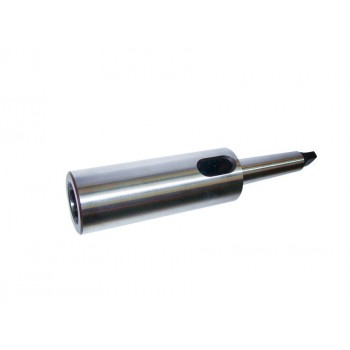
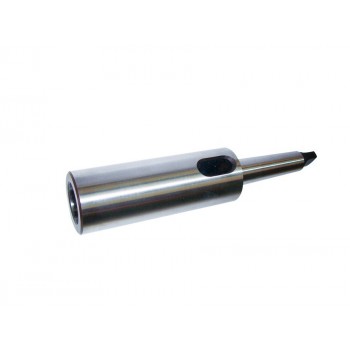
Morse Taper Increasing Sleeve
Morse Taper Increasing Sleeve: Adapt Larger Morse Taper Tools to Your Metalworking Machine
A Morse taper increasing sleeve is a metalworking accessory designed to connect certain tools or tool holders with a larger Morse taper to a machine equipped with a smaller Morse taper socket. Unlike a reducing sleeve, which allows a smaller taper tool to be used in a larger spindle socket, an increasing sleeve provides the opposite type of adaptation.
At Probois Machinoutils, we offer a selection of Morse taper increasing sleeves designed for specific connections, including MT2 to MT3 and MT3 to MT4, depending on the available product references. These accessories may be useful in mechanical workshops where operators need to adapt existing drilling tools or compatible tool holders to different metalworking machines.
However, selecting a Morse taper increasing sleeve requires particular attention. Installing a tool with a larger Morse taper does not mean that the machine automatically has the power, rigidity or capacity required to operate that tool. The technical specifications and operating limits established by the machine manufacturer must always be respected.
What Is a Morse Taper Increasing Sleeve?
A Morse taper increasing sleeve, also known as a Morse taper enlarging adapter or Morse taper increasing adapter, is a mechanical accessory featuring two tapered connections of different sizes.
Its external connection is designed to fit into the machine's Morse taper socket, while its internal connection accommodates a tool equipped with a larger Morse taper.
For example, an MT2 to MT3 increasing sleeve is intended to connect a tool with an MT3 Morse taper to a machine equipped with an MT2 socket, provided that the adapter design and the machine are compatible.
This arrangement differs from an MT3 to MT2 reducing sleeve, which has a larger external taper and a smaller internal socket.
An increasing sleeve must be specifically manufactured for this purpose. A conventional Morse taper reducing sleeve cannot simply be reversed to perform the same function.
Before purchasing an adapter, it is therefore essential to identify the exact connection sizes and check the manufacturer's technical specifications.
What Is the Difference Between a Morse Taper Reducing Sleeve and an Increasing Sleeve?
Morse taper reducing sleeves and Morse taper increasing sleeves are both designed to connect tools and machine sockets with different Morse taper dimensions. However, they perform opposite functions.
A reducing sleeve has an external Morse taper that is larger than its internal socket. For example, an MT3 to MT2 reducing sleeve allows an MT2 tool to be installed in an MT3 spindle socket.
An increasing sleeve is designed to connect a tool with a larger Morse taper to a smaller machine socket.
For example, an MT2 to MT3 increasing adapter may allow an MT3 tool to be mounted on a machine equipped with an MT2 connection, subject to the specific design and compatibility of the assembly.
This distinction is particularly important when selecting accessories for drill presses, drilling and milling machines or metal lathes.
The two types of adapters are not interchangeable, and their dimensions must be checked carefully before installation.
Understanding Morse Taper Sizes MT2, MT3 and MT4
The Morse taper is a standardised tapered mounting system widely used on metalworking machines, including drill presses, drilling and milling machines, and metal lathes.
It provides a tapered connection between a tool or tool holder and a compatible machine socket.
Common Morse taper sizes include MT1, MT2, MT3 and MT4. As the taper number increases, its dimensions also increase.
An MT3 tool therefore has a larger Morse taper shank than an MT2 tool. Similarly, an MT4 Morse taper is larger than an MT3 taper.
Different Morse taper sizes cannot be directly connected without a suitable adapter specifically designed for the required combination.
A Morse taper increasing sleeve provides a possible solution for certain applications where the tool taper is larger than the machine socket.
However, the use of an increasing sleeve must remain consistent with the machine's mechanical capacity and the intended machining operation.
MT2 to MT3 Increasing Sleeve: Adapting an MT3 Tool to an MT2 Machine
An MT2 to MT3 increasing sleeve is intended to allow certain tools equipped with an MT3 Morse taper to be connected to a machine featuring an MT2 socket.
This adaptation may be useful when a workshop already owns an MT3 tool and wishes to use it with another machine equipped with a smaller MT2 spindle connection.
Depending on the adapter design, it may be suitable for certain drilling accessories or compatible tool holders.
However, machines equipped with an MT2 spindle are generally designed for loads and operating conditions corresponding to their own technical specifications.
Using an increasing sleeve does not automatically make it possible to operate larger drill bits or tools requiring greater cutting forces than the machine can safely provide.
Before use, the operator should check the overall length of the assembly, the mounting and extraction methods, and the machine's maximum permitted operating conditions.
The adapter must also be compatible with the shape of the tool shank and any specific retention requirements.
MT3 to MT4 Increasing Sleeve: Using a Larger Morse Taper Tool
An MT3 to MT4 increasing sleeve is designed to connect certain tools with an MT4 Morse taper to a machine equipped with an MT3 socket, provided that the accessory and machine are specifically compatible.
This arrangement may be of interest to workshops using different metalworking machines and wishing to make better use of their existing tools.
It may be considered for certain drilling applications, subject to the mechanical characteristics of the machine and the requirements of the tool-holding system.
As with an MT2 to MT3 adapter, installing a tool with a larger Morse taper must not be interpreted as increasing the machine's performance.
Motor power, spindle rigidity, drilling capacity and the manufacturer's recommendations remain the determining factors.
The additional space occupied by the adapter must also be considered, particularly on machines with limited spindle travel.
Before installation, it is advisable to check whether the complete assembly leaves sufficient clearance for the intended operation.
Morse Taper Increasing Sleeve for Drill Presses
On certain metalworking drill presses, a Morse taper increasing sleeve may allow a tool with a larger Morse taper to be connected to a smaller spindle socket, where this configuration is specifically supported by the machine and adapter manufacturers.
This solution may be considered when an operator wishes to reuse an existing tool instead of immediately purchasing another accessory with a smaller Morse taper connection.
However, the installation must be assessed carefully. The capabilities of a drill press depend on several factors, including motor power, transmission design, structural rigidity and spindle construction.
An increasing sleeve does not modify any of these characteristics.
It is therefore essential to ensure that the intended drilling diameter, cutting forces and working conditions remain within the machine's technical limits.
The tapered contact surfaces must also be clean and free from damage to ensure correct positioning of the assembly.
Before starting the machine, the operator should verify that the tool is securely mounted and that there is no abnormal movement or interference.
Using a Morse Taper Increasing Sleeve on a Drilling and Milling Machine
Many metalworking drilling and milling machines are equipped with Morse taper spindle sockets designed to accommodate different accessories.
An increasing sleeve may be considered for certain drilling operations when the connection sizes and retention systems are compatible.
However, it is essential to distinguish drilling operations from milling operations.
Milling generates significant lateral cutting forces that require an appropriate tool-holding system. A simple Morse taper friction connection is not necessarily suitable for these conditions.
For milling operations, tool holders and positive retention systems specifically designed for the intended application must be used.
A Morse taper increasing sleeve must therefore never be considered a universal adapter for installing any type of milling cutter or tool holder.
Where a drawbar or another mechanical retention device is required, the adapter and tool holder must be expressly compatible with that system.
The machine manufacturer's instructions should always take priority over general assumptions about Morse taper compatibility.
Morse Taper Increasing Sleeve for Metal Lathes
On certain metal lathes, the tailstock is equipped with a Morse taper socket designed to accommodate various drilling accessories.
A Morse taper increasing sleeve may potentially be used to connect a tool with a larger Morse taper, provided that the tailstock and adapter specifications allow this configuration.
The overall length of the assembly, available tailstock quill travel and extraction mechanism must all be checked.
A longer tool-holding assembly may change the working position of the tool and reduce the available space between the lathe components.
It may also increase the distance between the tool and its support, making it particularly important to respect the permitted working loads.
Before installing the adapter, consult the lathe manual and the technical specifications provided by the adapter manufacturer.
Only use the assembly for operations that remain within the capabilities of the lathe and its tailstock.
How to Choose the Right Morse Taper Increasing Sleeve
Several technical factors must be considered when selecting a Morse taper increasing adapter for metalworking machines.
- Machine Morse taper size: accurately identify the spindle socket dimensions.
- Tool Morse taper size: check the taper size of the tool to be adapted.
- Increasing direction: distinguish between MT2 to MT3 and MT3 to MT4 configurations.
- Machine type: drill press, drilling and milling machine or metal lathe.
- Adapter design: verify the actual connection dimensions and mounting system.
- Overall length: check the space occupied by the complete assembly.
- Extraction system: ensure that the adapter and tool can be removed correctly.
- Machine capacity: respect the power, drilling capacity and mechanical load limits specified by the manufacturer.
It is particularly important not to confuse an increasing sleeve with a reducing sleeve.
For example, an MT2 to MT3 increasing sleeve performs a different function from an MT3 to MT2 reducing sleeve.
Before ordering, compare the adapter specifications with those of the machine and the tool concerned.
If the manufacturer does not confirm the suitability of the proposed assembly, another compatible tool-holding solution should be selected.
Installing a Morse Taper Increasing Sleeve: Recommended Practices
A Morse taper increasing sleeve must be installed carefully to protect the tapered contact surfaces and ensure correct tool positioning.
Before any operation, the machine must be switched off and secured according to the manufacturer's safety instructions.
The tapered surfaces of the spindle, adapter and tool should be clean, dry and free from metal chips, unless otherwise specified by the manufacturer.
Even a small particle trapped between two tapered surfaces can cause incorrect seating, excessive runout or insufficient tool retention.
Always follow the mounting procedure specified for the accessory. Do not force the adapter into position with a metal hammer or unsuitable tools.
Before starting the machine, check that the assembly is correctly seated and that there is no abnormal play.
The adapter should be removed using the extraction mechanism recommended for the machine and the particular sleeve design.
After use, clean the accessory and protect it against corrosion during storage. Remove any protective oil from the tapered mounting surfaces before the next installation.
When Should a Morse Taper Increasing Sleeve Be Replaced?
A Morse taper increasing sleeve is a mechanical accessory whose tapered surfaces must retain their correct geometry to provide proper tool positioning.
Certain signs may indicate that inspection or replacement is necessary:
- Deep scratches on the tapered mounting surfaces.
- Visible deformation following an impact.
- Significant corrosion on the tapers.
- Insufficient tool retention.
- Abnormal runout after checking the machine spindle and tool.
- Unusual difficulties during installation or removal.
However, poor machining accuracy is not necessarily caused by the adapter. The problem may also originate from a damaged spindle, a deformed tool or incorrect mounting.
It is therefore advisable to inspect the complete tool-holding assembly before replacing the sleeve.
Regular cleaning, careful handling and appropriate storage help maintain the condition of the accessory.
Why Buy Your Morse Taper Increasing Sleeve from Probois Machinoutils?
Specialising in woodworking and metalworking machinery, Probois Machinoutils offers a selection of accessories designed for equipping, maintaining and adapting machine tools.
Our Morse Taper Increasing Sleeve category includes accessories designed for specific connections between different Morse taper sizes, particularly MT2 to MT3 and MT3 to MT4 configurations.
These adapters may provide a practical solution for operators wishing to reuse certain tools already available in their workshops, provided that the machine characteristics and mounting conditions are compatible.
To complete your workshop equipment, discover our Morse taper reducing sleeves, drill chuck arbors, drill chucks and other accessories for drill presses, drilling and milling machines, and metal lathes.
Whether you need to adapt an existing drilling tool, expand your workshop equipment or explore different mounting configurations, choosing a compatible Morse taper increasing sleeve can provide additional flexibility while respecting the technical limits of your metalworking machine.