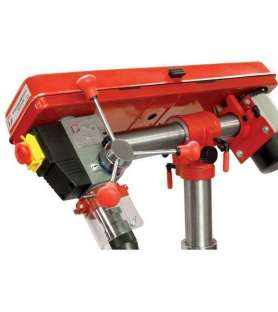
Spare Parts for Holzprofi & Jean l'Ébéniste Pillar Drills
Discover our selection of spare parts for Holzprofi and Jean l'Ébéniste pillar drills, designed for the maintenance, repair and refurbishment of your workshop drilling machine.
A pillar drill, also widely known as a drill press, is designed to provide accurate, stable and repeatable drilling. Its rigid column, adjustable table and vertically guided spindle make it suitable for drilling wood, metal, plastics and many other materials.
Over time and with regular use, some mechanical or electrical components can wear, develop excessive play or become damaged. A worn belt, damaged chuck, faulty bearing, broken return spring or defective switch does not necessarily mean that the complete machine needs to be replaced.
Probois Machinoutils offers a selection of replacement parts for Holzprofi and Jean l'Ébéniste pillar drills to help maintain your equipment and extend its service life.
What Spare Parts Are Available for a Pillar Drill?
A pillar drill consists of numerous mechanical and electrical components that can potentially be replaced individually.
Depending on the model and availability, spare parts may include:
Our range of pillar drill spare parts evolves according to the components available for different machine models and generations.
Drive Belts for Pillar Drills
On a conventional belt-driven pillar drill, the drive belt transfers rotation from the motor to the spindle through a system of pulleys.
On many machines, moving the belt between the different pulley steps also allows the spindle speed to be adjusted according to the drill bit diameter and the material being machined.
Over time, a drive belt can stretch, harden, crack or become worn.
A damaged or incorrectly tensioned belt can cause:
When replacing a belt, always check the profile, length and dimensions of the original component.
Pulleys and Drive Components
Drive pulleys work together with the belt to transfer power from the electric motor to the spindle.
Depending on the design of the pillar drill, several stepped pulleys may be used to provide different spindle speeds.
A damaged, cracked or excessively worn pulley can cause vibrations, irregular operation and premature belt wear.
If the drive system becomes noisy or irregular, check the condition of the belts, pulleys, shafts and associated bearings.
Drill Chucks for Pillar Drills
The drill chuck holds the drill bit securely during machining.
Its condition directly affects tool holding and drilling accuracy.
Over time, a chuck can wear, develop excessive play or no longer clamp the drill bit correctly.
Before replacing a drill chuck, it is important to identify its mounting system and the specifications of the machine spindle.
Visual similarity between two chucks does not guarantee compatibility.
Spindle and Associated Components
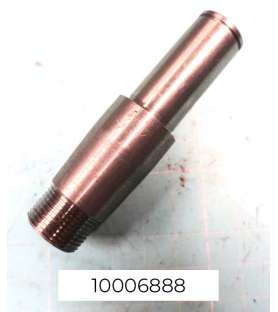
The spindle is one of the main mechanical components of a pillar drill. It provides both rotation and vertical movement of the cutting tool.
It operates together with components such as bearings, the quill, feed mechanism and the chuck mounting system.
Excessive spindle play can directly affect drilling accuracy.
Significant vibration, unusual bearing noise or noticeable play should therefore lead to an inspection of the spindle and its associated components before the machine is used again.
Bearings for Pillar Drills
Bearings ensure smooth rotation of the spindle, shafts and pulleys.
They are subjected to repeated loads and can gradually wear.
A damaged bearing may cause:
The exact bearing must be identified and its dimensions checked before replacement.
However, noise coming from the drill head is not necessarily caused by a bearing. Belts, pulleys and other mechanical components should also be inspected.
Return Springs and Quill Feed Mechanism
The return spring helps return the quill and spindle to their upper position when the operator releases the feed handle after drilling.
After repeated use, the spring may lose tension or become damaged.
The feed mechanism also incorporates various mechanical components such as the feed shaft, handles and parts used to transmit movement to the quill.
If the spindle feed becomes difficult or irregular, or no longer returns correctly to its upper position, the mechanism should be inspected before continuing to use the machine.
Feed Handles and Levers
The feed handle allows the operator to lower the drill bit progressively towards the workpiece.
Its handles, shaft and associated mechanical components are subjected to frequent use.
A broken handle, worn shaft or mechanism with excessive play can make the pillar drill less accurate and more difficult to operate.
These components can often be replaced individually depending on the design of the machine.
Drilling Tables and Table Supports
The drilling table provides stable support for positioning and securing the workpiece below the drill bit.
On many pillar drills, the table can be adjusted in height and may also be tilted or rotated.
Its adjustment system can include a table support, rack, crank handle, locking mechanism and various mechanical components.
Over time, these parts may wear, break or develop excessive play.
A correctly secured and adjusted table is important for maintaining stable working conditions and accurate drilling.
Motors for Pillar Drills
The electric motor provides the power required to rotate the spindle.
When replacing a motor, power output alone is not sufficient to determine compatibility.
You should also check:
Two motors with the same rated power may have different dimensions, shafts or mounting systems and therefore may not be interchangeable.
Switches and Electrical Components
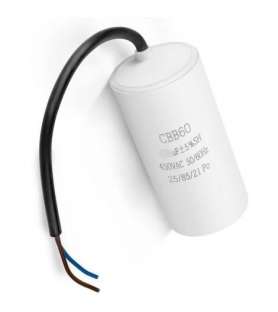
A pillar drill may contain various electrical components, including an ON/OFF switch, emergency stop, capacitor, wiring, safety switch or other components depending on the model.
A starting problem therefore does not automatically mean that the motor has failed.
The cause of the fault should be identified before replacing a component.
For switches and other electrical parts, always check the reference, electrical specifications, connections and configuration of the original component.
Spare Parts for Holzprofi Pillar Drills
Holzprofi pillar drills contain numerous components that may require maintenance or replacement during the service life of the machine.
Depending on the model, these may include parts associated with the transmission, spindle, table adjustment, quill feed mechanism or electrical system.
A fault should be correctly diagnosed before replacing a component.
For example, vibration may be caused by a drive belt, pulley, bearing or spindle-related problem.
Correctly identifying the cause helps avoid unnecessarily replacing components that are still in good working condition.
Spare Parts for Jean l'Ébéniste Pillar Drills
Many Jean l'Ébéniste pillar drills remain in regular use in woodworking and general-purpose workshops.
When a machine is still in good overall condition, replacing a belt, spring, switch, chuck, bearing or another mechanical component can considerably extend its service life.
Some components may have changed between different production years.
It is therefore important to identify the exact pillar drill model and, where necessary, its manufacturing period before selecting a replacement part.
Why Maintain Your Pillar Drill Regularly?
A properly maintained pillar drill or drill press helps ensure accurate drilling and smooth, reliable operation.
Components that should be checked regularly include:
-
drive belt condition and tension;
-
pulleys;
-
spindle play;
-
bearings;
-
drill chuck;
-
quill feed mechanism;
-
return spring;
-
drilling table and locking system;
-
electric motor;
-
switches and safety devices.
Wood chips, metal swarf, dust and other debris should also be regularly removed from the table, column and accessible mechanisms.
Regular maintenance helps identify wear before a damaged component causes additional problems elsewhere in the machine.
Repair Your Pillar Drill Instead of Replacing It
A fault on a pillar drill does not necessarily mean that the complete machine needs to be replaced.
In many cases, replacing a drive belt, drill chuck, bearing, return spring, switch, motor or another mechanical component can restore normal operation.
This is particularly useful for older Holzprofi and Jean l'Ébéniste pillar drills whose frame, column and main mechanical components remain in good condition.
Accurate fault diagnosis followed by replacement of the affected component can significantly extend the service life of the machine.
Always Check Compatibility Before Purchasing
Holzprofi and Jean l'Ébéniste pillar drills may have been manufactured in different versions over the years.
Even machines with the same model designation can sometimes use different components depending on their production period.
IMPORTANT: BEFORE PURCHASING, ALWAYS CHECK THE LIST OF COMPATIBLE MACHINES. Depending on the spare part, the month and year of manufacture and the serial number of your machine may be required to confirm compatibility.
If an exploded parts diagram is available, also use the part position number shown on the diagram to help identify the correct replacement part.
For belts, chucks, bearings, shafts, spindles, springs and other mechanical components, it may also be necessary to compare the dimensions of the original part.
Visual similarity alone is not sufficient to guarantee compatibility.
Find Spare Parts for Your Holzprofi or Jean l'Ébéniste Pillar Drill
Probois Machinoutils offers a growing selection of spare parts for Holzprofi and Jean l'Ébéniste pillar drills to help you maintain, repair and extend the service life of your machine.
Depending on the model and availability, you can find drive belts, pulleys, drill chucks, spindles, bearings, return springs, motors, switches, tables, supports and other mechanical or electrical replacement parts.
Select your pillar drill model and carefully check the compatibility information provided on each product page before ordering your replacement part.