
Sorry for the inconvenience.
Search again what you are looking for


Search again what you are looking for
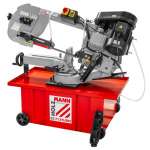
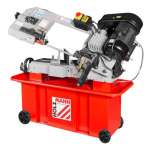
Discover our selection of spare parts for Holzmann metal bandsaws, designed for the maintenance, servicing and repair of your machine.
Holzmann metal bandsaws are designed for cutting tubes, profiles, bars and various metal workpieces. Their operation relies on numerous mechanical and electrical components subject to significant loads, including the blade drive system, gearbox, pulleys, belts, wheels, blade guides, bearings, motor, vice, bow lowering system and electrical components.
Probois Machinoutils offers a growing range of replacement parts for Holzmann metal bandsaws, including parts for models such as the BS115, BS128HDR, BS210TOP, BS275TOP, BS712TURN and BS712TOP, depending on available references.
The blade guide system plays an essential role in the cutting accuracy of a metal bandsaw.
The guides keep the blade correctly positioned as it enters the metal workpiece and help prevent excessive blade deflection under cutting pressure.
A damaged, incorrectly adjusted or excessively worn blade guide can result in angled cuts, uneven blade wear or excessive vibration.
Depending on the Holzmann model, the system may include various components such as blade guide assemblies, guide supports, rollers, bearings and adjustment parts.
Before replacing a blade guide component, also check its adjustment and inspect the condition of the bandsaw blade and guide bearings.
Some Holzmann metal bandsaws use a V-belt or drive belt between the motor and the drive mechanism.
Over time, a belt may stretch, crack, harden or become worn.
A defective drive belt can cause slipping, loss of power, irregular blade speed or complete loss of blade drive.
When replacing a drive belt for a Holzmann metal bandsaw, check its length, width, profile and compatibility with the exact version of your machine.
Pulleys and drive wheels are important components in transmitting movement from the motor and transmission system to the bandsaw blade.
A worn or damaged pulley can cause poor power transmission, vibration or premature belt wear.
On some models, these components may have been modified during the production period. The same metal bandsaw model may therefore use different pulleys or wheels depending on its production date.
It is particularly important to check the month and year of manufacture and the serial number before ordering this type of spare part.
The transmission system of a metal bandsaw may contain different gears and pinions that transfer power from the motor to the drive wheel.
These components are subjected to significant mechanical loads during cutting, particularly when the machine is used on larger metal sections.
A worn or damaged gear can cause knocking, unusual mechanical noise, irregular blade drive or complete loss of blade movement.
Before replacing a gear, inspect the complete transmission mechanism to determine why the component has failed.
Some Holzmann metal bandsaws use a worm gearbox to obtain the blade speed required for cutting metal.
The worm shaft and associated gears are important components of the machine's drive system.
Insufficient lubrication, excessive wear or a damaged gear can cause play, unusual noises or poor transmission of movement.
When servicing the gearbox, also inspect the condition of the seals, bearings, shafts and gears.
Bearings are used in various areas of the bandsaw, including the drive wheels, blade guide system, transmission shafts and other rotating mechanisms.
A worn bearing can cause play, vibration, excessive operating noise or overheating.
A severely worn bearing may also cause premature wear to a shaft, wheel or another transmission component.
Before ordering a replacement bearing, check its reference and exact dimensions to ensure compatibility with your machine.
Correct blade tension is essential for the proper operation of a metal bandsaw.
Insufficient blade tension can cause the blade to deflect during cutting, move out of its correct path or produce inaccurate cuts. Excessive tension can unnecessarily stress the blade, bearings and wheels.
The tensioning mechanism may include various components such as a handwheel, threaded rod, shaft, support, nut and adjustment parts.
If it becomes difficult to tension the blade correctly, inspect the entire mechanism before replacing an individual component.
On some Holzmann metal bandsaws, the lowering movement of the saw bow is controlled by a hydraulic cylinder.
This system controls the speed at which the blade descends into the workpiece, helping to provide a smooth and controlled cutting action.
A defective hydraulic cylinder can cause the bow to lower too quickly, move irregularly or become difficult to adjust.
Before replacing the cylinder, also check its settings and the other components of the lowering mechanism.
The vice holds the tube, profile or metal workpiece securely during cutting.
The mechanism may include a clamping screw, nut, handwheel, vice jaws, shafts and various guiding or locking components.
A workpiece that is not held securely can result in inaccurate cutting and increase the load placed on the blade.
Excessive play or difficulty tightening the vice should therefore be investigated to identify the mechanical component that needs replacing.
The motor drives the bandsaw blade through the machine's transmission system.
However, a bandsaw that no longer starts or appears to lack power does not necessarily have a defective motor.
Before replacing it, check the electrical supply, switches, safety devices, contactors, capacitors on certain single-phase models, wiring and the mechanical transmission.
A slipping belt, seized bearing or gearbox with excessive resistance can also create symptoms that appear to be caused by a loss of motor power.
Switches, emergency stop buttons, contactors, capacitors, safety devices and other electrical components control and protect the metal bandsaw.
A machine that no longer starts may have several possible faults.
Before replacing the switch, check the electrical supply, safety devices, motor, capacitor where fitted and wiring.
Electrical components must always correspond to the technical specifications of the machine, particularly its supply voltage.
To correctly identify a spare part for a Holzmann metal bandsaw, first check the exact model shown on the machine identification plate.
Then consult the exploded parts diagram corresponding precisely to your model and locate the position number of the required component.
Several details may be needed to confirm the correct reference: exact model, position number, month and year of manufacture, serial number, supply voltage and any reference marked on the original component.
For a drive belt, bearing, pulley, shaft or gear, it may also be necessary to check the exact dimensions of the original part.
IMPORTANT: BEFORE ORDERING, ALWAYS CHECK THE LIST OF COMPATIBLE MACHINES PROVIDED ON THE PRODUCT PAGE.
Holzmann may have made technical modifications to certain metal bandsaws during their production period.
The same machine model may therefore use different components depending on its month and year of manufacture or serial number.
This check is particularly important for gears, drive wheels, pulleys, belts, shafts, motors, switches and transmission components.
Never rely solely on the appearance of a spare part. Two components that look similar may have different dimensions or technical specifications.
The exploded parts diagram for your Holzmann metal bandsaw is one of the best ways to correctly identify a replacement part.
First locate the exact model of your machine, then identify the required component on the corresponding exploded diagram.
The position number can then be used to identify the appropriate spare part reference.
Make sure that the technical documentation corresponds to the correct generation of your machine, as certain parts may have changed during the production period.
Regular maintenance helps extend the service life of your metal bandsaw and its components.
Regularly inspect the blade tension and condition, blade guides, bearings, drive belts, pulleys, wheels, gearbox, gears and clamping system.
Metal chips should be removed frequently to prevent them from accumulating around moving mechanisms.
Any unusual noise, vibration, mechanical play, drive problem or blade deviation should be investigated promptly. Continuing to operate a machine with a mechanical fault can result in damage to additional components.
Probois Machinoutils offers a growing range of spare parts for Holzmann metal bandsaws to facilitate the maintenance, troubleshooting and repair of your machine.
Depending on availability, you can find blade guides, drive belts, drive wheels, pulleys, gears, worm shafts, bearings, gearbox components, hydraulic cylinders, vice parts, motors, switches and electrical components.
Whether you own a Holzmann BS115, BS128HDR, BS210TOP, BS275TOP, BS712TURN, BS712TOP or another compatible Holzmann metal bandsaw, accurately identifying the replacement part and the exact version of your machine is essential before ordering.