
Special Products
Special Products


Metal lathe tools and accessories

Metal Lathe Tools and Accessories: Equip Your Lathe for Precision Machining
A metal lathe is an essential machine tool for performing turning, facing, boring, threading and other machining operations on metal workpieces. To make full use of its capabilities, it is important to select metal lathe tools and accessories suited to the machine's specifications, the materials being machined and the operations to be performed.
At Probois Machinoutils, we offer a selection of metal lathe accessories designed to improve machining precision, versatility and ease of use.
This category brings together lathe chucks, cutting tools, carbide inserts, lathe centres, steady rests, faceplates, backplates and tool posts.
Whether you are equipping a new workshop, replacing worn accessories or expanding the capabilities of your machine, choosing suitable tooling is essential for achieving consistent and accurate results.
Lathe Chucks: Securely Holding Workpieces
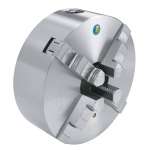
A lathe chuck is one of the most important accessories for a metal lathe. Mounted on the machine spindle, it holds the workpiece securely during rotation and machining operations.
Different types of chucks are available depending on the application.
A three-jaw self-centring chuck is commonly used for holding cylindrical or hexagonal workpieces. Its mechanism moves the jaws simultaneously, making centring and clamping easier.
A four-jaw independent chuck allows each jaw to be adjusted separately. It is particularly useful for holding irregularly shaped workpieces or carrying out machining operations requiring specific positioning.
When selecting a lathe chuck, it is important to consider its diameter, clamping capacity, spindle mounting system and compatibility with the machine.
The correct chuck contributes to secure workholding, machining accuracy and efficient operation.
Metal Turning Tools for Different Machining Operations
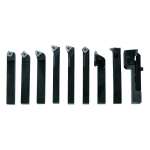
Metal turning tools remove material from a rotating workpiece to produce the required dimensions, shapes and surface finishes.
Different cutting tools are available depending on the operation:
-
External turning tools for machining cylindrical surfaces.
-
Facing tools for machining the ends of workpieces.
-
Boring tools for enlarging or machining internal holes.
-
Threading tools for producing internal or external threads.
-
Parting tools for cutting off workpieces and performing certain grooving operations.
These tools may be manufactured from high-speed steel (HSS) or designed to accept replaceable cutting inserts.
Selecting the correct cutting tool depends on the workpiece material, cutting conditions, tool geometry and rigidity of the lathe.
Correct tool positioning and suitable cutting parameters are essential for obtaining accurate dimensions and good surface finishes.
Carbide Inserts: Replaceable Cutting Edges
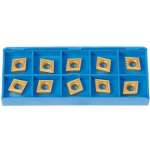
Carbide inserts are used with compatible turning tool holders to perform a wide range of machining operations.
Their main advantage is that worn cutting edges can be replaced without changing the entire tool holder.
Depending on their design, some inserts offer several usable cutting edges, making them a practical solution for regular machining operations.
Insert geometry varies according to the machining process, workpiece material and cutting conditions.
Certain inserts are intended for finishing operations, while others are designed for roughing and higher material removal rates.
Before purchasing a turning insert, it is essential to check its shape, dimensions, mounting system and compatibility with the tool holder.
Choosing the correct insert helps maintain consistent cutting performance and reduces the risk of premature wear.
Lathe Centres: Supporting Long Workpieces
A lathe centre is an important accessory when machining relatively long workpieces or parts requiring additional support.
It is generally fitted into the tailstock quill and supports the end of the rotating workpiece during machining.
Two common types are available: dead centres and live centres.
A dead centre remains stationary while the workpiece rotates against it and therefore requires appropriate operating conditions.
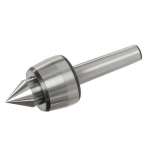
A live centre incorporates bearings that allow its tip to rotate with the workpiece, reducing friction during machining.
When selecting a lathe centre, it is important to check the Morse taper size, load capacity, permissible rotational speed and compatibility with the machine.
Correctly supporting the workpiece helps limit deflection and improve machining accuracy.
Steady Rests and Follow Rests for Improved Workpiece Support
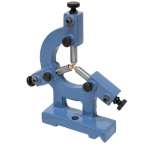
Lathe steady rests are used to support long or flexible workpieces during machining.
They help reduce vibration and deflection that could otherwise affect dimensional accuracy and surface finish.
There are two main types of lathe rests.
A fixed steady rest is mounted on the lathe bed and supports the workpiece at a selected position.
A follow rest is attached to the carriage and moves with the cutting tool, providing support close to the machining area.
The choice depends on the workpiece length, diameter, machining operation and compatibility with the lathe model.
Properly adjusted rests can improve stability when turning slender components or performing operations requiring additional support.
Lathe Tool Posts: Secure and Convenient Tool Positioning
A lathe tool post holds cutting tools on the machine carriage.
It plays an essential role in tool positioning, rigidity and machining precision.
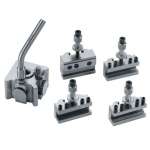
Conventional tool posts allow different cutting tools to be mounted and adjusted, while quick-change tool posts make it easier to switch between tool holders during machining.
Quick-change systems are particularly useful when several tools are required for successive operations such as turning, facing, threading and parting.
They can reduce setup time and make repeated tool changes more convenient.
Before selecting a tool post, check the mounting dimensions, centre height, tool holder capacity and compatibility with your metal lathe.
Correct tool height and secure clamping are essential for efficient and accurate machining.
Lathe Faceplates and Chuck Backplates
Lathe faceplates and chuck backplates are used for different workholding and mounting applications.
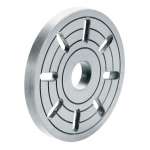
A lathe faceplate can be used to secure workpieces that cannot easily be held in a conventional chuck, provided suitable clamping equipment is used.
This type of accessory is particularly useful for irregularly shaped components or machining operations requiring special workholding arrangements.
Chuck backplates serve as mounting interfaces between certain lathe chucks and the machine spindle.
When choosing these accessories, it is important to verify the mounting dimensions, bolt hole patterns, spindle connection and compatibility with the chuck or machine.
An unsuitable mounting arrangement may cause alignment problems and create safety risks during rotation.
For reliable machining, all workholding accessories must be installed and checked in accordance with the manufacturer's instructions.
Drill Chucks for Metal Lathes
A drill chuck is used to hold drill bits and other compatible drilling tools.
On a metal lathe, it is generally fitted to the tailstock using a suitable taper or adaptor.
This arrangement allows axial drilling operations to be performed on a workpiece held in the main lathe chuck.
Drill chucks are useful for producing centre holes, preparing holes for boring operations and carrying out general drilling tasks.
When selecting a lathe drill chuck, check its clamping capacity, mounting connection and compatibility with the tailstock.
The correct mounting system is essential for accurate tool positioning and safe operation.
How to Choose Metal Lathe Tools and Accessories
Before purchasing metal lathe tooling, several important factors should be considered.
Machine compatibility: each lathe has specific characteristics, including spindle mounting, Morse taper sizes, centre height and accessory mounting dimensions.
Machining operation: turning, facing, drilling, boring, threading and parting require different cutting tools and accessories.
Workpiece material: steel, aluminium, brass and other alloys may require different cutting geometries and machining conditions.
Workpiece dimensions: diameter, length and shape influence the choice of chucks, centres, steady rests and workholding equipment.
Frequency of use: for regular or professional machining, accessories suited to the machine and workload help maintain consistent performance.
Tool rigidity and precision: secure mounting and correct positioning are important for reducing vibration and achieving accurate results.
Before ordering, always check the technical specifications of both the machine and the selected accessory.
Using and Maintaining Metal Lathe Accessories
To maintain the accuracy and service life of your metal lathe accessories, regular inspection and appropriate maintenance are essential.
Lathe chucks should be kept clean, and mounting surfaces should be free from swarf and debris. Moving components must be maintained according to the manufacturer's recommendations.
Cutting tools and inserts should be inspected before use. Damaged inserts, worn cutting edges or incorrectly positioned tools can reduce machining quality and cause vibration.
It is also important to check the secure mounting of tool holders, chucks and workpieces before starting the machine.
Rotational speeds, cutting conditions and operating loads must remain within the limits specified for the machine and its accessories.
Correct maintenance and careful tool selection help preserve machining precision and reduce unnecessary wear.
Discover Metal Lathe Tools and Accessories at Probois Machinoutils
At Probois Machinoutils, we offer a selection of metal lathe tools and accessories to help you equip your workshop and carry out machining operations under suitable conditions.
Explore our range of lathe chucks, metal turning tools, carbide inserts, live centres, steady rests, tool posts, faceplates, chuck backplates and drill chucks.
Our dedicated subcategories make it easier to find accessories suited to your machine and machining requirements.
Whether you use your lathe occasionally for maintenance and repair work or regularly for metalworking projects, selecting compatible accessories helps improve accuracy, versatility and working efficiency.
Find the right tooling for your metal lathe and equip your workshop for turning, facing, boring, drilling, threading and other precision machining operations.