
Special Products
Special Products


Spare parts for Holzmann planer thicknesser
-
Spare parts for Holzmann HOB260MINI planer thicknesser
-
Spare parts for Holzmann HOB260ABS planer thicknesser
-
Spare parts for Holzmann HOB260ECO planer thicknesser
-
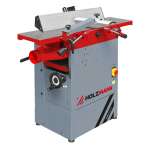
Spare parts for Holzmann HOB260ECOSMW2 planer thicknesser
-
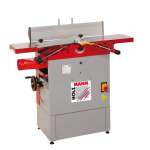
Spare parts for Holzmann HOB260NL planer thicknesser
-
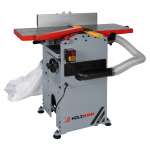
Spare parts for Holzmann HOB305ABS planer thicknesser
-
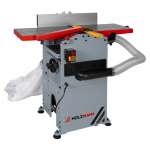
Spare parts for Holzmann HOB305ABSSMW2 planer thicknesser
-
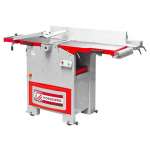
Spare parts for Holzmann HOB305PRO planer thicknesser
-
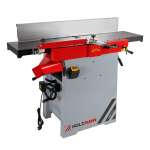
Spare parts for Holzmann HOB310ECO planer thicknesser
-
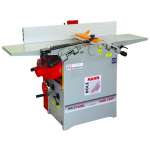
Spare parts for Holzmann HOB320P planer thicknesser
-
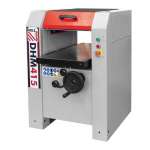
Spare parts for Holzmann thickness planer
Holzmann planer thicknessers combine two essential woodworking operations in a single machine: surface planing and thicknessing. They allow you to first create a flat face and straight edge, then machine the workpiece to a consistent and precise thickness.
The Holzmann range includes numerous models with different working widths, motor configurations and cutterblock technologies. These include the HOB260, HOB305, HOB310 and HOB410 series, available in various versions depending on the model and production year.
This category contains spare parts for Holzmann planer thicknessers, including planer knives, carbide inserts, drive belts, chains, gears, feed rollers, bearings, switches, motors, tables, fences, adjustment components and other parts required to maintain and repair your machine.
Spare parts for Holzmann HOB planer thicknessers
Holzmann planer thicknessers are mainly identified by the HOB designation, with numerous versions depending on working width, equipment and production year.
Models include, depending on the generation, HOB260NL, HOB260ECO, HOB260ECOSMW2, HOB260ABS, HOB260MINI, HOB305ABS, HOB305ABSSMW2, HOB305PRO, HOB305PROSMW2, HOB310ECO, HOB310ECOSMW2, HOB410N, HOB410ECO, HOB410ECOSMW2, HOB410PRO and HOB410PROSMW4.
Some machines use conventional planer knives, while others are equipped with reversible knives or a spiral cutterblock with carbide inserts. Spare parts are therefore not necessarily interchangeable between different models.
Spare parts for the surface planer function
The surface planer is used to produce a flat reference face and then straighten an edge using the planer fence.
This section of the machine includes planer tables, cutterblock, planer knives or inserts, planer fence, adjustment mechanisms, hinges, levers, handles, guards and fixing components.
Poor surface planing results do not necessarily indicate a major mechanical fault. Blunt knives, incorrect adjustment or improperly aligned tables can significantly affect the quality of the finished surface.
It is therefore important to identify the cause of the problem before replacing components.
Spare parts for the thicknesser function
The thicknesser is used to machine timber to a precise and consistent thickness after one face has been surface planed.
The workpiece is automatically fed beneath the cutterblock by the feed rollers.
This system includes infeed and outfeed rollers, chains, gears, shafts, bushes, springs, bearings and transmission components.
If the timber no longer feeds correctly or the feed becomes irregular, the entire mechanism should be inspected before ordering a replacement part.
Planer knives for Holzmann planer thicknessers
Planer knives have a direct influence on cutting quality.
With regular use, their cutting edges gradually become blunt. Worn planer knives can cause:
-
poor surface finish;
-
torn grain;
-
marks on the timber;
-
increased cutting resistance;
-
increased load on the motor;
-
irregular planing results.
Depending on the machine, Holzmann uses different types and sizes of planer knives. Some models use conventional resharpenable knives, while others use reversible planer knives.
Always check the dimensions and compatibility with the exact machine model before ordering.
Carbide inserts for Holzmann spiral cutterblocks
Certain Holzmann planer thicknessers, particularly models with the SMW designation, use cutterblocks equipped with multiple cutting inserts.
This system allows an individual damaged or worn insert to be replaced without replacing a knife across the entire working width.
When one cutting edge becomes blunt or damaged, a reversible insert can, depending on its design, be rotated to use another cutting edge.
When replacing an insert, it is essential to use one with exactly the correct dimensions, thickness, geometry and fixing system for the cutterblock.
Cutterblock for Holzmann planer thicknessers
The cutterblock is one of the main mechanical components of the machine.
It rotates at high speed and carries the knives or carbide inserts responsible for removing material from the workpiece.
A damaged cutterblock, incorrectly secured cutting tools or defective bearings can cause vibration, unusual noise or poor machining quality.
Any significant abnormality around the cutterblock should be investigated before continuing to use the machine.
Cutterblock bearings for Holzmann planer thicknessers
The cutterblock bearings allow the cutterblock to rotate accurately at high speed.
A worn bearing may cause:
-
unusual noise;
-
vibration;
-
excessive cutterblock play;
-
overheating;
-
irregular rotation.
When a bearing is damaged, it is also advisable to inspect the cutterblock shaft and bearing housing.
Drive belts for Holzmann planer thicknessers
Drive belts transmit power from the motor to the cutterblock and, depending on the machine design, to other mechanisms.
Over time, a belt may stretch, crack, wear or begin to slip.
An apparent loss of power can therefore be caused by a loose or worn belt rather than a motor problem.
Before ordering a replacement belt, check its reference, profile, dimensions and compatibility with your Holzmann model.
Chains and gears for Holzmann planer thicknessers
Chains and gears are used on many models to transmit movement to the thicknesser feed rollers.
A stretched or loose chain, worn gear teeth or a seized shaft can interfere with the timber feed mechanism.
Knocking noises, jerky feeding or a feed roller that no longer rotates correctly should prompt an inspection of the complete transmission system.
Replacing a single component without checking the associated parts may not provide a lasting solution.
Feed rollers for Holzmann thicknessers
The feed rollers automatically move the timber through the thicknesser.
Depending on the machine design, there are generally infeed and outfeed rollers with surfaces suited to their respective functions.
A roller contaminated with resin, excessively worn or unable to rotate freely can cause poor timber feeding.
Before replacing a feed roller, it is also advisable to inspect its shaft, bearings or bushes, springs and transmission components.
Surface planer tables for Holzmann machines
The surface planer tables must be correctly positioned relative to the cutterblock to achieve accurate results.
A poorly adjusted table or excessive play can cause flatness problems and make the machine difficult to set up correctly.
Depending on the Holzmann model, the tables may incorporate hinges, locking levers, handles and various mechanisms for adjustment or lifting when switching to thicknessing mode.
These components can be replaced individually when available as spare parts.
Thicknesser table and height adjustment
The thicknesser table supports the workpiece as it passes beneath the cutterblock.
Its height directly determines the final thickness of the timber.
The adjustment system may include a handwheel, threaded spindle, columns, chains, gears or other mechanical components designed to move the table while maintaining its alignment.
A table that becomes difficult to raise or lower should not be forced. First check for dirt, inadequate lubrication or a mechanical problem.
Planer fence for Holzmann planer thicknessers
The planer fence guides the workpiece when straightening edges.
On many models, the fence can be tilted to allow planing at different angles.
Excessive play, a defective locking mechanism or a damaged tilt adjustment system can affect machining accuracy.
Depending on the fault, it may be possible to replace only the handle, lever, mounting component or another individual part of the mechanism.
Dust extraction hood and chip extraction parts
A planer thicknesser produces a considerable quantity of wood chips. The dust extraction hood directs these chips towards the dust collector.
On many machines, this hood must be repositioned when switching between surface planing and thicknessing.
A damaged, incorrectly positioned or blocked extraction hood can significantly reduce extraction efficiency.
The chip passage should therefore be kept clean and the dust extraction connection checked regularly.
Switches and safety devices for Holzmann planer thicknessers
Holzmann machines use various switches and safety devices designed to prevent the machine from starting in certain unsafe configurations.
Depending on the model, these may include a main switch, emergency stop, contactors and safety switches associated with guards or tables.
A machine that no longer starts does not therefore necessarily have a faulty motor.
The power supply, safety devices, switches and control circuit should be checked systematically before considering motor replacement.
Motors for Holzmann planer thicknessers
The motor drives the cutterblock and must provide sufficient power to remove material efficiently.
However, a machine that appears to lack power does not necessarily have a defective motor.
Before replacing the motor, check:
-
the electrical power supply;
-
whether an unsuitable extension lead is being used;
-
the condition and tension of the drive belts;
-
depth of cut;
-
condition of the knives or inserts;
-
free rotation of the cutterblock;
-
condition of the bearings;
-
possible mechanical obstructions.
Severely blunt knives or an excessive depth of cut can considerably increase the load on the motor.
Holzmann planer thicknessers in 230 V and 400 V
Many Holzmann planer thicknessers are available in 230 V and 400 V versions.
This difference must be taken into account when ordering electrical spare parts.
A drive belt, gear or bearing may sometimes be common to both versions, whereas the motor, switch, contactor and other electrical components may differ.
Before ordering any electrical component, always check the exact voltage shown on the machine identification plate.
Why is my Holzmann thicknesser no longer feeding the timber?
If the timber no longer feeds correctly during thicknessing, several causes are possible.
Check the feed rollers, chains, gears, shafts, springs and other transmission components.
Resin, sawdust and wood-chip deposits can also interfere with the operation of the feed rollers.
If a shaft or roller is seized, it is important to determine the cause of the blockage before simply replacing the chain or gear driving it.
Why does my Holzmann planer thicknesser leave marks on the timber?
Repeated marks, waves or an uneven surface finish can have several causes.
They may be related to incorrectly adjusted, blunt or damaged planer knives, a problem with the cutterblock or bearings, inappropriate feed conditions or insufficient support of the workpiece.
The exact type of machining defect should therefore be identified before changing the machine settings or replacing parts.
Identify the correct part using the Holzmann exploded diagram
The exploded diagram for your Holzmann planer thicknesser is one of the most reliable ways to identify the required spare part.
Each component is generally assigned an item number, making it easier to locate the corresponding replacement part.
This is particularly important because the same machine series may have undergone technical changes during its production life.
A visually similar component is therefore not necessarily compatible.
Check the model, manufacturing date and serial number
The general machine designation is not always sufficient to identify the correct spare part.
Different generations of the same Holzmann series may use different switches, belts, gears, cutterblocks, rollers or other components.
It is therefore important to check the complete machine model and, when required, its manufacturing date and serial number.
IMPORTANT: BEFORE PURCHASING, always check the list of compatible machines shown on the product page and, where required, the month and year of manufacture or the serial number of your machine.
Maintaining your Holzmann planer thicknesser
Regular maintenance helps preserve the accuracy, cutting quality and service life of your machine.
Regularly remove wood chips and dust, keep the tables clean, monitor the condition of the planer knives or carbide inserts and periodically inspect the drive belts, chains, gears and feed rollers.
Adjustment mechanisms should remain clean and operate freely.
Efficient dust extraction is also essential to prevent wood chips from accumulating inside the machine.
Before carrying out any cleaning, adjustment, maintenance or repair work, always disconnect the Holzmann planer thicknesser from the power supply.
Repair your Holzmann planer thicknesser with the correct spare part
Worn planer knives, a loose belt, damaged gear, noisy bearing, seized feed roller or faulty switch do not necessarily mean that the complete machine needs to be replaced.
Our selection of spare parts for Holzmann planer thicknessers allows many mechanical and electrical components to be replaced individually, helping you maintain your machine and extend its service life.
Before ordering, accurately identify your machine model, the item number of the required part and, where necessary, the voltage, manufacturing date and serial number.
Choosing the correct spare part for your Holzmann planer thicknesser allows you to carry out an appropriate repair and restore the performance required for accurate surface planing and thicknessing.