Electric Hoists and Winches for Workshop Lifting and Material Handling
An electric hoist or electric winch is a practical piece of equipment designed to make lifting, handling and moving heavy loads easier. Commonly used in mechanical workshops, woodworking shops, garages, warehouses and industrial environments, these motorised lifting devices help reduce physical effort and improve working conditions when handling heavy equipment.
At Probois Machinoutils, we offer a selection of electric hoists for workshops, lifting systems and compatible accessories suitable for both professional users and demanding DIY enthusiasts. These devices provide a convenient solution for lifting motors, moving mechanical components, positioning machinery parts and carrying out various maintenance operations.
Choosing the right lifting equipment depends primarily on the weight of the load, the required lifting height, the installation configuration and how frequently the equipment will be used.
What Is the Difference Between an Electric Hoist and an Electric Winch?
Although both devices use a motorised mechanism to move loads, their operating principles and intended applications may differ.
An electric hoist is primarily designed for vertical lifting operations. It raises or lowers a load using a wire rope or chain, depending on the model. Electric hoists are particularly useful in workshops for lifting equipment, installing mechanical components or positioning heavy items at a specific height.
An electric winch generally uses a cable wound around a rotating drum. Depending on its design, it may be intended for pulling, moving or lifting loads. However, not all winches are suitable for vertical lifting, so it is essential to check the applications authorised by the manufacturer.
When choosing between these devices, consider the required direction of movement, the weight of the load and the technical specifications of the equipment.
Why Use an Electric Hoist in a Workshop?
An electric lifting hoist offers several advantages for material handling operations.
First, it makes lifting heavy or awkward loads considerably easier. In a mechanical workshop, it can be used to lift certain engines or mechanical assemblies. In a woodworking workshop, it can help move heavy woodworking machinery components, provided that a suitable lifting and attachment system is available.
Electric hoists also provide greater control over raising and lowering movements. This is particularly useful when positioning a component onto a machine, workbench or supporting structure.
In addition, electric lifting equipment reduces the physical effort required for repeated handling operations. It can therefore improve workshop organisation and make certain maintenance tasks easier to perform.
How to Choose the Right Electric Hoist Lifting Capacity
The lifting capacity is one of the most important factors when selecting an electric hoist.
Every lifting device has a maximum rated load specified by its manufacturer. This limit must always be respected to ensure safe operation and prevent damage to the equipment.
Some electric wire rope hoists can be operated with a pulley block when this configuration is specifically approved by the manufacturer. This arrangement may increase the permitted lifting capacity while reducing the available lifting height or lifting speed.
Before choosing an electric hoist, check the following technical specifications:
-
Maximum rated lifting capacity.
-
Maximum lifting height.
-
Lifting and lowering speed.
-
Wire rope diameter and length, or chain specifications.
-
Motor power and electrical supply requirements.
-
Mounting method and installation conditions.
-
Permitted operating duty cycle.
An electric hoist must always be selected according to its actual operating conditions and used within the limits stated in the manufacturer's instructions.
Electric Wire Rope Hoists: A Practical Workshop Lifting Solution
An electric wire rope hoist is commonly used in workshops, garages and maintenance facilities.
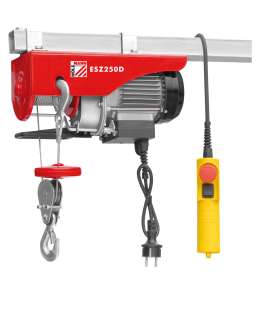
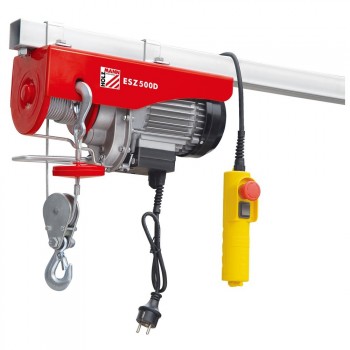
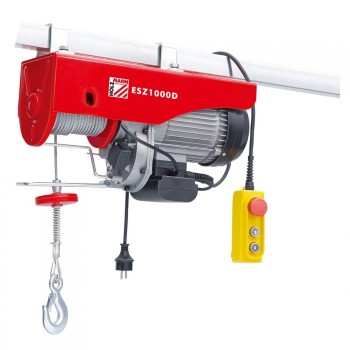
It operates using an electric motor that drives a drum around which a steel wire rope is wound. The load is generally raised and lowered using a pendant control unit.
Depending on the model, the hoist may be installed on a fixed support or combined with compatible accessories to adapt the lifting system to the working environment.
This type of equipment is particularly suitable for occasional lifting operations, handling mechanical components and positioning heavy machinery parts.
For reliable operation, it is essential to follow the manufacturer's mounting instructions and ensure that the supporting structure has sufficient load-bearing capacity.
Accessories for Electric Hoists and Winches
Electric hoist accessories can help complete a lifting installation and make certain material handling operations more convenient.
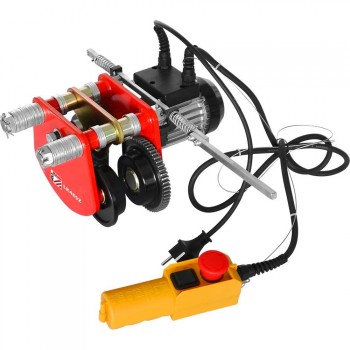
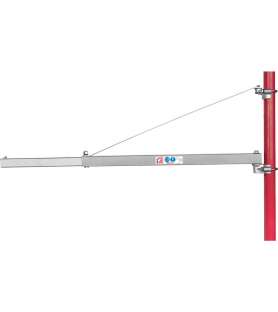
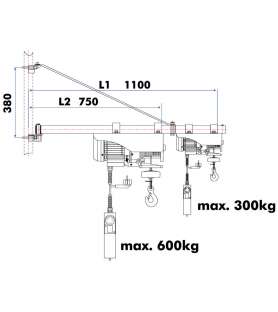
Available accessories include hoist mounting arms, designed to support compatible lifting devices on suitable structures, and electric hoist trolleys, which may allow a hoist to travel along an appropriate beam, depending on their design.
These accessories must be selected carefully. Their rated capacity, dimensions and compatibility with the lifting equipment are essential considerations.
A hoist trolley can be particularly useful when a suspended load needs to be moved between different positions in a workshop, provided that the complete installation is designed and approved for this purpose.
The load-bearing capacity of the supporting beam, mounting hardware and all other lifting components must also be checked before use.
Where Can Electric Hoists and Winches Be Used?
Electric hoists and winches can meet a wide range of lifting and material handling requirements.
In an automotive repair workshop, a suitable hoist can help lift certain heavy mechanical components during servicing and repair operations.
In a woodworking workshop, lifting equipment can assist with positioning machinery components, handling bulky equipment and carrying out technical maintenance tasks.
In industrial maintenance and metalworking, electric lifting devices can be used to move and position different components during manufacturing, assembly or repair operations.
They may also be used in warehouses, storage facilities and maintenance workshops for handling tasks that fall within their technical capabilities.
The appropriate equipment must always be selected according to the working environment, load weight and intended operating conditions.
Electric Hoist Installation and Safety
Using electric lifting equipment requires careful attention to safety and proper installation.
Before installation, it is essential to ensure that the mounting structure is suitable for the maximum intended load and the forces transmitted by the lifting device. The strength of a wall, beam or metal framework must never be assumed without appropriate verification.
The electric hoist must be installed according to the manufacturer's instructions, using compatible mounting hardware and accessories.
Before each use, inspect the visible condition of the wire rope or chain, hook, mounting components and controls. Any equipment showing signs of damage or abnormal operation must be taken out of service until it has been properly inspected.
Never exceed the maximum rated lifting capacity, never stand or pass beneath a suspended load, and never use a goods-only hoist to lift people.
Inspection, maintenance and periodic examination requirements must be followed in accordance with the manufacturer's instructions and applicable regulations.
Discover Electric Hoists and Lifting Accessories at Probois Machinoutils
At Probois Machinoutils, we offer a selection of electric hoists, material handling equipment and lifting accessories designed to make workshop operations easier.
Our range includes lifting solutions from Holzmann, along with compatible accessories that can be used to complete certain installations.
Whether you are looking for an electric hoist for lifting heavy loads, a mounting arm or a hoist trolley, you can compare the technical specifications of each product to select equipment suited to your requirements.
Explore our selection of electric hoists and winches for workshops and equip your workspace with practical lifting and material handling solutions designed to make demanding tasks easier and more efficient.