Spare parts for the Jean l’Ébéniste ML393E planer thicknesser
This category is dedicated to spare parts for the Jean l’Ébéniste ML393E planer thicknesser. The ML393E is a woodworking machine combining surface planing and thicknessing operations. In normal use, the surface-planing function is used to produce a flat reference face and edge, while the thicknessing function brings the workpiece to a consistent thickness. The ML393E was sold in a single-phase 230 V version and its published specifications include a mechanical system for direct reading of the thicknessing height. The selection shown here is therefore deliberately focused on parts actually listed for this model rather than on every component that might exist on the machine.
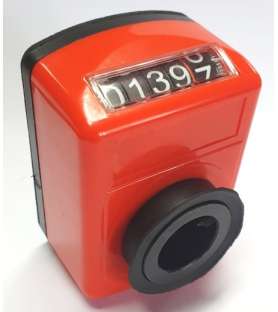
At present, this category contains one mechanical thicknessing height indicator, Probois reference BPD97-INDICATEUR. The product is designed to assist with reading the thicknesser table setting. Its product page specifies an 18 mm bore and describes it for various planer thicknessers using a matching handwheel arrangement. Because components and mountings can change over a machine’s production life, the original part and mounting dimensions should always be checked before ordering.
What does the mechanical thicknessing height indicator do?
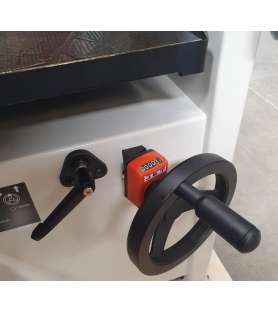
In thicknessing mode, the finished thickness of the timber is determined by the position of the thicknesser table in relation to the cutterblock. The mechanical height indicator or thicknessing scale counter follows the handwheel adjustment and gives the operator a direct reference for the table height. It is not a substitute for measuring the machined workpiece when an accurate final dimension is required, but it is useful for approaching a target setting quickly and for returning to a previous table position.
After years of use, an indicator can become difficult to read, develop play, stop following the adjustment correctly or suffer physical damage. Before replacing it, check that the handwheel operates normally and that the table raising and lowering mechanism moves smoothly. If the table is stiff, jerky or blocked, the underlying problem may be in the adjustment mechanism rather than in the indicator itself. Replacing the display component alone will not correct a separate mechanical fault.
How to identify the correct replacement part
When carrying out an ML393E repair, the machine model is an important starting point but should not be the only check. Compare the original component with the photographs on the product page and measure the relevant mounting dimensions. For the indicator currently listed in this category, the product specification states an 18 mm bore. The corresponding diameter on the original handwheel or mounting must therefore be checked before purchase.
Do not rely on appearance alone. Two mechanical indicators can look very similar while differing in bore size, fixing arrangement, operating direction or the way they engage with the machine’s adjustment system. If an older ML393E has already been repaired or modified, a previously fitted component may also differ from the original factory configuration. Keeping the removed part until the replacement has been checked makes comparison much easier.
Symptoms worth checking before ordering
The height indicator should be investigated if the displayed value no longer corresponds with actual table movement, if the reading changes inconsistently while the handwheel is turned, or if the indicator no longer responds to adjustment. Visible damage, a broken mounting or excessive play can also justify replacement. However, difficult table movement, irregular lifting or a table that will not hold or reach the required position should prompt inspection of the machine’s adjustment mechanism before the indicator is blamed.
Disconnect the machine from the power supply before inspection or dismantling and wait until all moving parts have stopped. Clean dust and chips from the handwheel and adjustment area so that contamination is not mistaken for a failed component. After fitting a replacement, compare the indicated setting with actual measurements at several table positions. This confirms that the mechanical reference follows the adjustment consistently.
IMPORTANT: check compatibility before purchase
IMPORTANT: BEFORE PURCHASING, carefully check the list of compatible machines shown on each product page.
For some spare parts, the machine model alone is not sufficient to guarantee compatibility. Manufacturers may revise components during a model’s production life, so machines carrying the same model designation can sometimes use different parts.
If you are unsure, send us the exact model, month and year of manufacture and serial number before ordering. For the indicator listed here, a clear photograph of the original part and a measurement of the mounting diameter are also useful for comparison.
Cannot find the ML393E part you need?
This category reflects the parts currently and genuinely listed by Probois Machinoutils for the Jean l’Ébéniste ML393E. We therefore do not add artificial lists of belts, motors, feed rollers or electrical components that are not present in this category. If the part you need is not shown, contact us Probois Machinoutils - SEO catégorie ML393E Page 5 with the machine identification and information from the original component. Where a reference can still be identified and sourcing is possible, we can check whether a suitable solution exists or tell you what additional information is required.
Repair your planer thicknesser with Probois Machinoutils
Replacing a failed adjustment component can keep an otherwise serviceable woodworking machine in use for many more years. Probois Machinoutils develops its range of woodworking machine spare parts for both private users and professional workshops, including machines that have been in service for a long time. For the Jean l’Ébéniste ML393E, the objective is to list parts that are actually available and to encourage careful compatibility checks before purchase. Correct identification, sensible fault diagnosis and regular maintenance can often extend machine life and avoid replacing a complete machine because of one isolated component.