Spare parts for the Leman LODRA210 planer thicknesser
This category is dedicated to spare parts for the Leman LODRA210 planer thicknesser. This compact bench machine combines surface planing and thicknessing. Its construction includes a two-knife cutterhead, surfacing tables, thicknessing table, automatic feed, tilting fence, carbon-brush motor and an integrated chip extraction system with collection bag.
Available references can change with manufacturer supply. This page is therefore not a fixed inventory of today's products. It is intended as a long-term resource for maintaining, diagnosing and repairing a Leman LODRA210, using the exploded diagrams and accurate identification of the machine and original component.
Cutterhead and 210 mm planer knives
The LODRA210 uses a 50 mm diameter cutterhead fitted with two knives. Knife condition and adjustment directly affect surface quality. Dull, damaged or incorrectly set knives can cause poor finish, tear-out, increased cutting load or uneven results.
When replacing knives, check their exact dimensions and mounting arrangement. Inspect the cutterhead clamping components as well. Both knives must be correctly positioned and secured in accordance with the machine instructions.
Drive belts, pulleys and transmission
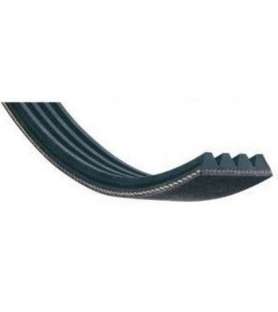
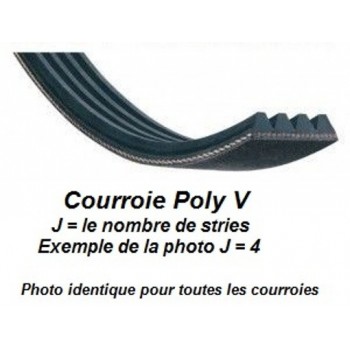
The transmission transfers motor power to the machine mechanisms. The LODRA210 uses Poly-V belts for certain functions. Belts can stretch, crack, lose grip or become damaged by misalignment.
If a belt slips, fails prematurely or tracks incorrectly, inspect pulley condition and alignment, mechanism rotation and belt tension. A new belt can quickly be damaged if the underlying mechanical cause remains.
Feed rollers and thicknessing mechanism
In thicknessing mode, the timber is automatically fed beneath the cutterhead. Rollers and their transmission must provide consistent movement for an even finished thickness. Jerky or weak feeding can leave marks or stop the workpiece moving.
Depending on the fault, belts, gears, shafts, springs, bearings, bushes, rollers and chip accumulation may need checking. Diagnose the complete feed system before assuming that a roller itself must be replaced.
Surfacing fence, handles and adjustments
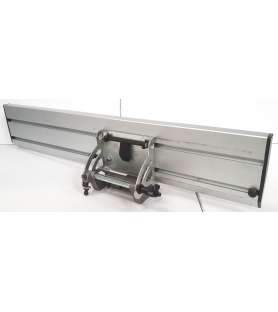
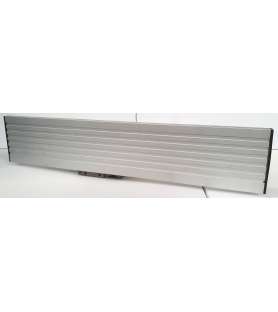
The aluminium fence supports the workpiece during edge jointing and can be tilted for angled work. It must remain stable and lock securely. The fence, brackets, handles, screws and clamping mechanisms can wear, loosen or become damaged.
If the fence no longer holds its position, inspect the complete locking arrangement. For a complete fence or individual mechanism part, confirm the machine model and exploded-diagram reference.
Surfacing tables and thicknessing table
The tables are the machine's reference surfaces. The LODRA210 has surfacing tables and a lower thicknessing table. Depth-of-cut and table-height adjustments must move correctly while holding their selected position.
Do not force a stiff control. Remove accessible chips and dust and inspect for mechanical restriction, damaged screws, loose fasteners or faulty guides. A broken handle can be the consequence rather than the cause of a seized mechanism.
Carbon-brush motor and electrical components
The LODRA210 uses a 230 V carbon-brush motor. Brushes are wear parts and can affect starting and motor operation. Difficult starting, intermittent running or unusual sparking can justify checking brush condition before concluding that the complete motor has failed.
Starting faults can also involve the switch, a safety device, cable, connection or another electrical component. Record original markings and connections before ordering. Disconnect the machine before dismantling and use a competent person for specialist electrical work.
Integrated extraction, chip bag and connections
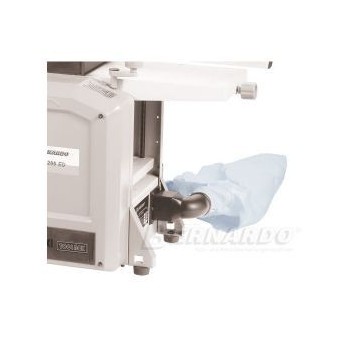
A distinctive feature of the LODRA210 is its integrated extraction system with collection bag. Correct chip removal helps prevent accumulation around the cutterhead and feed mechanism. The bag, hose, clamps, extraction hood and connections may therefore require maintenance or replacement.
Reduced extraction does not automatically mean that a component has failed. First check bag fill level, hose and hood for blockage, connection tightness and free chip flow.
Why does the LODRA210 feed timber poorly?
Poor thicknessing feed can have several causes, including unsuitable timber condition, excessive depth of cut, dirty rollers, slipping transmission, a feed-mechanism fault or accumulated chips. Inspect the system before ordering parts.
Also check knife condition. Dull knives increase cutting load and can make the machine appear underpowered or reluctant to feed.
Vibration, noise and planing quality
New vibration or noise should be investigated. Check knife clamping, belts, pulleys, accessible bearings and machine fasteners. Do not use the LODRA210 if abnormal cutterhead play or insecure cutting components are found.
For poor surface finish, start with knife condition and setting before looking for a more complex fault. Timber condition, grain direction and depth of cut also influence the result.
IMPORTANT: check compatibility before purchase
IMPORTANT: BEFORE PURCHASING, carefully check the list of compatible machines shown on each product page.
Probois Machinoutils – SEO pièces Leman LODRA210 Page 5
For some parts, the model name alone may not guarantee compatibility. Production changes can result in different components being fitted to machines with the same designation.
If unsure, provide the exact model, month and year of manufacture and serial number. Whenever possible add the exploded-view figure and item number, photographs, dimensions and markings from the original component.
Compatibility with Bernardo PT200ED and other machines
Some Leman LODRA210 parts can be explicitly listed as compatible with similar planer thicknessers, including the Bernardo PT200ED for certain references. This may apply to an individual belt or fence, but it must never be generalised to the complete machine.
Sharing one component does not mean that motors, cutterheads, rollers, electrical parts or other assemblies are interchangeable. Always follow the compatibility list on the individual product page.
Identify parts with the LODRA210 exploded diagrams
Current LODRA210 documentation provides a parts list and exploded diagrams. To avoid errors, identification should ideally include the LODRA210 reference, relevant figure, part number and part description. This is much more reliable than identifying a component from appearance alone.
If the required part is not yet listed online, send this information together with the rating plate and clear photographs. For belts include the printed marking; for mechanical parts provide useful dimensions; for electrical parts photograph markings and terminals.
Maintain and repair your Leman LODRA210
Routine maintenance helps preserve accuracy and reliability. With the machine disconnected, remove accumulated chips, inspect knives, belts, guards and fasteners, and monitor the feed mechanisms. Effective chip evacuation also supports consistent thicknessing operation.
Probois Machinoutils develops an evolving range of Leman LODRA210 spare parts. References can be added or become unavailable as supply changes, so accurate machine and component identification remains the best basis for a durable repair.