Bernardo Mortising Machine Spare Parts – Maintenance and Repairs
Discover our selection of spare parts for Bernardo mortising machines, designed for maintaining, repairing and replacing worn or damaged components on your woodworking equipment.
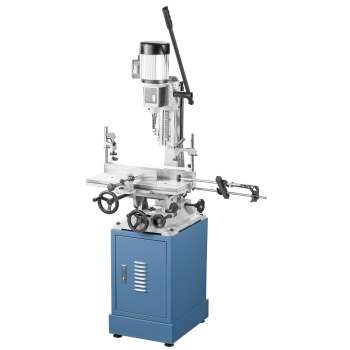
A Bernardo mortising machine is an essential piece of equipment in many woodworking and joinery workshops. It is used to produce accurate mortises in timber, particularly for traditional mortise-and-tenon joints.
These joints are widely used in the manufacture of doors, windows, furniture, frames and other timber structures requiring strong and durable connections.
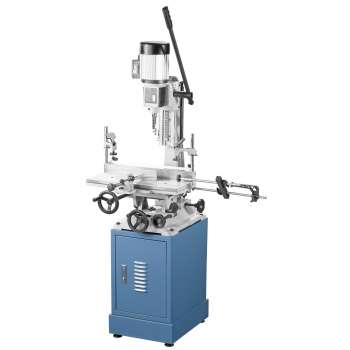
Depending on the model, a mortising machine may use a horizontal rotating drill bit or a hollow chisel and auger assembly.
These different designs require specific mechanical components, particularly in their cutting systems, guiding mechanisms and workpiece positioning arrangements.
Over time, regular use can cause certain parts to wear, develop excessive play or suffer mechanical or electrical faults.
At Probois Machinoutils, we offer a selection of mechanical and electrical spare parts for Bernardo mortisers, depending on the machine model and the availability of individual components.
Our aim is to help you identify the correct replacement part, extend the service life of your machine and restore reliable operation.
What Is a Bernardo Mortising Machine Used For?
A mortising machine is designed to produce cavities in timber for various woodworking joints.
It is particularly useful for manufacturing doors, windows, furniture and structural joinery components.
A correctly adjusted mortiser produces consistent mortises with the required depth, length and position.
Depending on the machine design, the cutting operation may be performed using a horizontal mortising bit or a hollow chisel and auger assembly.
The machine generally relies on several essential components:
-
An electric motor to drive the cutting tool.
-
A chuck or suitable tool-holding mechanism.
-
A worktable or workpiece support.
-
Movement and adjustment mechanisms.
-
Workpiece clamping devices.
-
Electrical controls and safety components.
The condition of these components directly affects machining accuracy, ease of operation and the quality of the finished joints.
What Spare Parts Are Available for Bernardo Mortisers?
Bernardo mortising machine replacement parts may be required for various mechanical and electrical assemblies.
Depending on the machine design and manufacturer availability, replaceable components may include:
-
Chucks and tool-holding components.
-
Electric motors and associated parts.
-
Switches and electrical controls.
-
Operating handles and levers.
-
Adjustment handwheels and cranks.
-
Screws, nuts and threaded components.
-
Shafts and guiding elements.
-
Bearings and bearing housings.
-
Workpiece clamping components.
-
Depth stops and positioning devices.
-
Model-specific mechanical parts.
Not all Bernardo mortising machines use the same components.
It is therefore essential to check the exact machine reference and the compatibility information provided for each spare part before ordering.
Chucks and Mortising Bit Holding Systems
On a horizontal mortising machine, the chuck or tool-holding system plays an important role in securing the cutting bit.
It holds the mortising bit during rotation and transfers the motor's movement to the cutting tool.
A damaged or worn chuck may cause several problems:
-
Difficulty securing the mortising bit.
-
Tool slippage during operation.
-
Unusual vibrations.
-
Excessive runout.
-
Reduced accuracy when cutting mortises.
Before replacing a chuck, it is important to check its mounting system, clamping capacity and mechanical specifications.
A chuck that looks similar to the original may not necessarily fit the machine spindle.
Components used on horizontal mortisers must also be distinguished from those fitted to hollow chisel mortisers, which use a different cutting and tool-holding arrangement.
Spare Parts for Bernardo Horizontal Mortisers
A horizontal mortiser is particularly suitable for producing elongated mortises in timber.
It uses a rotating mortising bit mounted on a horizontal spindle.
Depending on the model, the workpiece is positioned on a table that allows longitudinal, transverse or vertical movement.
These movements help determine the length, width and depth of the mortise.
Mechanical components that may require maintenance include shafts, operating levers, stops and guiding mechanisms.
Wear in these assemblies can lead to irregular movement or reduced machining accuracy.
If excessive play develops, the cause should be identified before replacing any component.
The problem may result from insufficient tightening, worn guiding elements or a mechanism requiring cleaning and maintenance.
Spare Parts for Bernardo Hollow Chisel Mortisers
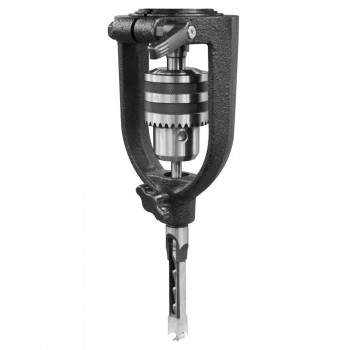
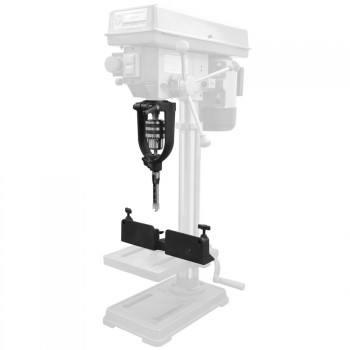
Some mortising machines use a hollow chisel and auger assembly to produce square-cornered mortises.
In this system, the rotating auger removes most of the waste material while the surrounding hollow chisel forms the square corners.
Correct installation and adjustment of the cutting assembly are essential.
The chisel-holding components, guiding mechanisms and plunge system are particularly important.
Incorrect mounting or adjustment can result in difficult cutting, excessive heat or premature tool wear.
Spare parts designed for hollow chisel mortisers are not automatically compatible with horizontal mortising machines.
Before ordering, it is therefore important to identify the exact machine design and corresponding replacement part reference.
Handles, Levers and Adjustment Cranks for Bernardo Mortisers
Bernardo mortising machine handles and operating levers are used to control table movements, head positioning and adjustment mechanisms.
These components are regularly operated during woodworking tasks.
Over time, a handle may break, become loose or develop damaged threads.
A worn adjustment crank can also make precise positioning more difficult.
Replacing the correct component can help restore smooth movement and more reliable adjustments.
Before ordering, check:
-
Thread diameter.
-
Overall dimensions.
-
Mounting and fixing arrangement.
-
Part number shown in the exploded diagram.
-
Compatibility with the exact machine model.
Handles with similar dimensions are not necessarily interchangeable.
Worktable Movement and Adjustment Mechanisms
The accuracy of a mortising machine depends largely on the condition of its movement systems.
On certain models, the worktable can move along several axes to position the timber accurately in relation to the cutting tool.
These mechanisms may incorporate slides, shafts, adjustment screws, stops and locking components.
A table that becomes difficult to move may be affected by:
-
Accumulated dust and wood chips.
-
Resin or dirt on guiding surfaces.
-
Insufficient lubrication.
-
Damaged screws or nuts.
-
Worn guiding components.
-
Incorrect adjustment of a locking mechanism.
Before replacing a part, it is advisable to clean and inspect the entire mechanism.
Lubrication should follow the manufacturer's recommendations to avoid unnecessarily attracting wood dust and debris.
Depth Stops and Positioning Components
Mortising machine depth stops help limit movement and allow repeatable machining operations.
They are particularly useful when producing several identical mortises for a series of woodworking joints.
Depending on the machine, these systems may include stop screws, locking nuts, rods and other mechanical components.
A damaged or incorrectly secured stop can result in variations in mortise depth or positioning.
Regular inspection helps maintain machining consistency.
When replacing a component, its dimensions and original technical characteristics must be respected.
Electric Motors for Bernardo Mortising Machines
The Bernardo mortiser motor provides the power required to rotate the cutting tool.
Depending on the machine model, it may be fitted with a single-phase or three-phase electric motor.
A motor fault may cause:
However, these symptoms do not automatically mean that the motor needs replacing.
A blunt mortising bit, excessive cutting depth, mechanical resistance or an electrical supply problem can also cause overload.
Before considering motor replacement, it is important to check the cutting tool, the mechanical components and the machine's operating conditions.
Capacitors and Electrical Components for Bernardo Mortisers
On certain Bernardo mortisers equipped with single-phase motors, an electrical capacitor is involved in motor operation.
A faulty capacitor may cause starting difficulties or a humming noise without normal motor rotation.
However, similar symptoms may also result from mechanical resistance, an electrical supply fault or another motor problem.
A proper diagnosis is therefore recommended before replacing the capacitor.
When selecting a replacement, the manufacturer's electrical specifications must be respected, particularly the capacitance, rated voltage and capacitor type.
Electrical work must only be carried out with the machine disconnected from the power supply and by a suitably qualified person.
Switches and Electrical Controls for Bernardo Mortising Machines
Bernardo mortiser switches control the starting and stopping of the machine.
Depending on the model, the electrical system may also incorporate protective devices and safety interlocks.
A defective switch can prevent the machine from starting or cause intermittent operation.
However, starting problems may also be caused by a safety device, an electrical supply fault or another component.
Before replacing a switch, check its reference, electrical specifications and wiring arrangement.
Two switches that appear identical may have different electrical functions or connections.
Bearings, Shafts and Mechanical Components
Mortising machine bearings and shafts are used in various moving assemblies.
They help support rotating components and guide mechanical movements.
A worn bearing may cause vibrations, unusual noises or excessive play.
A damaged shaft may also affect the accuracy and smoothness of a movement mechanism.
If abnormal noises occur, the machine should be stopped and the cause identified before work continues.
The dimensions and technical specifications of replacement components must always be checked.
Why Is My Bernardo Mortiser Losing Power?
A mortising machine that struggles during cutting does not necessarily have a defective motor.
Several factors can cause reduced performance:
-
Blunt or unsuitable mortising bits.
-
Excessive feed pressure.
-
Poor wood chip evacuation.
-
Excessive cutting depth in a single pass.
-
Particularly hard timber.
-
Incorrect tool clamping.
-
Mechanical resistance in the spindle assembly.
-
Insufficient electrical supply.
-
Motor or associated electrical component faults.
On a hollow chisel mortiser, incorrect adjustment between the auger and the chisel can also significantly increase cutting resistance.
Cutting conditions should always be adapted to the tool diameter, timber species and machine capacity.
Why Is My Bernardo Mortising Machine Vibrating?
Unusual vibrations in a Bernardo mortiser may have several causes.
A bent mortising bit, incorrect clamping or an unbalanced cutting tool can cause vibration during rotation.
Worn bearings, mechanical play or insufficient machine fixing may also be responsible.
Before replacing any part, inspect the cutting tool, its mounting and the relevant mechanical fixings.
A mortising machine producing excessive vibration should not be operated until the cause has been identified and corrected.
How to Identify the Correct Bernardo Mortiser Spare Part
When ordering spare parts for a Bernardo mortising machine, identifying the exact model is essential.
We recommend checking the following information:
-
The Bernardo brand.
-
The complete machine model reference.
-
The serial number.
-
The manufacturing date, when available.
-
The electrical supply voltage.
-
The part position number in the exploded diagram.
-
The original component dimensions, when necessary.
These details are particularly important when different versions of the same machine exist.
A component suitable for one Bernardo mortiser may not fit another model from the same manufacturer.
Using Bernardo Mortising Machine Exploded Parts Diagrams
A Bernardo mortising machine exploded parts diagram helps identify the different mechanical and electrical components.
Each part is generally associated with a position number, making it easier to locate the correct replacement.
These diagrams are especially useful for internal mechanisms, adjustment systems, shafts, handles and transmission components.
When a model has undergone technical modifications, it is important to consult the documentation corresponding to the correct manufacturing period.
Accurate part identification helps reduce ordering errors and unnecessary repairs.
Regular Maintenance of a Bernardo Mortising Machine
Preventive maintenance helps preserve machining accuracy and reliable operation.
Recommended checks include:
-
Regularly removing wood chips and dust.
-
Inspecting mortising bits and cutting tools.
-
Checking chuck and tool clamping.
-
Inspecting table movement mechanisms.
-
Checking handles and locking devices.
-
Monitoring unusual noises and vibrations.
-
Maintaining guiding surfaces.
-
Following the manufacturer's lubrication instructions.
Suitable dust and chip extraction, combined with regular cleaning, also helps prevent debris from accumulating around moving mechanisms.
Before carrying out any maintenance, the machine must be switched off and disconnected from its electrical supply.
Why Repair a Bernardo Mortising Machine?
A mortising machine represents a significant investment for a woodworking workshop.
When a fault is caused by a switch, handle, bearing or another replaceable component, replacing the entire machine is not always necessary.
A suitable repair can extend the equipment's service life and allow the workshop to continue using a familiar machine.
Replacing worn components also helps maintain mortising accuracy and reduce the risk of further mechanical damage.
Probois Machinoutils – Bernardo Mortising Machine Spare Parts
At Probois Machinoutils, we offer a selection of spare parts for Bernardo mortising machines to help with the maintenance and repair of woodworking equipment.
Whether you need an adjustment component, a mechanical part, a switch, a fixing element or another specific replacement, explore the references available in our catalogue.
Our range evolves according to manufacturer references and parts availability.
IMPORTANT BEFORE ORDERING: Always check the compatibility information provided on each product page. Bernardo mortising machines may differ significantly depending on their model, mortising system and manufacturing year. Carefully verify the exact machine reference, serial number and, where necessary, the part position shown in the exploded diagram before purchasing a replacement component.