


Why Is My Table Saw Burning the Wood?
Have you just made a cut with your table saw and noticed brown or black marks along the edges of the wood? This is a relatively common problem, particularly when ripping solid timber. It can occur on a brand-new machine as well as on a table saw that has been used for several years.
A table saw that burns wood does not necessarily have a motor problem. In most cases, these marks are caused by excessive heat generated by friction between the saw blade and the wood.
A dirty blade, unsuitable tooth geometry, incorrect alignment or an insufficient feed rate can all be responsible for these marks. Here is how to identify their causes and achieve clean cuts again.
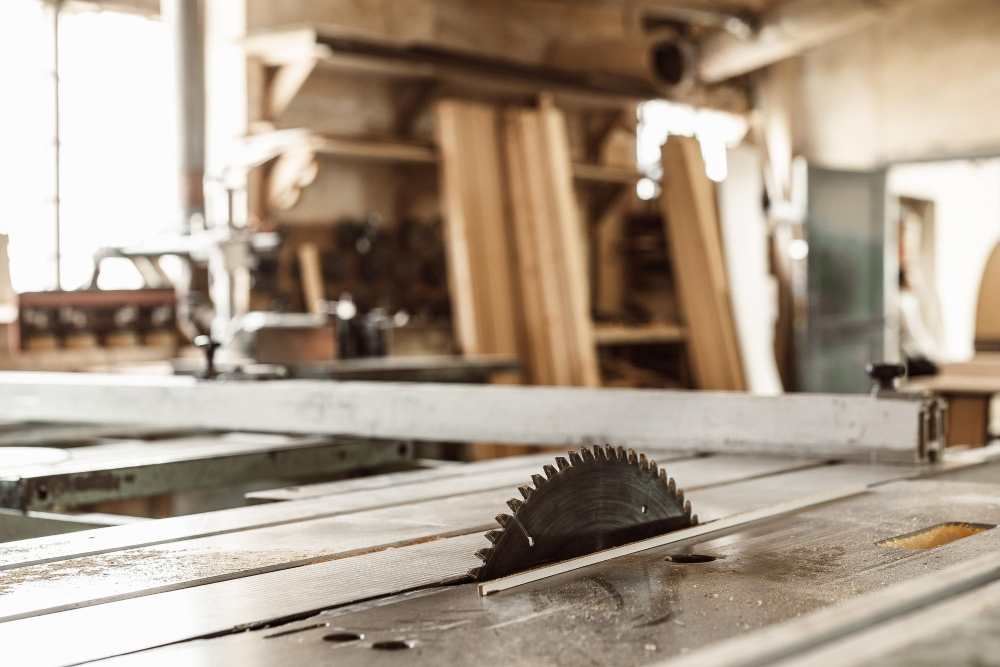
1. Why Does Wood Burn During Sawing?
When a circular saw blade cuts through wood, its teeth remove material to create the saw kerf. Some of the energy generated during this operation is naturally converted into heat.
When the cutting process is working correctly, this heat generally remains limited. However, if the blade rubs excessively against the wood or if sawdust and chips are not removed efficiently, the temperature can rise rapidly.
The wood then begins to turn brown and may eventually become black in certain areas. Burn marks can appear along one edge, on both sides of the cut or only in specific places.
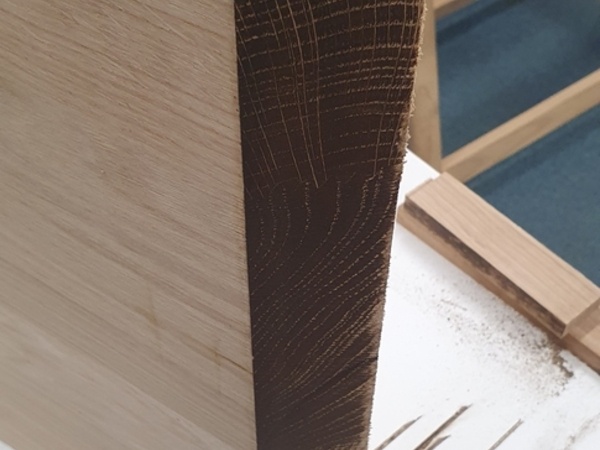
Burn marks along the edge of the wood can be caused by an unsuitable saw blade, excessive friction or an insufficient feed rate.
Remember: burn marks are generally a sign of abnormal friction or poor chip removal. They do not automatically mean that the motor lacks power.
2. Is the Saw Blade Dirty?
A dirty saw blade is one of the first possible causes to investigate when a table saw starts leaving burn marks on wood.
Over time, resin, glue and dust residues can accumulate on the teeth and body of the blade. These deposits increase friction and reduce cutting efficiency.
This problem is particularly common when cutting resinous softwoods, but it can also occur when sawing wood-based panels containing adhesives.
How to Check the Condition of the Blade
- Disconnect the machine completely from the power supply before carrying out any work.
- Inspect the teeth and both sides of the blade.
- Look for brownish, sticky or hardened deposits.
- Check that the spaces between the teeth are not obstructed.
- Clean the blade using a suitable product, following the manufacturer's recommendations.
Tip: a dirty blade can sometimes regain good cutting performance after thorough cleaning. It is therefore not always necessary to replace it immediately.
3. Is the Saw Blade Sharp Enough?
A blunt saw blade no longer cuts through wood fibres as efficiently. Instead of cutting them cleanly, it tends to crush them and generate additional friction.
This increased resistance can cause the temperature to rise and produce burn marks along the cut edges.
Signs of a Blunt Saw Blade
- Cutting requires more effort than before.
- The wood becomes difficult to feed despite correct guidance.
- Brown or black marks appear regularly.
- The quality of the cut deteriorates.
- The machine appears to be working harder during cutting.
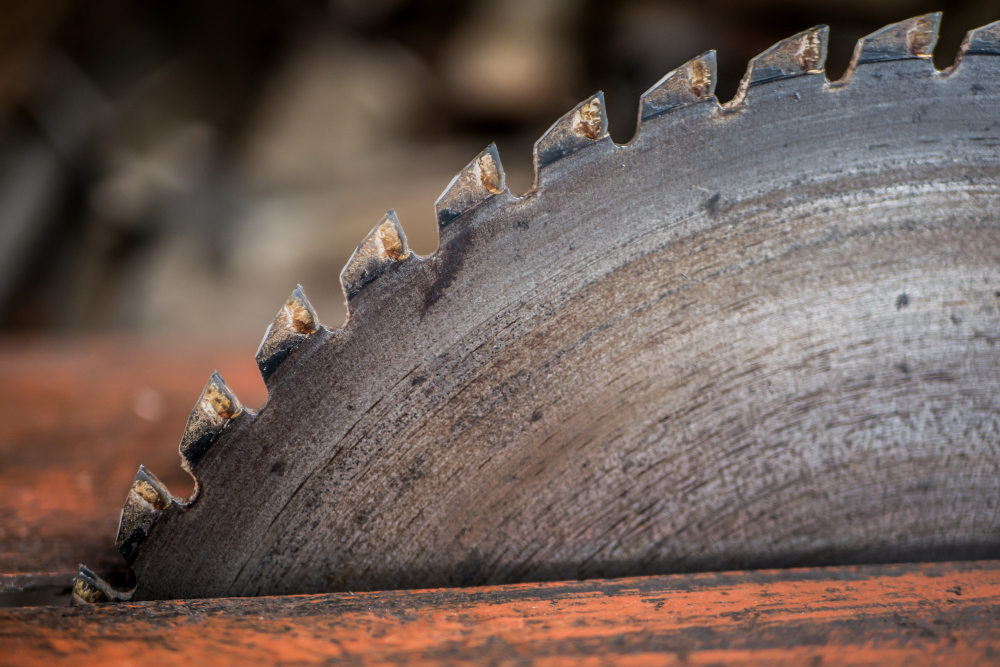
The condition of circular saw blade teeth should be checked regularly. Worn or damaged teeth can reduce cutting quality and increase friction.
If the blade is clean but these symptoms persist, professional sharpening or replacement may be necessary.
Warning: a broken tooth, missing carbide tip or deformed blade is a reason to stop using the blade immediately.
4. Are You Using a Suitable Blade for Ripping?
The choice of saw blade tooth geometry plays an important role in heat generation during cutting.
A blade with a high tooth count can provide a clean finish when crosscutting or cutting certain wood-based panels. However, it is not necessarily suitable for ripping thick sections of solid timber.
During ripping, the teeth must efficiently remove the chips produced when cutting along the wood grain. If the spaces between the teeth are too small for the amount of material being removed, cutting can become more difficult and generate excessive heat.
How to Choose the Right Tooth Configuration
- Ripping solid timber: choose a blade specifically designed for cutting along the grain, generally with a relatively low tooth count.
- Crosscutting: use a blade suitable for cutting across the grain, often with a finer tooth configuration.
- Melamine-faced or laminated panels: select a blade with tooth geometry suitable for the surface coating and core material.
- General-purpose use: a combination blade can provide a compromise, although it will not necessarily offer the same performance as a specialised blade for each operation.
Always respect the blade diameter, bore size, thickness and maximum permitted rotational speed specified by the machine manufacturer.
5. Are You Feeding the Wood Too Slowly?
An excessively slow feed rate can also cause burn marks.
When the wood remains in contact with the rotating teeth for too long, heat can build up locally. This phenomenon is particularly noticeable with certain hardwood species.
Conversely, pushing the wood too quickly can overload the machine, reduce cutting quality and increase the risk of jamming.
How to Maintain a Suitable Feed Rate
- Feed the wood steadily, without sudden movements.
- Avoid prolonged stops while the workpiece is passing through the blade.
- Adjust the feeding effort according to the thickness and hardness of the wood.
- Never force a workpiece that offers abnormal resistance.
- Use suitable push sticks or feeding devices to maintain safe control of the workpiece.
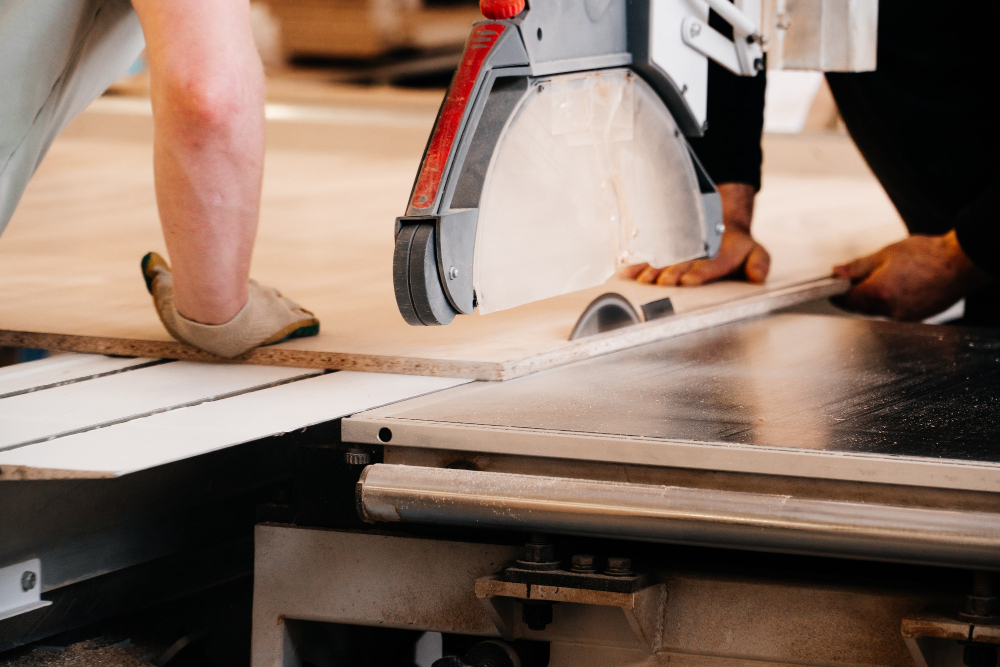
A steady feed rate suited to the material helps reduce friction and blade overheating during cutting.
Important: if the wood becomes difficult to feed, do not try to compensate by pushing harder. Stop the machine safely and investigate the cause of the resistance.
6. Is the Rip Fence Correctly Aligned?
An incorrectly adjusted rip fence can cause abnormal friction between the wood and the rear section of the saw blade.
If the fence converges towards the rear of the blade, the workpiece may become trapped between the fence and the teeth. This problem can produce burn marks and significantly increase the risk of kickback.
Checks to Carry Out
- Disconnect the machine from the power supply.
- Check that the rip fence is securely locked in position.
- Check its alignment with the blade according to the manufacturer's instructions.
- Make sure the fence has no excessive play or deformation.
- Ensure that the wood has a straight reference edge.
The rip fence must always be adjusted according to the manufacturer's recommendations. In particular, it must not converge towards the rear of the blade.
Good to know: if burn marks appear mainly on one side of the saw kerf, a guiding or alignment problem deserves particular attention.
7. Is the Blade Correctly Aligned with the Saw Table?
Even when the rip fence is correctly adjusted, incorrect blade alignment relative to the machine's reference points can cause friction.
This problem may occur after an impact, mechanical maintenance or an adjustment problem affecting the saw assembly.
The blade must be correctly positioned relative to the mitre slots and other reference points specified by the manufacturer.
How to Check Blade Alignment
- Disconnect the table saw completely from the power supply.
- Select a reference point on the body of the blade.
- Measure its distance from a reference slot at the front and rear of the blade.
- Rotate the blade manually to use the same reference point for both measurements.
- Compare the results and consult the instruction manual if you notice a significant difference.
Depending on the model, correcting the alignment may require adjustments to the saw assembly mounting. Do not modify mechanical settings unless you are familiar with the procedure specified by the manufacturer.
8. Do Some Wood Species Burn More Easily Than Others?
Not all wood species react in the same way to the heat generated during sawing.
Certain hard or dense woods may be more prone to burn marks when cutting conditions are not optimal. This is particularly true of cherry, maple and certain exotic hardwoods.
Resinous softwoods, on the other hand, can contribute to blade contamination because of their resin content.
Internal stresses, wood deformation or poorly prepared reference edges can also interfere with cutting and increase friction.
Tip: if burn marks only appear when cutting a particular wood species, first check whether the blade is suitable, inspect its condition and review your feed rate before changing the machine settings.
9. Troubleshooting Table: How Can You Prevent Burn Marks?
| Problem Observed | Possible Cause | Recommended Solution |
|---|---|---|
| Burn marks on both cut edges | Blunt or dirty blade, or feed rate too slow | Inspect the blade and adjust the feed rate |
| Burn marks mainly on one side | Incorrect blade or rip fence alignment | Check alignment according to the instruction manual |
| Burn marks when ripping thick timber | Unsuitable tooth configuration or insufficient chip removal | Use a blade designed for ripping |
| Burn marks after several consecutive cuts | Resin build-up or excessive heat | Inspect and clean the blade if necessary |
| Wood becomes difficult to feed | Blunt blade, incorrect guidance or pinching | Stop cutting safely and investigate the cause |
| Burn marks only appear on certain woods | Wood species sensitive to heat or unsuitable cutting conditions | Adapt the blade and feed rate to the material |
10. Frequently Asked Questions About Burn Marks on Wood
Why Does My Table Saw Burn Wood Even When the Blade Is New?
A new blade can cause burn marks if its tooth geometry is unsuitable for the material, if it is incorrectly installed or if the rip fence and saw assembly are not properly aligned. An excessively slow feed rate may also be responsible.
Why Does Wood Burn More Often During Ripping?
Ripping, particularly when cutting thick solid timber, produces a large quantity of wood chips. A blade with too many teeth or unsuitable tooth geometry may struggle to remove this material efficiently, resulting in excessive heat.
Is It Normal for a Saw Blade to Heat Up During Cutting?
Some heat generation is normal during sawing. However, repeated burn marks, a persistent smell of burning wood or abnormal cutting resistance should prompt you to check the cutting conditions and the condition of the machine.
Can Burn Marks Be Removed from Wood?
Yes. Superficial burn marks can generally be removed by sanding or using an appropriate finishing process. However, it is better to correct the underlying cause to prevent the marks from reappearing during future cuts.
Does a Blade with More Teeth Always Produce a Better Cut?
No. The number of teeth must be suitable for the material and type of cut. A fine-toothed blade can improve the finish of certain crosscuts, but a blade with too many teeth may be less effective when ripping thick solid timber.
11. Probois Machinoutils Tips for Achieving Clean Cuts Without Burn Marks
When a table saw leaves burn marks on wood, start with the simplest checks: blade cleanliness, tooth condition, blade selection and feed rate consistency.
If the marks persist, check the alignment of the rip fence and saw assembly. All mechanical checks must be carried out with the machine disconnected from the power supply, following the manufacturer's recommendations.
A suitable, properly maintained blade combined with accurate workpiece guidance will generally produce cleaner cuts while reducing unnecessary friction.
At Probois Machinoutils, we offer a wide range of table saws, circular saw blades and spare parts for maintaining your woodworking machinery.
Remember: to prevent your table saw from burning wood, use a clean, sharp blade suitable for the material, make sure the fences are correctly adjusted and maintain a steady feed rate.