
Special Products
Special Products


Woodworking Sanders
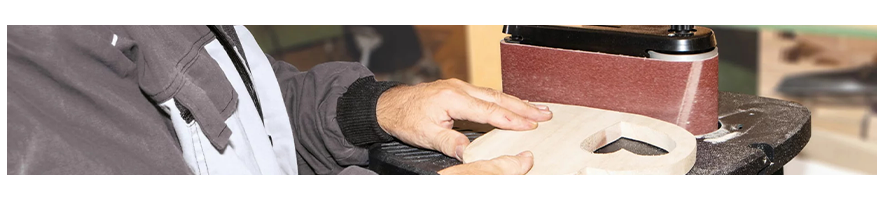





Stationary Woodworking Sanders: Machines for Sanding and Finishing Wood
A woodworking sander is an essential workshop machine for sanding, shaping, thickness calibration and finishing wooden workpieces. Whether you need to prepare a surface before applying oil or varnish, sand the edges of a panel, adjust a wooden component or achieve a consistent thickness, each type of sanding machine is designed for specific applications.
At Probois Machinoutils, discover a wide selection of stationary woodworking sanders suitable for demanding DIY enthusiasts, craftsmen, cabinetmakers and professional woodworking workshops. Our range includes belt sanders, disc sanders, combination belt and disc sanders, oscillating spindle sanders, oscillating edge sanders, drum sanders and floor sanders.
Explore woodworking equipment from specialist brands such as Holzmann, Bernardo, JET, Holzprofi and Jean l'Ébéniste, with machines designed for small workshops as well as regular professional use.
What Are the Different Types of Woodworking Sanders?
There are several types of wood sanding machines, each designed for particular woodworking operations. Choosing the right machine depends mainly on the shape and dimensions of the workpieces, the surface to be sanded, the required accuracy and the frequency of use.
Stationary Belt Sanders: For Sanding Edges and Surfaces
A stationary belt sander uses a continuous abrasive belt driven by rollers. It provides consistent material removal and is suitable for sanding, shaping and adjusting wooden workpieces.
Depending on the machine design, it can be used to sand straight edges, work on the ends of wooden components, correct certain surface irregularities and prepare workpieces for finishing.
A workshop belt sander is a versatile piece of equipment for woodworkers and woodworking enthusiasts who need a stable, fixed sanding machine.
Disc Sanders: Precision Sanding and Finishing of Small Workpieces
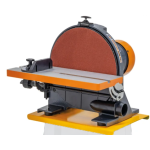
A stationary disc sander features a circular abrasive disc driven by an electric motor. It is particularly suitable for sanding ends, angles, edges and external contours of small wooden workpieces.
Some models feature a tilting worktable and a mitre gauge, allowing precise adjustments and sanding at different angles.
Compact and practical, a benchtop disc sander is a useful addition to woodworking, model-making and small craft workshops.
Belt and Disc Sanders: Two Sanding Functions in One Machine
A combination belt and disc sander brings together two complementary sanding systems in a single machine. The abrasive belt is particularly useful for sanding edges and certain surfaces, while the rotating disc allows accurate sanding of angles, ends and smaller components.
This combination provides excellent versatility while reducing the space required in the workshop. It is an attractive solution for DIY users, craftsmen and woodworkers who carry out a variety of sanding operations.
Combination belt and disc sanders are available in different sizes, from compact benchtop models to more powerful stationary machines.
Oscillating Spindle Sanders: Ideal for Curves and Rounded Shapes
An oscillating spindle sander is specifically designed for sanding curved surfaces and internal contours.
Its abrasive sanding drum rotates while moving vertically up and down. This oscillating movement distributes abrasive wear more evenly and helps reduce heat build-up during sanding.
This type of woodworking sander is particularly popular for scroll saw projects, wooden toys, decorative components, rounded shapes and fine cabinetmaking work.
Depending on the model, different diameters of abrasive sanding sleeves can be fitted to accommodate various curves and workpiece shapes.
Oscillating Edge Sanders: For Panels and Joinery Components
An oscillating edge sander is designed for sanding the edges of wooden panels, solid wood components and, depending on the machine's equipment, certain curved shapes.
It uses a long abrasive belt that runs continuously while performing an oscillating movement. This operation helps distribute abrasive wear and promotes consistent sanding results.
More advanced models may feature an adjustable worktable, a tilting sanding unit or accessories for sanding curved workpieces.
An oscillating edge sanding machine is particularly useful in workshops producing furniture, doors, panels and interior joinery components.
Drum Sanders and Thickness Sanding Machines: For Consistent Panel Thickness
A woodworking drum sander, also known as a thickness sanding machine, is designed to sand flat surfaces evenly and gradually adjust the thickness of wooden workpieces.
It is generally equipped with an abrasive sanding drum and a conveyor feed system that moves the workpiece beneath the sanding drum. Working width and adjustment capabilities vary depending on the model.
A drum thickness sander is particularly useful for furniture making, sanding wooden panels, processing solid wood components and projects requiring consistent thickness or an even surface finish.
It can also be used for finishing passes on glued-up wooden panels, provided that the machine's capacity and the characteristics of the material are respected.
Unlike a thickness planer, which removes material using cutting knives, a drum sander works with an abrasive surface. It is therefore a complementary machine for precise sanding, finishing and thickness calibration.
Floor Sanders: For Renovating Wooden Floors and Parquet
A wood floor sander is specifically designed for renovating and sanding wooden floors and parquet flooring. It allows users to gradually remove old finishes, reduce certain surface irregularities and prepare the floor before applying a new protective treatment.
Depending on the model and abrasives used, it can perform several stages of floor sanding, from initial material removal to surface preparation before finishing.
This type of sanding machine is particularly suitable for craftsmen, flooring professionals and users wishing to restore old wooden floors.
How to Choose the Best Woodworking Sander for Your Workshop
When selecting a stationary woodworking sanding machine, several important factors should be considered. The most suitable sander is the one that matches the actual operations carried out in your workshop.
Choose According to Your Sanding Applications
For sanding small workpieces and angles, a disc sander or a combination belt and disc sander is often a practical solution. For internal curves and scroll saw projects, an oscillating spindle sander is generally more suitable.
For regular sanding of panel edges and joinery components, an oscillating edge sander provides a large working area. For sanding flat panels and achieving a consistent thickness, a drum sander offers a more specialised solution.
Motor Power and Electrical Supply
Motor power influences the machine's sanding capabilities and performance during operation. The motor should be selected according to workpiece dimensions, frequency of use and the intensity of the sanding work.
Depending on the model, stationary sanders may operate on a 230 V single-phase or 400 V three-phase electrical supply. Before purchasing, always check compatibility with your workshop's electrical installation.
Sanding Dimensions and Working Capacity
The sanding disc diameter, abrasive belt width and length, worktable dimensions and drum sander working width are all important technical characteristics.
A compact sanding machine may be sufficient for small projects, while a larger-capacity sander is preferable for panels, long workpieces and regular woodworking operations.
Adjustment Accuracy and Machine Stability
A sturdy worktable, well-designed guides and precise adjustments help achieve consistent sanding results. Depending on the model, sanders may feature a tilting table, mitre gauge, height adjustment system or mechanical feed mechanism.
Machine stability is also important, especially when sanding heavy or large wooden workpieces.
Wood Dust Extraction
Wood sanding generates fine dust particles that can become airborne throughout the workshop. A suitable woodworking dust extraction system is therefore essential to improve workshop cleanliness and reduce exposure to wood dust.
Before choosing a sander, check the diameter of its dust extraction port and the airflow and suction requirements of the dust collection system.
Which Abrasives Should You Use with a Woodworking Sander?
Choosing the correct abrasives plays an essential role in sanding quality. Each type of machine uses specific consumables, including sanding belts, abrasive discs, sanding sleeves and abrasives for drum sanders.
Abrasive grit size should be selected according to the required operation. Coarse grits are used for heavier material removal, medium grits help refine the surface, and finer grits are suitable for finishing work.
Always use abrasive products with the dimensions specified by the manufacturer and ensure that they are compatible with your sanding machine.
Woodworking Sanders from Holzmann, Bernardo, JET, Holzprofi and Jean l'Ébéniste
At Probois Machinoutils, we offer a selection of sanding machines for different types of users, from woodworking enthusiasts to professional joiners and cabinetmakers.
Discover Holzmann, Bernardo, JET, Holzprofi and Jean l'Ébéniste woodworking sanders, with machines designed for different budgets, workshop configurations and production requirements.
Whether you are looking for a compact stationary sander for your workbench, an edge sander for your woodworking workshop or a drum sander for furniture production, our catalogue allows you to compare a variety of woodworking sanding solutions.
Why Buy Your Woodworking Sander from Probois Machinoutils?
As a specialist supplier of woodworking and metalworking machinery, Probois Machinoutils offers a selection of stationary sanders, workshop equipment and compatible sanding consumables.
Our range covers a wide variety of applications, including edge sanding, precise fitting, surface finishing, panel thickness sanding, curved workpieces and wooden floor renovation.
Check the technical specifications of each machine to compare sanding capacities, motor power, electrical requirements and available features. This will help you choose the woodworking sander best suited to your workshop.
Frequently Asked Questions About Woodworking Sanders
Which sander should I choose for a woodworking workshop?
The best choice depends on the type of work you carry out. A combination belt and disc sander is suitable for many fitting and finishing operations. An oscillating edge sander is better suited to regular sanding of panel edges, while a drum sander is designed for flat surfaces and consistent thickness sanding.
What is the difference between a stationary sander and a handheld sander?
A stationary sander remains fixed in the workshop, and the operator generally guides the workpiece against the abrasive surface. A handheld sander is moved across the surface being sanded. Stationary machines are particularly useful for repetitive work, precise fitting of small components and specialised sanding operations.
Which sander is best for curved wooden workpieces?
For internal curves, an oscillating spindle sander is particularly suitable. For external curves and rounded edges, a disc sander or a suitably equipped edge sander may be used.
Which machine should I use to sand wooden panels?
For consistent sanding of large flat surfaces, a drum sander is generally the most suitable machine. Its working width should be selected according to the dimensions of the panels being processed.
What is the difference between a drum sander and a thickness planer?
A thickness planer removes material using cutting knives to reduce and regulate the thickness of wooden workpieces. A drum sander uses an abrasive surface to gradually adjust thickness and improve surface finish. These two machines perform complementary functions in a woodworking workshop.
Can a woodworking sander be used on metal?
A sanding machine designed for wood should not automatically be used on metal. Abrasives, machine construction, projection hazards and dust extraction requirements may differ. Always check whether the manufacturer explicitly approves the machine for metalworking applications.
Should a stationary woodworking sander be connected to a dust extraction system?
Yes. Effective and suitable dust extraction is essential to reduce the dispersion of wood dust. The extraction system should be correctly sized according to the machine's technical specifications and the type of dust produced.