
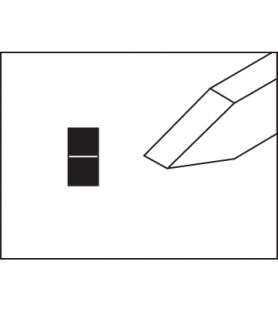
Reference: HAM-HCT091
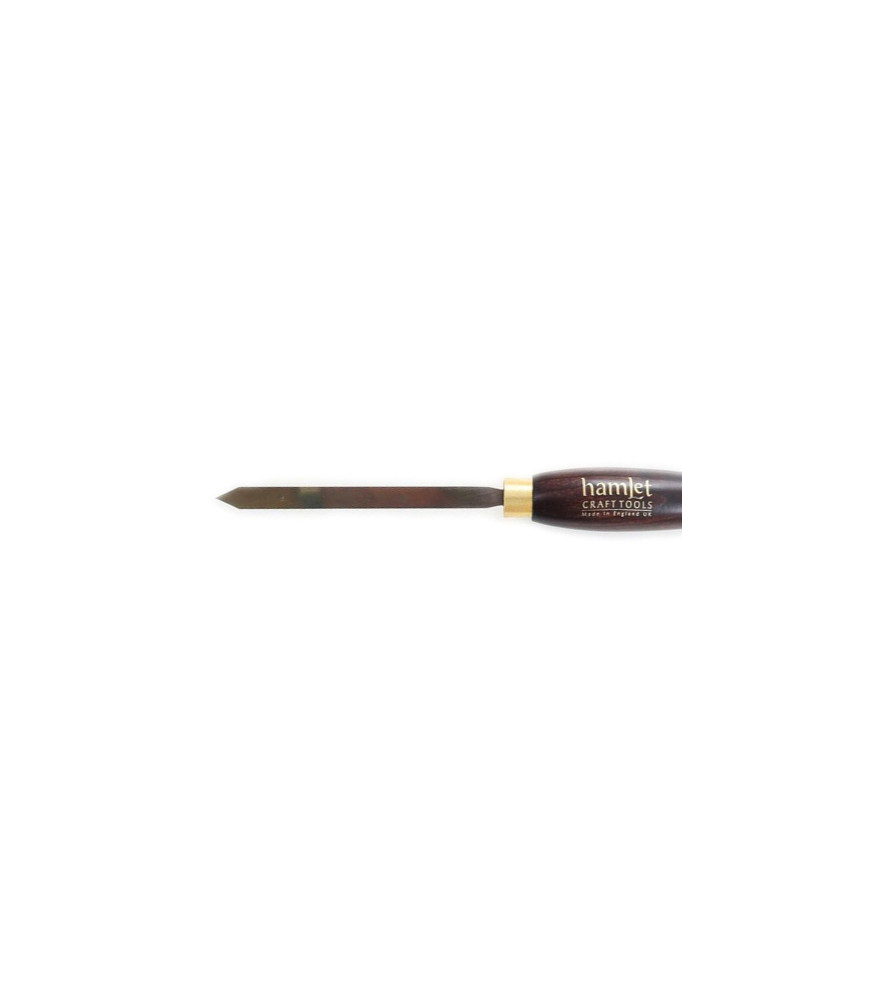
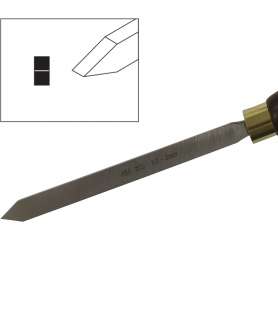
The HAMLET HCT091 6 mm Parting Tool is a professional HSS woodturning tool designed for spindle turning, cutting grooves, establishing accurate diameters, forming shoulders and parting off workpieces. Its 6 mm width provides an excellent balance of strength, stability and precision for everyday turning work. Supplied handled and sharpened, it is ready to use and makes a practical addition to any woodturner's tool rack.

The HAMLET HCT091 6 mm Parting Tool is a traditional and versatile tool primarily designed for woodturning and spindle turning. It can be used to cut grooves, establish accurate diameters, define shoulders and perform parting-off operations.
With its 6 mm width, the HCT091 offers greater stability than a very narrow parting tool while retaining the precision required for a wide variety of turning operations.
Manufactured from high-speed steel (HSS), this HAMLET parting tool is a traditional resharpenable cutting tool designed for long-term use in the woodturning workshop.
A parting tool is one of those tools that quickly earns a permanent place close to the lathe because it can be used for so many everyday operations.
The HAMLET HCT091 can be used to:
Reduce the diameter of a workpiece.
Cut straight grooves.
Produce deeper grooves.
Establish accurate diameters.
Create shoulders.
Define different sections of a profile.
Part off a workpiece.
Prepare a piece before final separation.
Create decorative details.
Work on spindle-turned components.
Its geometry allows precise cuts to be made without having to use a much wider turning tool.
One of the particularly useful applications of the HAMLET HCT091 Parting Tool is establishing an accurate diameter on a spindle-turned workpiece.
This is especially helpful when a project includes several different diameters.
On a furniture leg, baluster, handle or spindle, the parting tool can be used to establish the required diameters before the final profile is produced with other turning tools.
This gives the woodturner clear physical reference points directly on the workpiece.
The HAMLET 6 mm Parting Tool is also particularly suitable for producing straight, clearly defined grooves.
These grooves can serve either a practical or decorative purpose.
They can be used to:
Separate two profiles visually.
Mark a change in diameter.
Create a decorative feature.
Define a working area.
Prepare a shoulder.
Create a clear separation between different shapes.
The 6 mm width provides a substantial and well-defined cut while maintaining good control over the tool.
As its English name suggests, the HAMLET HCT091 Parting Tool can be used for parting off woodturning projects.
Parting off involves progressively reducing the diameter of a section until the finished workpiece can be separated from the remaining stock.
This operation is commonly performed towards the end of a turning project.
The tool can also be used to prepare the parting area before the final separation of the workpiece.
At 6 mm wide, the HAMLET HCT091 is a particularly versatile parting tool.
This size provides sufficient material for good stability during use while retaining the precision required for detailed turning work.
The 6 mm Parting Tool is particularly useful for:
Medium-sized workpieces.
Wider grooves.
Establishing diameters.
Forming shoulders.
Spindle turning.
Parting-off operations.
Decorative details.
It is a useful complement to the gouges, chisels and scrapers already found in a well-equipped woodturning workshop.
Different widths of parting tools are useful for different applications and can complement one another in the workshop.
A 3 mm Parting Tool will generally be particularly useful for:
Narrow grooves.
Fine details.
Smaller workpieces.
Operations requiring a narrow kerf.
Precision work on small diameters.
The HAMLET HCT091 6 mm Parting Tool provides greater width and stability and is particularly suitable for:
Wider grooves.
Medium-sized workpieces.
Establishing diameters.
More substantial cuts.
Forming shoulders.
Parting-off operations.
Having more than one width available allows the woodturner to select the most appropriate tool for each project.
The HAMLET HCT091 is particularly useful for spindle turning projects.
It can be used when producing:
Furniture legs.
Table and chair legs.
Balusters.
Spindles.
Tool handles.
Wooden handles.
Posts.
Decorative columns.
Turned ornaments.
Repetitive spindle work.
Whenever a project involves several diameters or clearly defined sections, the parting tool can be used to establish accurate reference points before the final shaping begins.
Accurate dimensions are particularly important when turning several matching components.
This is often the case when making a set of spindles, furniture legs, balusters or other components that need to look identical once assembled.
The parting tool can be used to cut down progressively until the required diameter is reached.
Once these reference diameters have been established, the woodturner can continue shaping the piece using a spindle gouge, skew chisel or another suitable tool.
This makes it easier to achieve consistent and repeatable results.
When turning several identical pieces, even a few millimetres of difference can become noticeable once the components are placed next to one another.
The HAMLET HCT091 Parting Tool is particularly useful for creating consistent reference diameters from one workpiece to the next.
When making a set of furniture legs, spindles or balusters, the main depths and diameters can be established before the profiles are shaped.
It is a simple but effective working method that helps improve consistency.
And this is one of those situations where a parting tool really earns its place in the workshop: once your reference diameters are established, you can concentrate much more comfortably on shaping the profile rather than constantly checking dimensions.
The HAMLET HCT091 6 mm Parting Tool can also be used when creating shoulders and clearly defined transitions.
A shoulder provides a distinct transition between two diameters or sections of a turned workpiece.
This type of detail is frequently found on:
Furniture legs.
Handles.
Wooden shafts.
Spindles.
Components intended for assembly.
Decorative turned pieces.
The tool makes it possible to clearly define the working area before continuing with the final shaping.
A parting tool should not be considered solely as a tool for separating a finished piece from the remaining stock.
Its versatility also makes it useful for decorative work.
A clean groove can be used to highlight a profile, separate two shapes or add visual rhythm to a turned piece.
On a baluster, furniture leg or decorative object, these seemingly small details can make a significant difference to the finished appearance.
When a workpiece includes several profiles, it is often easier to establish the main dimensions before creating the final shapes.
The parting tool is particularly useful for this purpose.
The woodturner can use it to:
Establish different diameters.
Define sections of the profile.
Cut initial grooves.
Prepare shoulders.
Mark important transitions.
Once these reference points have been created, other woodturning tools can be used to connect and shape the different sections.
The HAMLET HCT091 is a traditional woodturning tool that works with a sharpened cutting edge.
The condition of this cutting edge therefore plays an important role in both performance and comfort of use.
A properly sharpened tool provides a cleaner cut and generally requires less effort from the woodturner.
It also makes controlling the depth of a groove or diameter reduction easier and more predictable.
The HAMLET HCT091 6 mm Parting Tool is manufactured from high-speed steel (HSS), a material widely used for traditional woodturning tools.
HSS offers several important advantages:
Good resistance to wear.
Good cutting-edge retention.
Resharpenable cutting edge.
Good resistance to heat generated during use.
Long service life with proper maintenance.
Unlike disposable-tip turning tools, a traditional HSS tool can be sharpened repeatedly throughout its working life.
The HAMLET HCT091 can be resharpened whenever the cutting edge begins to lose its effectiveness.
This allows good cutting performance to be maintained over a long period.
Regular maintenance is particularly beneficial for woodturning tools, as a sharp cutting edge improves both the quality of the cut and the overall comfort of use.
Rather than waiting until the tool becomes completely blunt, light and regular sharpening generally makes it easier to maintain the correct cutting geometry.
The HAMLET HCT091 Parting Tool is supplied handled and sharpened.
You therefore receive a complete woodturning tool ready for use without needing to make or fit a separate handle.
The handle provides the grip and leverage required to guide the tool accurately over the tool rest.
For regular workshop use, having a complete, ready-to-use tool is both practical and convenient.
HAMLET offers a broad selection of traditional woodturning tools for different turning operations.
A versatile set of turning tools may include:
Roughing gouges.
Spindle gouges.
Bowl gouges.
Skew chisels.
Parting tools.
Straight scrapers.
Round scrapers.
Hollowing tools.
Special-purpose turning tools.
The HCT091 6 mm Parting Tool complements these tools particularly well for sizing, grooving, shoulder work and parting-off operations.
A parting tool does not replace the other gouges and chisels used by a woodturner. Instead, each tool performs a specific task.
For example, a versatile set may include:
A roughing gouge for turning a square blank into a cylinder.
A spindle gouge for shaping profiles.
A skew chisel for clean cuts and finishing.
A parting tool for grooves, sizing and parting off.
A scraper for specific finishing operations.
A bowl gouge for bowls and hollow forms.
Having the correct tool available for each operation makes the turning process more efficient and enjoyable.
The parting tool may look relatively simple, but its usefulness quickly becomes obvious to anyone who regularly works on a wood lathe.
It can establish a reference diameter, create a groove, define a shoulder or prepare a workpiece for separation, all with a single familiar tool.
It is often one of those tools bought for a specific purpose that ends up being used far more frequently than expected.
Whether you are working on a table leg, a wooden handle or a complete set of balusters, having a reliable parting tool close to the lathe is one of those small workshop habits that simply makes the job easier.
The HAMLET HCT091 6 mm Parting Tool can find a place in the tool collection of both beginners and experienced woodturners.
For someone developing their woodturning skills, it provides an opportunity to learn several fundamental operations such as grooving, sizing, shoulder work and parting off.
For the experienced turner, it becomes an efficient everyday tool for improving accuracy and consistency.
Its 6 mm width also provides a reassuring degree of stability for a wide variety of common turning projects.
Brand: HAMLET
Reference: HCT091
Tool type: Parting Tool
Application: woodturning
Width: 6 mm
Material: high-speed steel HSS
Suitable for spindle turning
Suitable for establishing accurate diameters
Ideal for cutting grooves
Suitable for shoulder work
Suitable for parting-off operations
Useful for decorative details
Resharpenable
Supplied with handle
Supplied sharpened
The HAMLET HCT091 is a versatile traditional turning tool that complements a spindle-turning toolkit perfectly.
Its 6 mm width makes it particularly suitable for:
Establishing accurate diameters.
Cutting straight grooves.
Producing deeper grooves.
Creating shoulders.
Defining different profiles.
Adding decorative details.
Preparing a workpiece for parting off.
Parting off turned components.
Producing consistent repetitive work.
Turning furniture legs and balusters.
Combined with gouges, skew chisels and scrapers, it provides the woodturner with an efficient tool for many common workshop operations.
With its 6 mm width, high-speed steel HSS construction and traditional design, the HAMLET HCT091 Parting Tool is a versatile choice for everyday woodturning.
Supplied handled and sharpened, it can be used for grooving, sizing, forming shoulders, decorative details and parting-off operations.
It is a traditional, durable and resharpenable tool that quickly finds its place alongside the gouges, skew chisels and scrapers in a well-equipped woodturning workshop.

The HAMLET HCT091 6 mm Parting Tool is a professional HSS woodturning tool designed for spindle turning, cutting grooves, establishing accurate diameters, forming shoulders and parting off workpieces. Its 6 mm width provides an excellent balance of strength, stability and precision for everyday turning work. Supplied handled and sharpened, it is ready to use and makes a practical addition to any woodturner's tool rack.